Subplots: Part 2
A series on a critical narrative element in any screenplay and analysis of the movies Casablanca, Die Hard, and The Shawshank Redemption.

A series on a critical narrative element in any screenplay and analysis of the movies Casablanca, Die Hard, and The Shawshank Redemption.
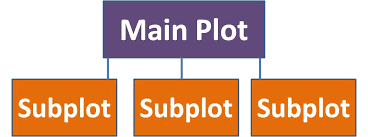
In the Prep: From Concept to Outline class I teach, we spend a lot of time talking about and developing subplots. In fact, as part of each writer’s learning experience in the online workshop, I direct them to a set of Go Into The Story posts I’ve written over the years on the subject.
The other day, I read through each of those posts, some of them stretching back to 2008, and it’s interesting to see the evolution in my thinking. Over time, I’ve come to adopt another screenwriting principle:
Subplot = Relationship.
What I propose to do each day this week is revise my original articles, taking the opportunity to clean them up a bit, and as we go through each one, consider the deeper implications of the above principle.
Today, let’s look at three notable movies — Casablanca, Die Hard, and The Shawshank Redemption — and take note of the primary subplots in each.
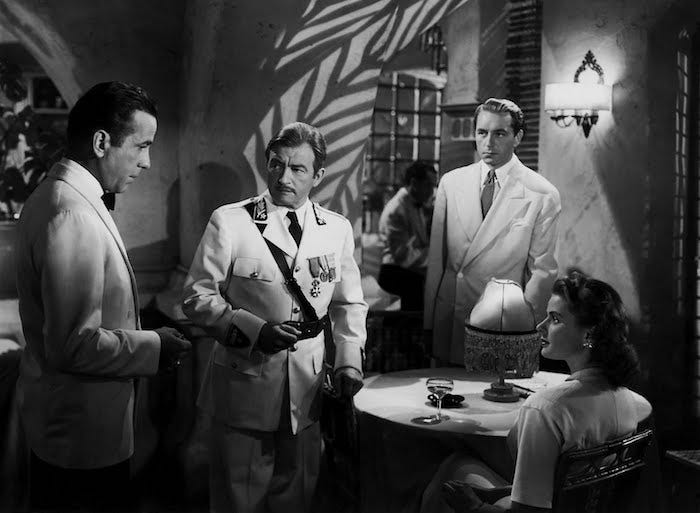
CASABLANCA
Plotline: Rick gains possession of the stolen letters of transit: The Germans want the letters back, while others want them to escape
Subplots:
Rick’s relationship with Ilsa (Attractor)
Rick’s relationship with Laszlo (Mentor)
Rick’s relationship with Renault (Trickster)
Renault and Strasser (Nemesis)
German authorities and Laszlo
Rick and Sam
DIE HARD
Plotline: John McClane versus bad guys who have taken over the skyscraper and are holding hostages
Subplots:
McClane’s relationship with Holly (Attractor)
McClane’s relationship with Sgt. Powell (Mentor)
McClane’s relationship with FBI (Trickster)
McClane versus Han and his minions (Nemesis)
Hans and FBI guys (Trickster)
Ticking clock: Hans’ guy, Theo, cracks safe codes
THE SHAWSHANK REDEMPTION
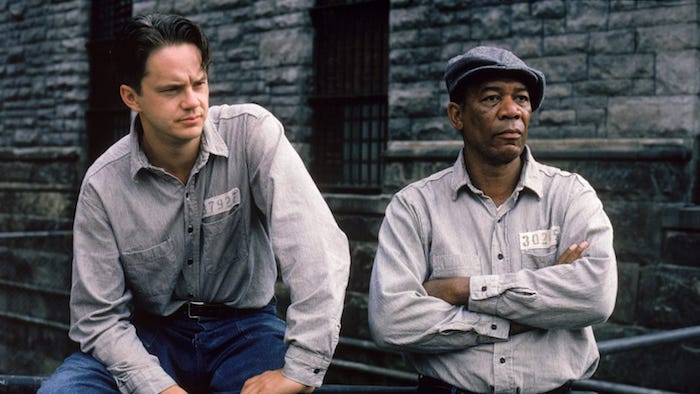
Plotline: Falsely sent to prison for life, Andy Dufresne plans and executes his escape
Subplots:
Andy’s relationship with Warden Norton (Nemesis)
Andy’s relationship with Red (Mentor)
Andy’s relationship with Tommy (Attractor)
Andy’s relationship with prison guard Hadley (Trickster)
Andy’s relationship with The Sisters (Nemesis)
Andy as financial adviser
Red and Brooks (Negative Mentor)
Red and Andy (Attractor)
Red and Institutionalization (Nemesis)
Red and Freedom (Trickster)
Notice how many subplots each movie has? And these lists are not comprehensive: What about Rick helping out the poor Romanian couple? Hans’ relationship with Holly? Andy’s letter-writing campaign soliciting books, then building up the prison library? All these sub-stories which relate to, intersect with, and build upon the Plotline.
To demonstrate how much impact a subplot can have, consider the role of Brooks in The Shawshank Redemption. In my view, Brooks functions as Red’s ‘dark wisdom’ character, charting one potential course post-prison. In effect, Brooks undergoes a negative transformation, leading to dissolution (suicide). He is a Negative Mentor character because Red follows every single step that Brooks trod outside prison — same job, same room, same park, same troubled thoughts. Brooks is the physicalization of the impact of institutionalization and, thus, because Red follows so closely in Brooks’ footsteps, it seems almost certain Red will continue on that path toward self-destruction.
Prison, while it may be a dehumanizing place, at least provides walls — a context, if you will — within which a person can construct a definable existence. Freedom in the real world is, for an ex-con especially, a whole other experience, one about openness, possibilities, and, as Andy argues, hope. But how to define oneself is there is no ‘context?’ Hence, Freedom = Trickster, turning from Ally to Enemy. Fortunately for Red, Andy provided a possibility hope — in Mexico. Plus, some keys words of advice:
“Get busy living, or get busy dying.”
Look at it this way: Without Andy as a friend and example, how would Red have fared in the ‘free’ world? It’s quite possible, even likely that he would have followed Brooks’ path.
These subplots… these relationships of Andy, Red, Brooks, and others in Shawshank, just as the relationships between Rick and Ilsa, Laszlo, and Renault in Casablanca, and McClane and Holly, Powell, and Hans in Die Hard are critical in the playing out of each story.
I hear you thinking: “Okay, so it’s bad enough I gotta figure out the main plot, now I gotta come up with all these other plots? That’s just gonna make my job harder.”
Wrong! In fact, subplots make the writing task easier. And tomorrow, we’ll find out how.
For Part 1 in the series on subplots, go here.