Studying Aristotle’s “Poetics” — Part 15(A): Four Qualities of a Tragic Hero
As I’ve been interviewing screenwriters, I typically ask what some of their influences are. One book title comes up over and over again…
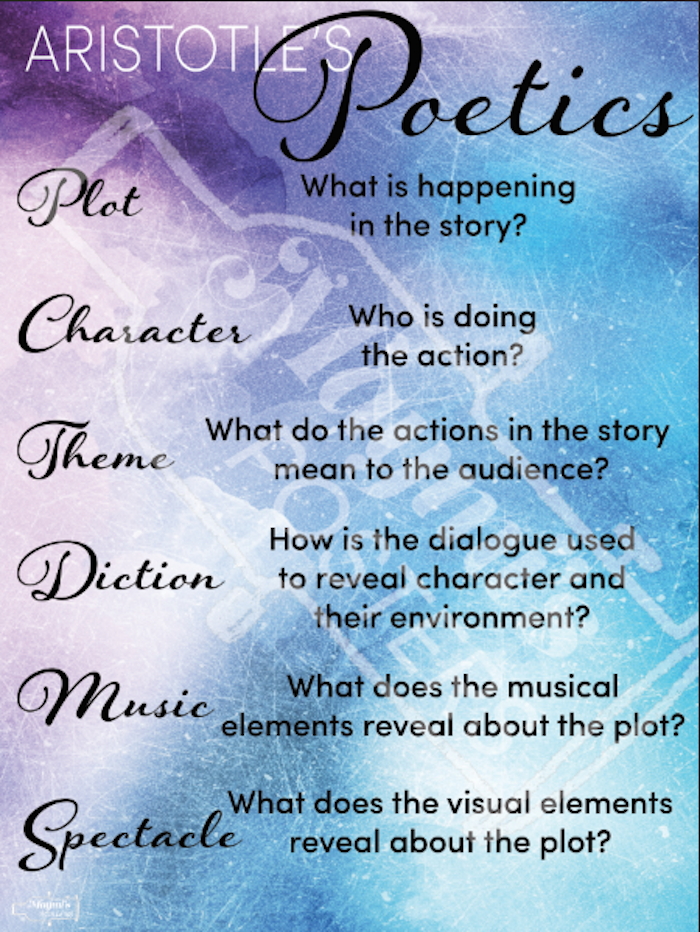
As I’ve been interviewing screenwriters, I typically ask what some of their influences are. One book title comes up over and over again: Aristotle’s “Poetics.” I confess I’ve never read the entire thing, only bits and pieces. So I thought, why not do a daily series to provide a structure to compel me to go through it. That way we’d all benefit from the process.
For background on Aristotle, you can go here to see an article on him in the Stanford Encyclopedia of Philosophy.
To download “Poetics,” you can go here.
Part 15(A): Four Qualities of a Tragic Hero
In respect of Character there are four things to be aimed at. First,
and most important, it must be good. Now any speech or action that
manifests moral purpose of any kind will be expressive of character:
the character will be good if the purpose is good. This rule is relative
to each class. Even a woman may be good, and also a slave; though
the woman may be said to be an inferior being, and the slave quite
worthless. The second thing to aim at is propriety. There is a type
of manly valor; but valor in a woman, or unscrupulous cleverness is
inappropriate. Thirdly, character must be true to life: for this is
a distinct thing from goodness and propriety, as here described. The
fourth point is consistency: for though the subject of the imitation,
who suggested the type, be inconsistent, still he must be consistently
inconsistent. As an example of motiveless degradation of character,
we have Menelaus in the Orestes; of character indecorous and inappropriate,
the lament of Odysseus in the Scylla, and the speech of Melanippe;
of inconsistency, the Iphigenia at Aulis- for Iphigenia the suppliant
in no way resembles her later self.
Let’s just bracket the culturally specific bias against women and slaves represented here — thankfully, humankind has made some progress on those fronts — to focus on “four things to be aimed at,” what I think we can describe as ‘qualities.’ But before we go there, don’t we need to revisit the subject of what Aristotle meant by character?
From Part 2 on “moral character”.
From Part 6(B): “By Character I mean that in virtue of which we ascribe certain qualities to the agents.”
From Part 6(D): “Dramatic action, therefore, is not with a view to the representation of character: character comes in as subsidiary to the actions.”
If I’ve got this right, Aristotle uses ‘character’ to refer to virtue and one’s moral standing. What we would mean by a character in a story, Aristotle employs the term “personal agent.”
Thus when Aristotle ascribes these “four things” in “respect to Character,” I take it he is talking about moral virtue. Furthermore, that character is represented by this quartet of qualities:
- A hero must be good.
- This goodness must be proper to the nature of the hero.
- The goodness must also feel realistic.
- The exhibition of character by a hero must be consistent.
In terms of contemporary storytelling, the concept of ‘good’ is elastic, not rigid. In TV, Tony Soprano (“The Sopranos”), Nancy Botwin (“Weeds”), Dexter Morgan (“Dexter”), Jackie Peyton (“Nurse Jackie”), Walter White (“Breaking Bad”), and Carrie Mathison (“Homeland”) to name a few represent a wide spectrum of morally ambiguous characters, each with some ‘good’ qualities to go along with their personal flaws and skewed world views.
That said most mainstream movies feature Protagonists who are in essence ‘good’ people. They may begin in an inauthentic psychological state and/or have some significant unresolved issues in their past, but ‘heroic’ nonetheless. This is especially so with big blockbuster movies like 2013 hits Gravity, The Hunger Games: Catching Fire, Star Trek: Into Darkness, Thor: The Dark World, World War Z, Frozen, and Captain Phillips.
Thus while there may be more latitude in terms of modern story heroes in terms of their ‘goodness,’ it is still a pretty relevant quality for most Protagonist figures.
The other three qualities — propriety, realistic, consistency — are all completely in line with modern screenwriting and TV writing sensibilities. If a character’s goodness fails on any of these fronts, that character is an example of flawed execution.
Finally, I love this observation: “For though the subject of the imitation, who suggested the type, be inconsistent, still he must be consistently inconsistent.” That brought to mind this character:
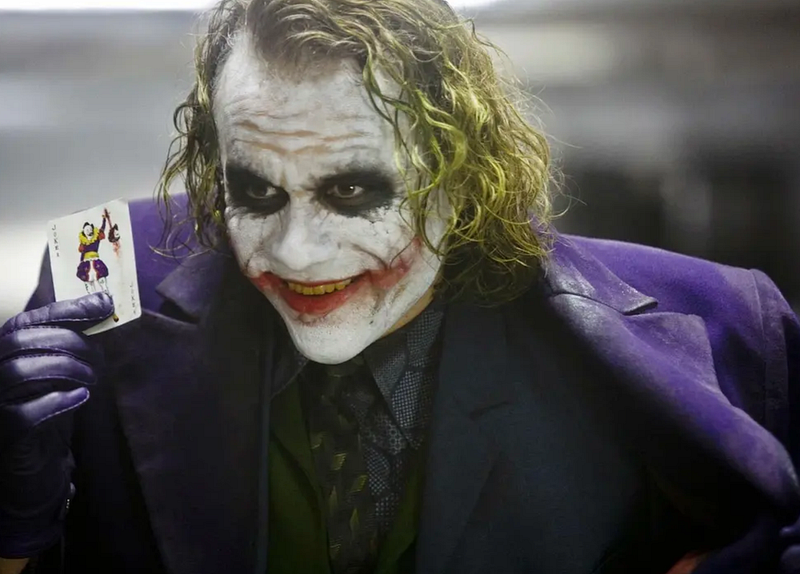
Consistently inconsistent. That describes beautifully the Joker’s schemes. He embraces chaos, but there is a consistency, even a thoroughness to his inconsistency. We don’t know how and where he’ll wreak havoc, but we are sure that he will do so.
As usual, I look forward to and welcome the thoughts of our wonderful group of Aristotelians, and thank you in advance for your insights into “Poetics.”
A reminder: I am looking at “Poetics” through the lens of screenwriting, what is its relevance to the craft in contemporary times. And I welcome the observations of any Aristotle experts to set me straight as I’m just trying to work my way through this content the best I can.
See you here tomorrow for another installment of this series.
For the entire series, go here.