Story Type: Slasher
In Hollywood movie circles, there are genres like Horror or Science Fiction, cross genres like Action-Thriller or Drama-Comedy, and…
In Hollywood movie circles, there are genres like Horror or Science Fiction, cross genres like Action-Thriller or Drama-Comedy, and sub-genres like Romantic Comedy or Mystery Thriller.
Then there are story types, a shorthand way to describe a specific narrative conceit that is almost always tied directly to the movie’s central concept. They can be found in any genre, cross genre, or sub-genre.
Knowledge about and awareness of these story types can be a boost not only to your understanding of film history and movie trends, but also as fodder for brainstorming new story concepts. Mix and match them. Invert them. Gender bend them. Genre bend them. Geo bend them.
Story types exist for a reason: Because they work. Hopefully this series will help you make them work for you.
Today: Slasher.
Per its Wikipedia page:
A slasher film is a type of horror film typically involving a psychopathic killer stalking and killing a sequence of victims in a graphically violent manner, often with a cutting tool such as a knife or axe.
Some examples of slasher movies:
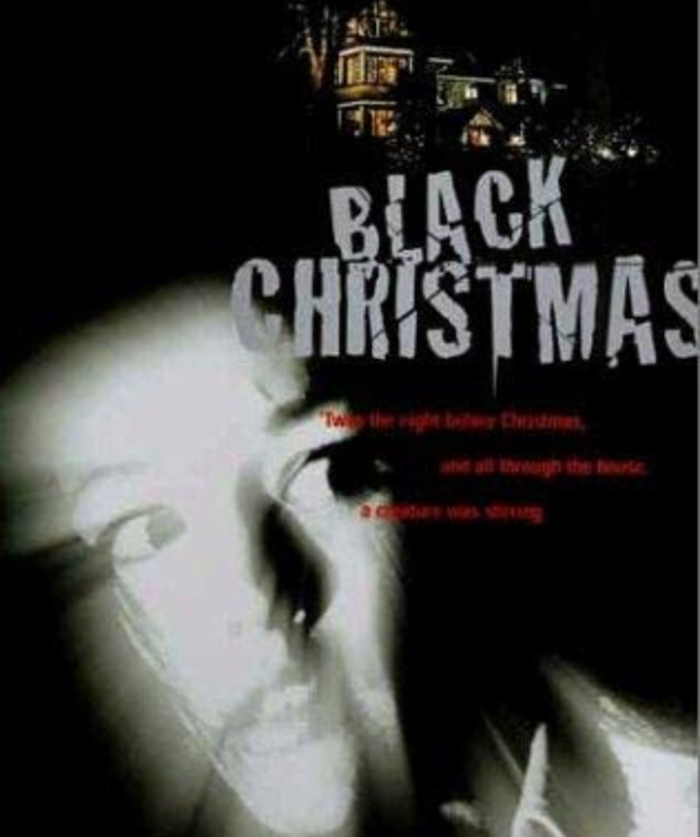
Black Christmas (1974): A sorority house is terrorized by a stranger who makes frightening phone calls and then murders the sorority sisters during Christmas break.
The Texas Chainsaw Massacre (1974): Five friends visiting their grandpa’s old house are hunted down and terrorized by a chainsaw wielding killer and his family of grave-robbing cannibals.
Halloween (1978): A psychotic murderer institutionalized since childhood escapes and stalks a high school girl and her friends while his doctor chases him through the streets.
Friday the 13th (1980): Camp counselors are stalked and murdered by an unknown assailant while trying to re-open a summer camp that was the site of a child’s drowning.
The Burning (1981): A former summer camp caretaker, horribly burned from a prank gone wrong, lurks around an upstate New York summer camp bent on killing the teenagers responsible for his disfigurement.
My Bloody Valentine (1981): A decades old folk tale surrounding a deranged murderer killing those who celebrate Valentine’s Day, turns out to be true to legend when a group defies the killer’s order and people start turning up dead.
A Nightmare on Elm Street (1984): In the dreams of his victims, a spectral child murderer stalks the children of the members of the lynch mob that killed him.
April Fool’s Day (1986): A group of nine college students staying at a friend’s remote island mansion begin to fall victim to an unseen murderer over the April Fool’s day weekend.
Child’s Play (1988): Young Andy Barclay gets the doll he wanted. However, he did not know it was alive!
Scream (1996): A killer known as “ghost face” begins killing off teenagers, and as the body count begins rising, one girl and her friends find themselves contemplating the “Rules” of horror films as they find themselves living in a real-life one.
I Know What You Did Last Summer (1997): Four teens are in great danger one year after their car hits a stranger whose body they dump in the sea.
Final Destination (2000): After a teenager has a terrifying vision of him and his friends dying in a plane crash, he prevents the accident only to have Death hunt them down, one by one.
Reeker (2005): Strangers trapped at an eerie travel oasis in the desert must unravel the mystery behind their visions of dying people while they are preyed upon by a decaying creature.
Hatchet (2006): When a group of tourists on a New Orleans haunted swamp tour find themselves stranded in the wilderness, their evening of fun and spooks turns into a horrific nightmare.
In Vera Dika’s book “Games of Terror: Halloween, Friday the 13th and the Films of the Stalker Cycle,” (Fairleigh Dickinson University Press, 1990), she describes narrative elements and dynamics common to slasher movies. They include:
Past event
- The young community is guilty of a wrongful action.
- The killer sees an injury, fault or death.
- The killer experiences a loss.
- The killer kills the guilty members of the young community
Present events
- An event commemorates the past action.
- The killer’s destructive force is reactivated.
- The killer reidentifies the guilty parties.
- A member of the old community tries to warn the young community (optional).
- The young community takes no heed.
- The killer stalks members of the young community.
- A member of some type of force like a detective etc., attempts to hunt down the killer.
- The killer kills members of the young community.
- The hero/heroine sees the extent of the murders.
- The hero/heroine sees the killer.
- The hero/heroine does battle with the killer.
- The hero/heroine kills or subdues the killer.
- The hero/heroine survives.
- But the hero/heroine is not free.
The slasher represents the ‘boogeyman’ of our collective imagination, the violent stranger out there who is always a threat to enter our lives here. The fact that we have nightmares in which threatening characters or circumstances confront us is a reminder of the thin membrane that exists between civilization and mayhem.
One not so subtle psychological message from slasher films is if we abide by certain rules, we will be safe from the slasher. Then along comes a movie like Black Christmas in which there is no reason or causality behind the murderer’s choice of victims, pretty much blowing up the idea that we can keep ourselves safe from harm’s way.
Of course, the rampaging killer is also a projection of our own dark impulses, thus watching slasher films enables us to get in touch with those instincts, yet not be culpable for doing anything on their behalf.
What other qualities and dynamics do you think are present in slasher films? What other movies of note belong in the list?
For more articles in the Story Types series, go here.