Story Type: Road Picture
The road may serve as a metaphor for a life journey. Each of us is on a road to somewhere. Movies that reflect this theme can be an…
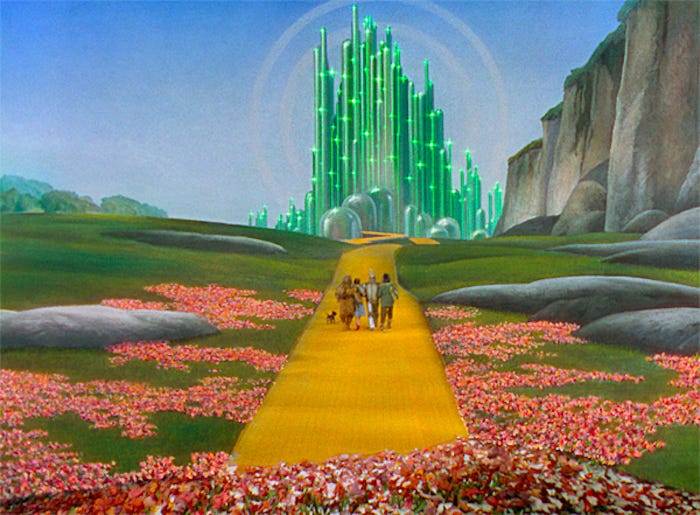
The road may serve as a metaphor for a life journey. Each of us is on a road to somewhere. Movies that reflect this theme can be an effective way to construct a story which causes the audience to draw a parallel to their own life-journey.
“Road pictures” have their roots in ancient stories like The Odyssey, where the hero goes on a literal and physical journey during which they explore new places, meet new faces, and rise to met new challenges. This story type was popular in the early days of Hollywood, but really took off with the emergence of America’s love affair with the automobile. Examples include:
It Happened One Night (1934)
The Wizard of Oz 1939)
Easy Rider (1969)
Duel (1971)
National Lampoon’s Vacation (1983)
Planes, Trains & Automobiles (1987)
Midnight Run (1988)
Rain Man (1988)
Wild at Heart (1990)
Thelma and Louise (1991)
Dumb and Dumber (1994)
The Straight Story (1999)
Almost Famous (2000)
Road Trip (2000)
Y Tu Mamá También (200
The Motorcycle Diaries (2004)
Sideways (2004)
Little Miss Sunshine (2006)
The End of the Tour (2015)
Logan (2017)
Why the allure of road pictures? Several reasons come to mind:
- The hero’s journey is an extension of and interplay with the emotional ‘journey’ (transformation) they are making in their Inner World, so an inherent synergy between plotline and themeline.
- Road pictures satisfy a viewer’s desire to travel, the psychological ‘pull of the road,’ the inner yearning to visit new places, the opportunity to present a ‘new’ face to strangers.
- Because of the travel, road pictures can be visually stimulating with different vistas and interesting characters along the way.
- One obvious plus that we might tend to overlook is road pictures generally have a compressed time frame (a day, two days, a week) which can sustain a heightened sense of pace.
- A journey by definition has a beginning and an end, generally a goal associated with that end-point, so this can create a natural ‘spine’ for the plotline.
- From a studio standpoint, the road element provides an easy marketing tool as contemporary moviegoers are quite familiar with the concept.
In some movies, like those referenced above, the road element is directly evident in the plot. There are other movies where it plays more of a background role such as Saving Private Ryan (1998) and Terminator 2: Judgment Day (1991).
Road pictures generally resolve in a ‘positive’ way — the Protagonist achieves their goal and realizes their emotional transformation — either with the P going back home or calling a new place home. However there are movies where the experiences of the road prove too much for the P such as Into the Wild (2007).
Have you ever written a road picture? Was it an easy story to write or difficult? And what are your favorite road pictures?