Story Type: Martial Arts
In Hollywood movie circles, there are genres like Horror or Science Fiction, cross genres like Action-Thriller or Drama-Comedy, and…
In Hollywood movie circles, there are genres like Horror or Science Fiction, cross genres like Action-Thriller or Drama-Comedy, and sub-genres like Romantic Comedy or Mystery Thriller.
Then there are story types, a shorthand way to describe a specific narrative conceit that is almost always tied directly to the movie’s central concept. They can be found in any genre, cross genre, or sub-genre.
Knowledge about and awareness of these story types can be a boost not only to your understanding of film history and movie trends, but also as fodder for brainstorming new story concepts. Mix and match them. Invert them. Gender bend them. Genre bend them. Geo bend them.
Story types exist for a reason: Because they work. Hopefully this series will help you make them work for you.
Today: Martial Arts.
Martial arts, kung fu, ninja, “chop sockey,” there are many variations in this movie story type, but they typically share some common traits:
* Action film with numerous fighting sequences.
* Highly technical fighting with stylized maneuvers and camera angles.
* A strong Asian influence with a majority of movies produced in Hong Kong, Thailand, and Indonesia.
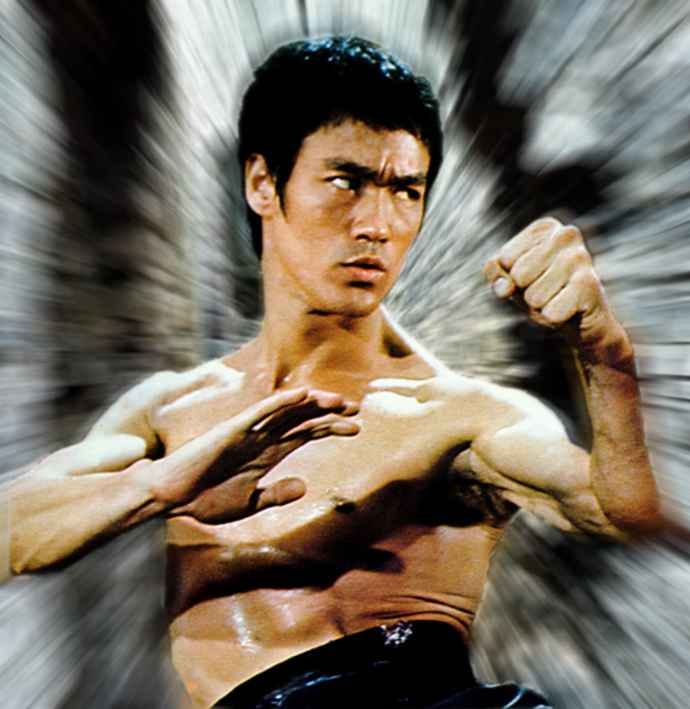
Martial arts movies feature numerous stars including Jackie Chan, Jet Li, Yuen Baio and the legendary Bruce Lee [pictured]. Hollywood has also produced martial arts figures including Chuck Norris, Steven Seagal, Jean-Claude Van Damme, and Jason Statham.
Some examples of martial arts movies:
The Chinese Connection (1972): A young man seeks vengence for the death of his teacher.
Enter the Dragon (1973): A martial artist agrees to spy on a reclusive crime lord using his invitation to a tournament there as cover.
The Shaolin Temple (1982): The son of a slave worker escapes to the Shaolin Temple, learns kung fu, and sets out to kill the traitor who killed his father.
The Last Dragon (1985): A young man searches for the “master” to obtain the final level of martial arts mastery known as the glow.
The Legend of Drunken Master (1994): Wong Fei-Hong is unwittingly caught up in the battle between foreigners who wish to export ancient Chinese artifacts and loyalists who don’t want the pieces to leave the country.
Blade (1998): A half-vampire, half-mortal man becomes a protector of the mortal race, while slaying evil vampires.
The Matrix (1999): A computer hacker learns from mysterious rebels about the true nature of his reality and his role in the war against its controllers.
Crouching Tiger, Hidden Dragon (2000: Two warriors in pursuit of a stolen sword and a notorious fugitive are led to an impetuous, physically-skilled, teenage nobleman’s daughter, who is at a crossroads in her life.
Ong-bak (2003): When the head of a statue sacred to a village is stolen, a young martial artist goes to the big city and finds himself taking on the underworld to retrieve it.
Fearless (2006): This film tells the story of Chinese Martial Arts Master Huo Yuanjia (1869–1910).
Ip Man (2008): A semi-biographical account of Yip Man, the first martial arts master to teach the Chinese martial art of Wing Chun.
Martial arts movies typically have a clear delineation between the Good Guys and the Bad Guys, the latter having hurt or killed somebody close to the former, or overlords ruthlessly ruling underlings. This allows a viewer to fully commit their positive feelings toward the Protagonist and negative feelings toward the Nemesis, thus animating battle sequences with those dual sets of emotions.
Another feature common to martial arts movies is training, often comprising 10% or more of screen time. This allows the viewer to see complex techniques slowed down and broken into composite parts, meaning that when the participants use those same moves in real time battle, we have a greater appreciation for the skill in play. There’s also this: To the degree we identify with the Protagonist as they undergo training, there is a subtle reinforcement that happens: If this character can master a skill, we can, too. Maybe not becoming a kung fu expert, but other areas of our own lives.
Finally, no martial arts movie is complete with a memorable Mentor character who distills some universal truth into simple, memorable lines of dialogue. To wit:
- It is better to sweat in practice than to bleed in battle.
- Practicing one hundred things is not as good as mastering one thing perfectly.
- The mind commands, strength goes along and follows.
What other qualities and dynamics do you think are present in most martial arts films? What other movies of note belong in the list?
For more Story Types articles, go here.