Story Type: Found Footage
In Hollywood movie circles, there are genres like Horror or Science Fiction, cross genres like Action-Thriller or Drama-Comedy, and…
In Hollywood movie circles, there are genres like Horror or Science Fiction, cross genres like Action-Thriller or Drama-Comedy, and sub-genres like Romantic Comedy or Mystery Thriller.
Then there are story types, a shorthand way to describe a specific narrative conceit that is almost always tied directly to the movie’s central concept. They can be found in any genre, cross genre, or sub-genre.
Knowledge about and awareness of these story types can be a boost not only to your understanding of film history and movie trends, but also as fodder for brainstorming new story concepts. Mix and match them. Invert them. Gender bend them. Genre bend them. Geo bend them.
Story types exist for a reason: Because they work. Hopefully this series will help you make them work for you.
Today: Found Footage.
Per its Wikipedia page:
Found footage is a genre of filmmaking, especially horror, in which all or a substantial part of a film is presented as discovered film or video recordings, often left behind by missing or dead protagonists. The events onscreen are seen through the camera of one or more of the characters involved, who often speaks offscreen. Filming may be done by the actors themselves as they recite their lines, and shaky camerawork is often employed for realism.
Some examples of found footage movies:
Cannibal Holocaust (1980): A New York University professor returns from a rescue mission to the Amazon rainforest with the footage shot by a lost team of documentarians who were making a film about the area’s local cannibal tribes.
Man Bites Dog (1992): A camera crew follows a serial killer/thief around as he exercises his craft.
The Last Broadcast (1998): Bristling with equipment, two enthusiastic local access cable TV producers recruit an assistant and venture into a forest in search of the mythical and horrifying Jersey Devil.
The Blair Witch Project (1999): Three film students travel to Maryland to make a student film about a local urban legend: The Blair Witch.
Noroi: The Curse (2005): A documentary filmmaker explores seemingly unrelated paranormal incidents connected by the legend of an ancient demon called the “kagutaba.”
[Rec] (2007): “REC” turns on a young TV reporter and her cameraman who cover the night shift at the local fire station.
Diary of the Dead (2007): A group of young film students run into real-life zombies while filming a horror movie of their own.
Cloverfield (2008): Revolves around a monster attack in New York as told from the point of view of a small group of people.
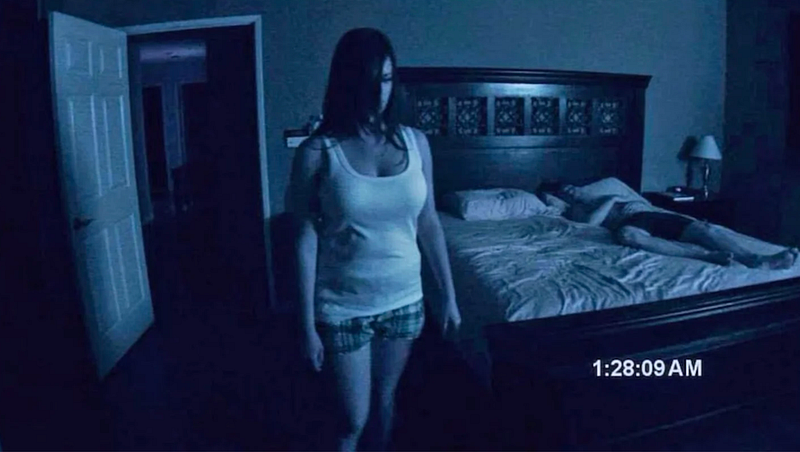
Paranormal Activity (2009): After moving into a suburban home, a couple becomes increasingly disturbed by a nightly demonic presence.
The Last Exorcism (2010): A troubled evangelical minister agrees to let his last exorcism be filmed by a documentary crew.
Apollo 18 (2011): Decades-old found footage from NASA’s abandoned Apollo 18 mission, where two American astronauts were sent on a secret expedition, reveals the reason the U.S. has never returned to the moon.
If you visit the Wikipedia page linked above, you will be amazed to see how many found footage movies have been produced in the last decade. Why?
First, the very idea of the central conceit — found footage — can translate into low budget filmmaking. If the audience is expecting to see raw footage, then filmmakers can embrace that and cut costs at the same time.
Second, viewers seem to be drawn to found footage movies because they create a heightened sense of reality making the viewing experience that much more realistic and visceral.
What other qualities and dynamics do you think are present in found footage movies? What other films of note belong in the list?
For other Story Type articles, go here.