So-Called Screenwriting ‘Rules’: Part 13
There are conventions. There are expectations. There are patterns. But the simple fact is… THERE ARE NO SCREENWRITING RULES!

There are conventions. There are expectations. There are patterns. But the simple fact is… THERE ARE NO SCREENWRITING RULES!
Awhile back, I posted this about an occurrence that happens with irritating regularity in the online screenwriting universe: The contentious specter of so-called screenwriting ‘rules’. More below.
What happens is pretty much this:
- Somebody posts something about how there is a rule against doing this or that.
- That circulates as people bat around the idea.
- Professional writers catch wind of it, then lambaste the shit out of the thesis in question.
- The ‘debate’ fades away…
- Until the next time it arises.
- Again…
- And again…
So it occurred to me, why not just deal with it once and for all! Get every single supposed screenwriting rule out on the table, then go through them, one by one, to see if we can take all the heat that typically gets generated when one of these online snits breaks out and collectively create some actual light.
In other words, let’s make this a real learning experience and hopefully in the process, put some of this nonsense to bed for good.
I asked for your help in aggregating these ‘rules’ and as always, the GITS community responded. I’ve gone through them all, thought about it, and here is my plan: Do a 3-week series on “So-Called Screenwriting ‘Rules’”.
Week 1: As long as we’re going to take the time to go through this stuff, I figured we might as well put it all into some perspective: historical, theoretical, and practical. I’m going to start that process today:
Part 1: The Organic Nature of the Screenplay
Part 2: The Emergence of the Selling Script
Part 3: The Evolution of Screenplay Format and Style
Part 4: There are no screenwriting ‘rules’
Part 5: There are expectations
Week 2: I’ve sorted out five real nuts-and-bolts items which I will analyze and discuss one per day in our second week:
Part 6: We See / We Hear
Part 7: Unfilmables
Part 8: Action Paragraphs — 3 Lines Max
Part 9: CUT TO (Transitions)
Part 10: Parentheticals
Week 3: Readers made several suggestions that are about larger narrative choices, so let’s take those on as well:
Part 11: Flashbacks
Part 12: Voice-over Narration
Part 13: Sympathetic Protagonist
Part 14: Protagonist and Shifting Goals
Part 15: Certain Events By Certain Pages
Before we jump into this, a caveat: Everything I post in this series is my opinion. I think it’s safe to say it’s a pretty well-informed take seeing as I’ve been writing scripts since 1986 and teaching since 2002. But again, I’m simply expressing my perspective. It’s incumbent upon you to sort out your own approach to screenwriting style and the single best thing you can do in that regard is read scripts, especially screenplays written within the last 5 years as they represent the latest trends.
With that, forward into the breach!
Part 13: Sympathetic Protagonist
I’m willing to wager that every writer who has worked in Hollywood has gotten this studio note at least once: Can you make the Protagonist more sympathetic?
This is part of the conventional wisdom that floats around script development circles and can be construed as being a rule: Your Protagonist must be sympathetic.
Indeed I extracted a screenwriting lesson from the movie The King’s Speech exploring this precise subject in this post dated February 2011. In it, I provide some of what I perceive to be the internal logic to this perspective:
To fully understand this mindset, we have to step back and consider the movie-watching experience. To create a successful movie, one goal the filmmakers should have is to lure the viewer into the movie — make them stop thinking about their job, their popcorn, the people around them, and instead get their heads and hearts immersed in what’s going on inside the story universe. If a movie can transport us from this world into that world, it increases the movie’s chances of being experienced in a positive way. After all, isn’t that the point of movies as escapist fare — to take us away from our ordinary world and entertain us for a few hours in the story’s extraordinary world?
The most direct and perhaps best way to accomplish that is via the Protagonist character. From a psychological standpoint, there is a way in which it’s not the Protagonist alone going through what they experience in the movie universe, it’s the Protagonist and us sharing it. Indeed at some heightened points in a movie, it’s possible the Protagonist disappears entirely from our consciousness and it is just us experiencing what’s going on in the story.
We can call this phenomenon audience identification and it is one key to the success of most Protagonist characters, how we identify with that pivotal character in some fundamental and powerful way which in turn transports us into the story universe.
Hollywood is not stupid. They know the simplest, easiest way to accomplish audience identification is by telling stories with sympathetic Protagonists. The fact is we are much more likely to identify with a Protagonist if we sympathize with them. So as far as the studios are concerned, screenwriters should accept that as a given and go write them a hit script.
If you read the post, you will see several examples of how screenwriter David Seidler went to great lengths to establish points of connection so that the audience would, indeed, sympathize with the Protagonist of The King’s Speech: Prince George (played by Colin Firth).
It may be true that creating a sympathetic Protagonist is easiest way to engender audience identification, but it is not the only way. Nor does every movie have to have a Protagonist who drips sympathy. In this post (January 2009), which explored the rather stunning box office success of Paul Blart: Mall Cop, I noted a big key is how the story went to great lengths to up the sympathy factor for the Protagonist. However, I took the opportunity to quote writer-director Alexander Payne (Election, Sideways, Nebraska) on the subject:
Payne agrees: “I never talk about sympathetic characters. Number one, the truth is sympathetic. Number two, we make comedies so we want the movie to be sympathetic…we’re interested in people, we want to see truthful people…we show our love for people precisely by including all aspects [of a character], as many as we can, in the limited form of a two-hour film.” Payne says that if an exec says your protagonist isn’t sympathetic, just say: “It hasn’t been cast yet. That’s the answer.” The right actor can warm the audience up to any role, even if it appears unlikable on the page. Payne: “Why are we interested in Alex in A CLOCKWORK ORANGE? Why are we interested in Michael Corleone? They’re fascinating. What’s more interesting, a cobra or a kitten?” Beware, Payne says, “especially when you’re talking about likeable. Just avoid those discussions, they’re tiring. Don’t get lured into the turf of those discussions, because they’re moronic.”

Indeed, this is true. There are plenty of movies that feature decidedly unsympathetic Protagonists, a note I made in this post (June 2012) in which I took up a reader question: “Are there any script rules that really shouldn’t be broken?” Here is part of my response:
I don’t think there are any rules for screenwriting. There are important principles, and dozens of tips and techniques. There is also a lot of ‘conventional wisdom’ floating around that gets transmogrified into being perceived as rules, and that is where the problem lies.
Stories are organic. Even in a screenplay, which is heavily structured by virtue of it being the blueprint for producing a movie, the underlying story — that universe, its characters, the events that transpire there — all have to feel alive, spontaneous, and native to that narrative environment.
Enter the plethora of screenwriting approaches, theories, paradigms, models, and formulas. While some of them reflect dynamics that are innate to story itself and what people expect when they read or see a story, once they get codified in the minds of writers, a big problem arises: The writer can write to the formula instead of to the story. Hence all the complaints from moviegoers about formulaic movies. And by the way, the complaint exists within Hollywood script development circles, too, as folks there often lament being forced to read one formulaic script after another.
Besides if you give me a supposed screenwriting rule, I am 99% positive I can come up with a movie that breaks it.
Movies have to be told with a linear narrative. Consider Memento, Pulp Fiction, or Betrayal.
Movies have to have a sympathetic Protagonist. Consider Sideways, As Good As It Gets, and Taxi Driver.
Movies always have to have a happy ending. Consider Citizen Kane, Shakespeare in Love, and Manon des Sources.
If movies like Sideways, As Good As It Gets, and Taxi Driver don’t rock your “A movie must have a sympathetic Protagonist” universe, how about Mark Zuckerberg as portrayed in The Social Network? I analyzed this movie and drew several screenwriting lessons from it including this post from February 2011 in which I assess the movie’s Protagonist figure:
Let us count the ways we can consider this Protagonist to be an asshole:
* He’s demeaning to Erica when he talks to her in the opening scene.
* After their break-up, he immediately creates a website and blogs to the world, “Erica Albright’s a bitch… do you think all B.U. girls are bitches,” then provides dirt on the minimal size of her breasts.
* He listens to the Winklevoss twins pitch their idea for Harvard Connection, then turns right around and pitches something strikingly similar — as if it’s his own idea– to his best friend Eduardo.
* He takes start-up money from Eduardo without telling him about the project’s roots, thereby ensnaring Eduardo in future business hassles.
* He strings along the Winklevoss brothers, supposedly working on their project when he actually works on his.
And that’s only the tip of unsympathetic iceberg which led me to this question:
So why in the world does The Social Network work if it flies directly in the face of one of the most widely held beliefs in Hollywood — that in order for a movie to succeed, it needs to have a sympathetic Protagonist?
Because in Zuckerberg, Sorkin created a compelling character. He may not be likable. Or sympathetic. But he’s damn interesting:
* Youngest billionaire in the world.
* Created a social network that has transformed hundreds of millions of lives, even world politics.
* Caught up in not one, but two massive lawsuits.
* He has a brilliant mind.
Per this last point, frankly if you go through all his dialogue where his egocentricity is in full bloom and he is being an asshole, we can’t help but be fascinated to hear what will come out of this guy’s mouth next.
If there is one thing that the emergence of the so-called Second Golden Age of Television has taught us, it’s that people are fascinated by deeply flawed Protagonists who explore their inner demons and sometimes just flat-out do dastardly shit… like this dude:
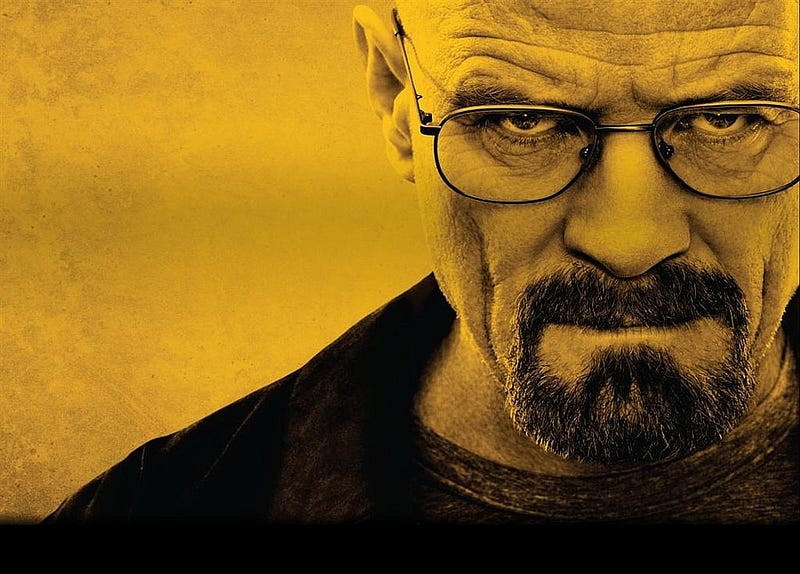
Where does this leave us? Clearly, there is no rule in Hollywood that a movie must have a sympathetic Protagonist. However, we do know this: The line of least resistance, both in terms of creating audience identification and, as a result, hitting studio execs’ comfort level, is working with a sympathetic Protagonist. If you want to play it safe, this is your path.
That does not mean you have to write a sympathetic Protagonist. Write what your story compels you to write. If your Protagonist is a psychopath (American Psycho), narcissist (Citizen Kane), greedy bastard (The Wolf of Wall Street), whatever, you have the freedom to write and work with that character.
Just be sure to make him/her compelling, a character a reader will be fascinated enough by so they are unable to put down your script.
NOTE: There’s a whole other angle on this about empathy which is different than sympathy. If you want me to get into that, hit me up in comments and I’ll post some thoughts on the matter.
Next: Protagonist and Shifting Goals.