So-Called Screenwriting Rule: Unfilmables
I don’t know who came up with this term — unfilmables — but please stop! How much proof does one have to see to know it is a wrongheaded…
I don’t know who came up with this term — unfilmables — but please stop! How much proof does one have to see to know it is a wrongheaded approach to screenwriting.
This came up in a thread recently about the script for (500) Days of Summer, written by Scott Neustadter and Michael H. Weber:
mention unfilmables, but actually that’s probably unfair. They were all filmable, because they got filmed. Every damn one of them. For reasons unclear to me, I seem to have an extremely good recollection of that movie, and the script to page comparison here is so near-identical it’s hardly worth bothering. ‘CLOSE on Tom, looking at Summer the way every woman wants to be looked at’. Nailed it. She’s ‘pretty enough to get away with’ her kooky hair. Gotcha. ‘It should look like the dandelions originated with Tom’s breath. That sort of thing. Anyway…’ Hate to say, but damn that’s good. Because this should really angry up my blood, but it doesn’t. It works. It just does.
To which I responded:
This is all part of the choices the writer takes with “Narrative Voice,” an extension of that invisible character’s personality.
And a quick aside about so-called ‘unfilmables’: There should be NO debates anymore. Ever. The idea that we can’t write what actors can’t act or what someone in a movie theater can’t see is completely wrong.
I used to teach a a semester-long course called “The History of American Screenwriting” and part of that research involved tracking script evolution since the 1890s. I found so-called ‘unfilmables’ stretching back to the silent era. For decades screenwriters have done whatever they could to tell stories the best way they can and this extends to what I call ‘editorializing’ in scene description, commenting on the atmosphere of the moment, or the inner feelings of a character, and on and on and on.
Yes, we have to be judicious — a screenplay is not a novel after all — but can we once and for all lay to rest this crazy idea that there are certain things we can not write in a screenplay. It’s proven wrong over and over in contemporary screenplays, and so-called ‘unfilmables’ have been in use for almost the entire time there have been formalized screenplays.
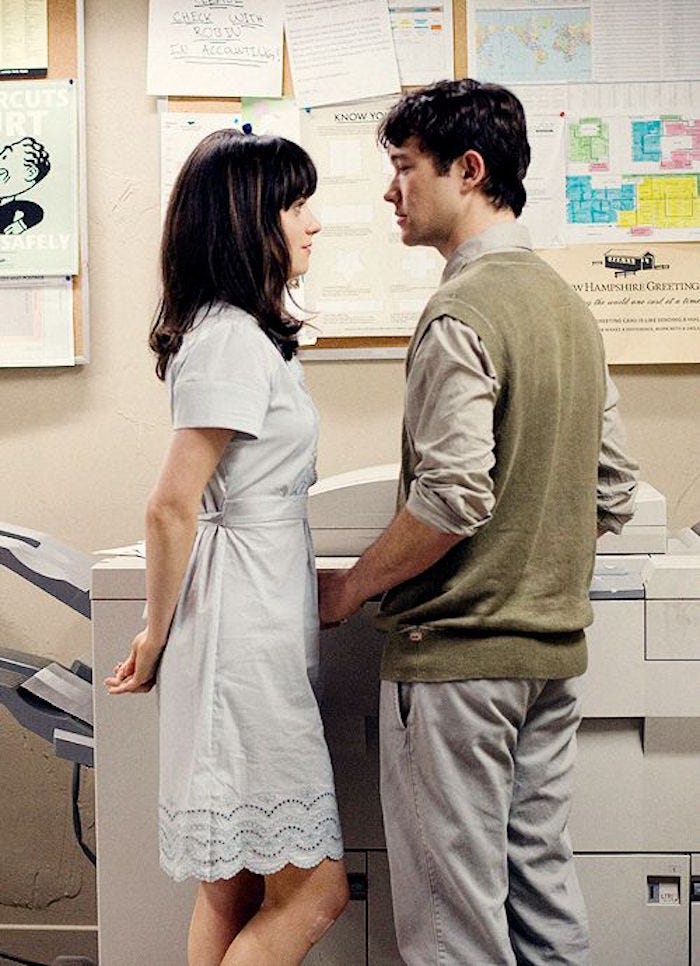
This whole mentality about what you can and can’t do in terms of screenplay format and style is completely off-base. All we need to do is look at… gee, I don’t know… how about (500) Days of Summer to see that notion of ‘unfilmables’ is flat-out wrong, disproved by a script that was nominated for the WGA Best Original Screenplay Award. Some more examples from the script:
- P. 7: Tom watches her eat like this is the worst travesty in the history of mankind.
- P. 8: He may never eat again.
- P. 25: He’s really into it and, well, it’s kinda sad.
- P. 26: Even her uncoolness is cool.
- P. 32: The wheels are spinning in Tom’s head. What’s the right answer here?
- P. 33: Tom makes copies. Making copies sure is dull.
And on and on and on and on. By subscribing to an inaccurate supposition that screenwriters can only write what a moviegoer can see cuts at the very heart of Narrative Voice. Here is a quote from screenwriter Larry Ferguson (The Hunt for Red October) precisely about this point:
The first thing you gotta do is sit down and ask, who’s telling this story? Who grabs hold of you and says, Listen I’m gonna tell you something that’ll knock your socks off. He’s a character. He speaks in a particular way, sometimes uses profanity, sometimes he’s a poet.
Skeptics say, Hey, you can’t take a picture of that… maybe not, but you know what Don Simpson said to me on Beverly Hills Cop II? He said, Jerry [Bruckheimer] and I love the style of your stage description. We know we can’t shoot them, but we can shoot the tone.
That is straight from the mouth of a professional screenwriter, a working screenwriter. They may not be able to shoot the scene description, the ‘unfilmables,’ but they can shoot the tone.
Look, it’s up to each writer. There is the world of whoever it is that is spreading this nonsense you can’t write something that is unfilmable in scene description, or there is the real world of screenwriting with actual screenwriters and actual movie projects where scripts include unfilmables all the time. Yes, you have to be judicious, you are not writing a novel and you have to be aware of that. But your number one priority is to your story. And if that silent character in your story, its Narrative Voice, pipes up with a line like, “Making copies sure is dull,” then you have not only the freedom, but the responsibility to write that scene description. Because at the end of the day, your job is to tell the story in the most entertaining way possible.
Period!
I call this use of one’s Narrative Voice — commenting on the moment — editorializing and it has been around since the very beginning of the film industry. More proof: The 1969 movie Butch Cassidy and the Sundance Kid, written as a spec script by William Goldman, selling for several hundred thousand dollars. Here is how Goldman introduces Butch Cassidy:
A MANidly walking around a corner of the building. He is
BUTCH CASSIDY and hard to pin down. Thirty-five and bright,
he has brown hair, but most people, if asked to describe
him, would remember him blond. He speaks well and quickly,
and has been all his life a leader of men; but if you asked
him, he would be damned if he could tell you why.
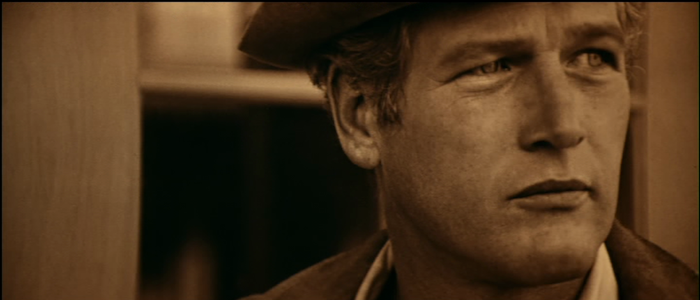
At least half of this scene description qualifies as ‘unfilmable.’ But what does William Goldman know? He only wrote dozens of movies and the best book on the craft ever (“Adventures in the Screen Trade”).
Three points of caution:
- A screenplay differs from a novel in many ways, one of the most significant being it is primarily an externalized reality. So the fundamental way we, as writers, communicate characters to the reader is through their actions and dialogue, what we can see and what we can hear. That is our default venue for writing.
- Just like other so-called ‘rules,’ I suspect this one has arisen because too many writers have editorialized badly or too much or most likely both. So some readers may carry with them an expectation that if they see a script with a lot of unfilmables, that is a sign of an amateur writer.
- You do not have to editorialize in scene description. It should be a choice tied to your Narrative Voice, that invisible character in your story [Genre + Style = Narrative Voice]. The attitude this character takes to the narrative should impact how much or how little editorializing you do. Some stick to the straight and narrow, only describing the action. But many engage in a certain amount of editorializing about the mood, tone, what’s going on inside character’s minds, their inner feelings, and so forth.
Once again, it’s best to think of the mantra: Tools, not rules.
Instead of this: You must never write an unfilmable!
How about this: You have the freedom to editorialize on the moment as long as you do it thoughtfully and in concert with your Narrative Voice.
Rule is negative in nature and restricts creativity.
Tool is positive and encourages creativity.
Finally this: The single best thing you can do to wrangle this subject as you go about determining what your own writing style is: Read scripts. Lots of them. Mostly contemporary ones. The more you read, the better you will grasp the subtleties of the practice of editorializing in scene description.
Here is the link to the Bitter Script Reader’s thoughts on the subject of “Unfilmables”. It is a must-read because you will get the honest, unvarnished opinion of someone who actually reads scripts for buyers.