Sex in Cinema
Reflections on a Playboy magazine article by the Black List’s Director of Community on what’s happening to sex on the silver screen.
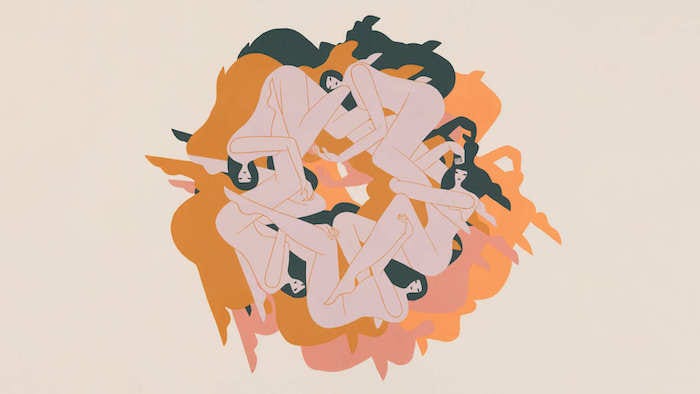
Reflections on a Playboy magazine article by the Black List’s Director of Community on what’s happening to sex on the silver screen.
Kate Hagen is the Director of Community at the Black List and over the years of my association with Franklin Leonard and company, Kate and I have had numerous conversations about movies. I like to think I know quite a bit about cinema and film history, but I bow down to Kate. How a person who’s less than half my age has seen as many films as she has and, as importantly, understands them as deeply as she does is beyond me.
In August 2018, I was in Los Angeles as a mentor and workshop facilitator for that year’s Black List Feature Writer’s Lab. Driving around L.A. with Kate from one event to the next, we had an ongoing conversation about great sex scenes from movies in the 80s and 90s (“Remember that scene with Dennis Quaid and Ellen Barkin in The Big Easy… What about the limo sex between Sean Young and Kevin Costner in No Way Out”).
At some point, Kate asked, “Where are all the great sex scenes in movies nowadays? Hell, where are any sex scenes today?”
Kate was right. Where has the sex gone in movies?
There’s porn, of course, but I’m talking about mainstream and even independent films.
As it turns out this week, Playboy magazine features an article written by Kate (“Sex in Cinema”) in which she tackles this subject and beyond. Sex on screen is an important subject for filmmakers. As Kate writes:
A spectacular sex scene appeals to our lusting lizard brains, but everything that unfolds around the fucking is what invites audience members to invest and empathize with the characters: the tight clasp of Linda Hamilton’s and Michael Biehn’s hands during their pivotal coupling in The Terminator, or the sobering POV shots as Jennifer Jason Leigh bids adieu to her virginity in Fast Times at Ridgemont High. Through sex, we’re able to gaze at our most beloved stars during moments of exceptional vulnerability, allowing deeper emotional connections — ones that can validate our own desires.
Here is an excerpt from Kate’s article:
I’ve been troubled by the state of sex in movies for the past few years. My fears are confirmed by data from IMDb: Only 1.21 percent of the 148,012 feature-length films released since 2010 contain depictions of sex. That percentage is the lowest since the 1960s. Sex in cinema peaked in the 1990s, the heyday of the erotic thriller, with 1.79 percent of all films featuring sex scenes. That half-point decline is massive in relative terms, considering almost four times as many films have been released in the 2010s as in the 1990s.
Studio releases simply aren’t keeping up with the conversations about sex, gender and relationships that have been amplified by Generation Z’s progressive attitudes and a #MeToo-driven cultural reckoning. Mainstream film surely isn’t representative of the kinds of love and sex I experience in my life as a bisexual woman. We’ve only begun to flirt with respectful depictions of queer sex, kink and sex work on-screen, but those stories often live and die in the art houses. Countless nuanced perspectives remain unexplored by studios.
As I investigated the state of sex in cinema, I became frustrated with the attempts to assign blame for the slump. Scapegoats include the rise of streaming tube sites and smartphone dependence. But like the complexities of human attraction, the factors that led to the decline of sex in movies are intertwined with our own media history — both as individual viewers and as a collective audience that isn’t getting laid as often as we did 20 years ago.
According to a November 2017 article in Archives of Sexual Behavior, American adults had sex about nine fewer times per year in the early 2010s than adults in the late 1990s. A 2016 LinkedIn study determined that entertainment is the top industry for young workers, which suggests we may be seeing less sex at the movies because Hollywood is full of undersexed millennials. (And why not blame another cultural catastrophe on millennials?) But that theory falls apart when you consider that the six major studios are run by baby boomers and GenXers — who reportedly have more sex than the younger cohort. If industry gatekeepers are so sexually active, shouldn’t there be more sex on release slates?
Consider the most successful erotic thriller ever made: Adrian Lyne’s Fatal Attraction, which grossed more than $155 million domestically and was nominated for six Academy Awards, including best picture, in 1987. With its chaotic sex, Oscar-nominated performance from Glenn Close (“I won’t be ignored, Dan” still haunts me) and controversial climax, Fatal Attraction gained the kind of cultural ubiquity now reserved for franchises and IP-driven tentpoles, not middle-budget adult dramas.
To further contextualize Fatal Attraction’s success, its adjusted domestic box office is nearly $360 million. If released in 2019, it would be the year’s sixth-highest-grossing domestic release, behind four Disney films and one Sony/Marvel/Disney crossover. There’s simply no way a movie like Fatal Attraction, with its languorous erotic intrigue and troubling morality, could compete with a Marvel giant in our current landscape, nor gain the same awards heat.
Beyond stories with explicit eroticism, five of the 100 all-time highest domestic grossers — Avatar, Titanic, Deadpool, Forrest Gump, Skyfall and Twilight: Breaking Dawn–Part 2 — feature depictions of sex. At five percent, this list over-indexes when compared with the percentage of sex scenes in all movies, but with alien sex, superhero sex and vampire sex, these movies are not representative of anyone’s sexual experiences (I imagine). What’s more, not a single female director is responsible for these titles.
The exceptions to the major studios’ sex strike are the adaptations of Fifty Shades of Grey, EL James’s problematic fantasy about the luxury of heteronormative submission. The first Fifty Shades film — and the only one lensed by a woman, Sam Taylor-Johnson — grossed more than 10 times its $40 million budget. In total, all three films in the franchise made more than $1.3 billion worldwide, without showing a single penis.
You should read the entire article as it’s a fascinating dive into a wide-ranging subject including sex and streaming services, alt porn, celebrity “deepfakes,” the influence on the depiction of sex on screen as a result of the growing presence of female filmmakers, and a lot more.
For screenwriters, one major takeaway is what Kate intimates about how a compelling sex scene “invites audience members to invest and empathize with the characters.” If it is true that part of the allure of watching a movie is to live vicariously through a character’s experience, most especially the Protagonist, then scenes of shared intimacy and the vulnerability one character opens themselves up to by displaying their body parts to another character can be a powerful way to create an emotionally charged scene.
In 1987 the year I broke into the business as a screenwriter, I remember going to see what turned out to be a bad action movie with my writing partner and a development executive at MGM. As the movie was nearing the end of a rather mindless chase sequence, the exec leaned toward me and whispered, “In the next scene, they’re going to have sex,” referring to the Protagonist and the female character he was currently protecting. Sure enough, the next scene, cue the tenor sax as the couple coupled on screen. As the exec later explained, “The hero just earned getting laid by saving her. Besides, they have to have sex then because she’s going to get kidnapped by the bad guy in the next scene” — which she did.
That’s NOT what I’m talking about. That’s filmmaking at its worst, where characters must have sex on P. 75–80 or some such formulaic nonsense.
I’m talking about the awkward sex between Lady Bird and Kyle in Lady Bird:
The encounter between an adolescent Chiron and his friend Kevin on the beach in Moonlight:
The explosive connection between Nina and Lily in Black Swan:
Each of these scenes uses sex as a way of conveying character, where the Protagonist is at that precise moment psychologically and how the specific physical encounter creates ramifications as they move forward in their journey.
A good character has multiple layers in their psyche and that includes their attitudes and desires with regard to sex. As writers, while living with and developing our characters, we should be on the lookout for scenes in which a character’s sexuality can convey something essential about who they are, where they are… and where they are going.
Besides, who doesn’t like a good sex scene in a movie every now and then?
For the rest of Kate Hagen’s “Sex in Cinema” article in the latest issue of Playboy, go here.