Set-up and Payoffs
One of the most important narrative elements screenwriters have available to us is set-ups and payoffs. The basic idea is this: We…

One of the most important narrative elements screenwriters have available to us is set-ups and payoffs. The basic idea is this: We establish something that pays off later. Here are some examples:
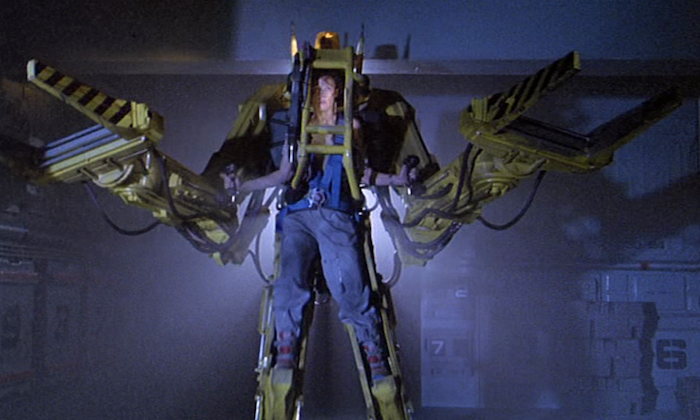
- Aliens: In an attempt to make herself useful, Ripley sets up how she can control a power loader. This pays off later when she engages the alien ‘mother’ in combat and delivers her classic line, “Get away from her, you bitch!”
- The Dark Knight: At dinner with Bruce Wayne, Harvey Dent provides a set-up when he says, “You either a die a hero, or live long enough to see yourself become the villain.” By the movie’s end, Dent pays off the truth of his own words.
- The Shawshank Redemption: Warden Norton creates a set-up when he returns Andy’s Bible and says, “Salvation lies within.” This gets paid off when Norton opens Andy’s Bible which is inscribed, “You were right. Salvation lies within,” and Norton sees the hollowed-out pages Andy used to hide his rock hammer.
- Magnolia: The numbers “8” and “2”. There’s an 82% chance of rain. Science convention begins at 8:20. That’s a set-up tied to Exodus 8:2: “If you refuse to let them go, I will plague your whole country with frogs.” Which pays off at the end of the movie.
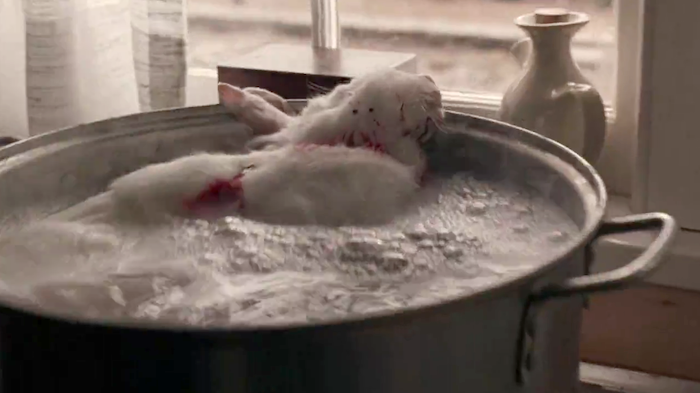
- Fatal Attraction: Alex creates a set-up when she tells Dan, “I’m great with animals and I love to cook.” The boiled bunny rabbit serves as the payoff.
Implicit in the set-up / payoff dynamic is the idea of foreshadowing whereby the writer gives the script reader an insight into events that will happen later on before they understand the significance of those occurrences. It can be an especially effective psychological ploy for several reasons:
- It can get the reader’s attention: Presented without context, a foreshadowed event can surprise the reader as the opening of The Hangover.
- It can raise the reader’s curiosity: A foreshadowed moment can cause the reader to wonder what is going on, what is the significance of this, why am I seeing this now, like the cold opening of Fight Club.
- It can create a sense of mystery: A foreshadowed image can generate a riddle we carry with us all the way through the script as in perhaps one of the most famous set-ups of all time — this “Rosebud” scene in Citizen Kane.
A great example of set-ups is the opening of Back to the Future [you can see an homage by high school students to that scene here]. Consider all the details that pay off later:
- The coffee maker with no pot. This sets up the fact that Doc Brown is not at home, indeed, hasn’t been here for at least a few days.
- A TV Anchorman talks about the theft of plutonium from a research facility and suspected Libyan terrorists. That sets up the fuel rods for the DeLorean time travel machine and the men who shoot Doc Brown.
- Einstein’s overflowing bowl of dog food. This sets up Doc Brown’s dog who does the first time travel experiment.
- Marty’s skateboard. This sets up a whole runner for how Marty gets around in the present — and then in an improvisational fashion in the past.
- The skateboard rolls across the floor and hits a container marked “Plutonium”. See above.
- Marty playing guitar. Loud. This sets up the fact that Marty is a musician [another runner] and that he likes to show off when he plays [which we see in the present and the past].
- Phone call from Doc Brown. This sets up two things. One: He asks Marty to meet him at Twin Pines Mall at 1:15, which Marty does. Two: The clocks going off at 8AM confirms for Doc Brown that his experiment worked. And as a nice grace note, when Mary discovers the clocks are 25 minutes slow, he hustles out of there — late for school — into the movie’s opening credits.
Another good example is The Sixth Sense. Look at this scene at the very end and consider how this series of payoffs [told as flashbacks] lead Malcolm to the startling conclusion that he is a ghost:
- Cole: “I see people. They don’t know they’re dead… they only see what they want to see.”
- The kitchen table where Malcolm’s wife Anna has been dining… alone.
- Their meeting at the restaurant where Anna picked up the tab.
- The basement door with the red handle Malcolm couldn’t open.
- The frost emitted from Anna’s lips.
- And of course, the gunshot to Malcolm’s abdomen.
The Sixth Sense is one of the most notable examples of what is known in Hollywood as a Big Twist movie. To pull that off, the writer needs to set up those surprising payoffs [see also The Usual Suspects, Se7en, Psycho, Memento].
Set-ups and payoffs are terrific tools for screenwriters. Don’t forget to use them!