Script To Screen: “The Departed”
The violent elevator scene in the 2006 movie, screenplay by William Monahan.

The violent elevator scene in the 2006 movie, screenplay by William Monahan.
Setup: An undercover cop (Billy) and a mole in the police (Cole) attempt to identify each other while infiltrating an Irish gang in South Boston.
The scripted version of the scene:

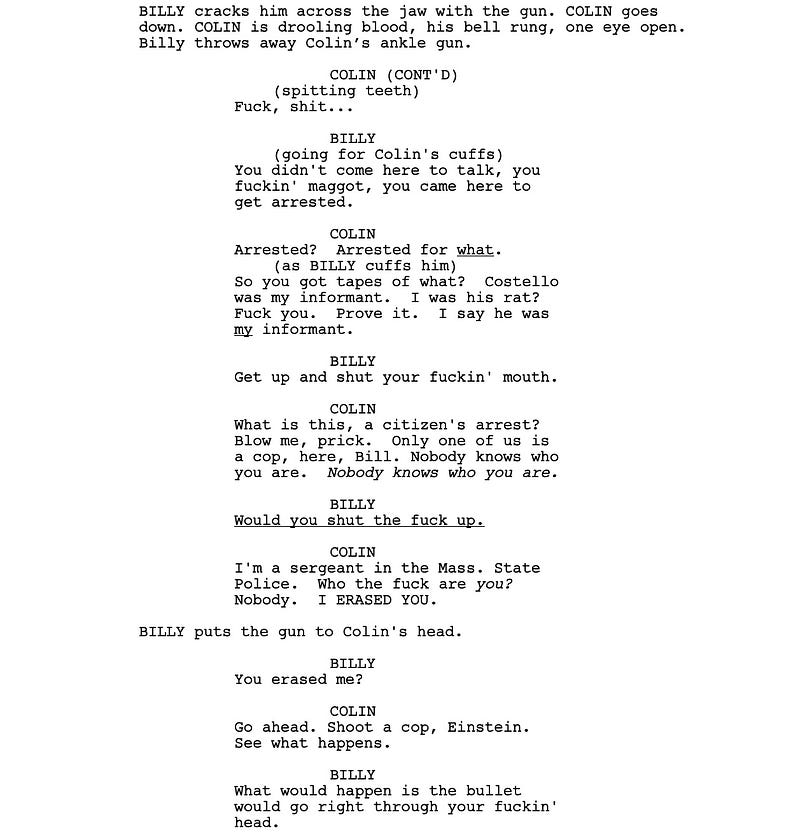

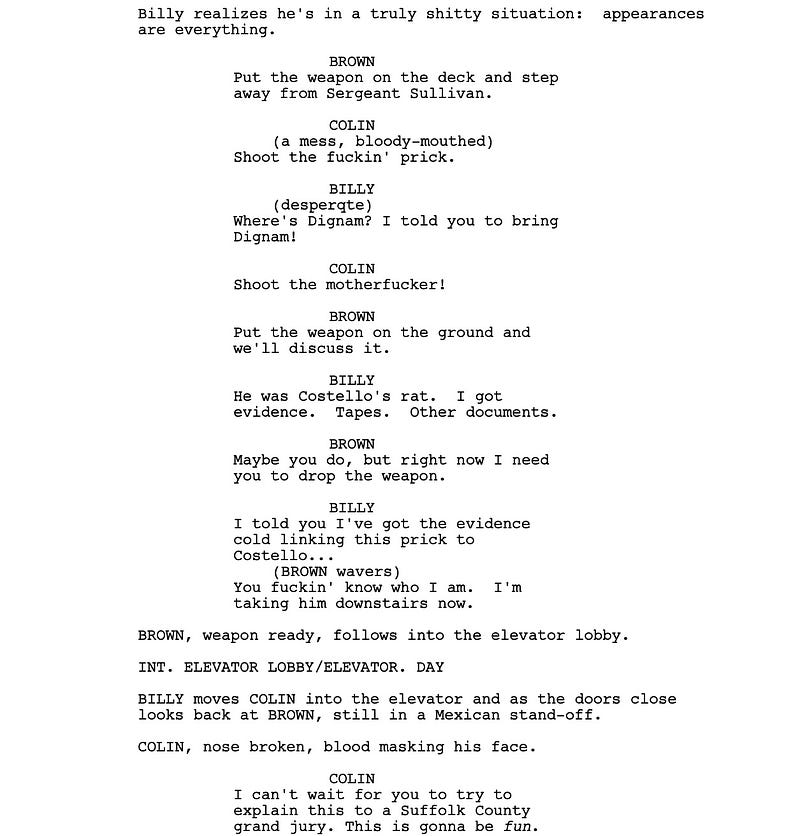
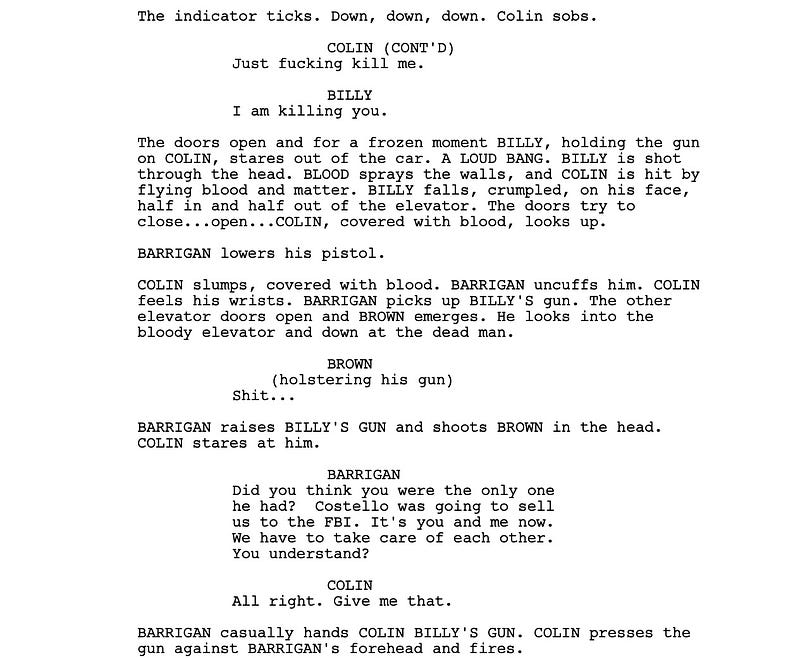
The movie version of the scene:
The movie is awfully close to the script. There is some added dialogue likely improvised. For example, Colin keeps making the point to Brown to shoot Billy, that line gets repeated more than in the script, but the overall structure is the same. Four things to note:
- The scene description is lean and efficient. It’s an action scene. No time to dawdle with the prose. The taut description matches the scene’s pace and mood.
- Notice something about this scene description? “COLIN is hammered to his knees. Head down, blood in his hair, drooling blood, thinking (impossibly) about his next move. He seems to realize he’s fucked.” That is a so-called ‘unfilmable.’ It describes a character’s inner thoughts. Yet again, a screenplay by a professional screenwriter breaks this supposed ‘rule’ in order to delve more deeply into the emotional undercurrents of the scene.
- “BILLY falls, crumpled, on his face, half in and half out of the elevator. The doors try to close…open…” It’s one of the more memorable visuals in the scene, the awkward back and forth of the door. My guess is this is a shot the director Martin Scorsese wanted, so it was included in the script.
- There is one subtle, but significant change from the script. As written, Colin says to Barrigan, “Give me that,” referring to Billy’s gun, then shoots him. In the movie, Colin picks up the gun off the ground and starts to wipe it clean of fingerprints, then turns it on Barrigan and fires the weapon at Barrigan killing him. My guess is this changed in order to make Barrigan look less gullible by willingly handing over a weapon to a violent criminal, even if they ostensibly on the same side.
Takeaway: Make sure the style of your scene description matches the story’s genre. Genre + Style = Narrative Voice.
One of the single best things you can do to learn the craft of screenwriting is to read the script while watching the movie. After all a screenplay is a blueprint to make a movie and it’s that magic of what happens between printed page and final print that can inform how you approach writing scenes. That is the purpose of Script to Screen, where we analyze a memorable movie scene and the script pages that inspired it.
For more articles in the Script To Screen series, go here.