Script To Screen: “The Birds”
A scene from the 1963 Alfred Hitchcock thriller The Birds, screenplay by Evan Hunter, short story by Daphne Du Maurier.
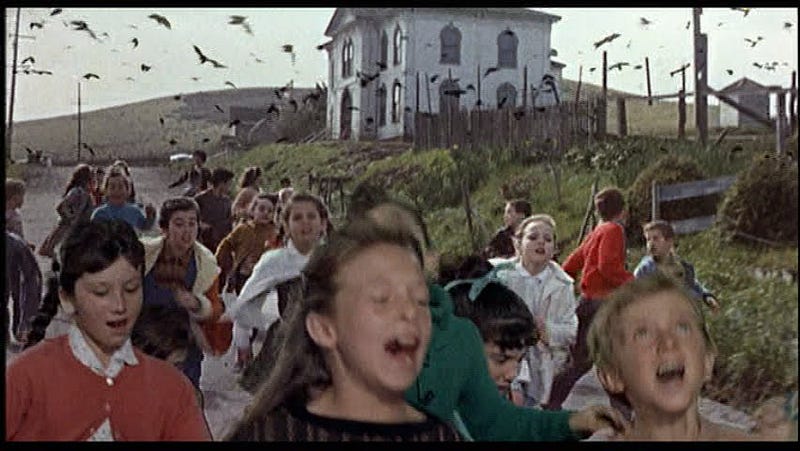
A scene from the 1963 Alfred Hitchcock thriller The Birds, screenplay by Evan Hunter, short story by Daphne Du Maurier.
IMDb Plot Summary: A wealthy San Francisco socialite pursues a potential boyfriend to a small Northern California town that slowly takes a turn for the bizarre when birds of all kinds suddenly begin to attack people there in increasing numbers and with increasing viciousness.
This is one of the more memorable scenes in the movie: school children attempting to escape an onslaught of attacking birds.
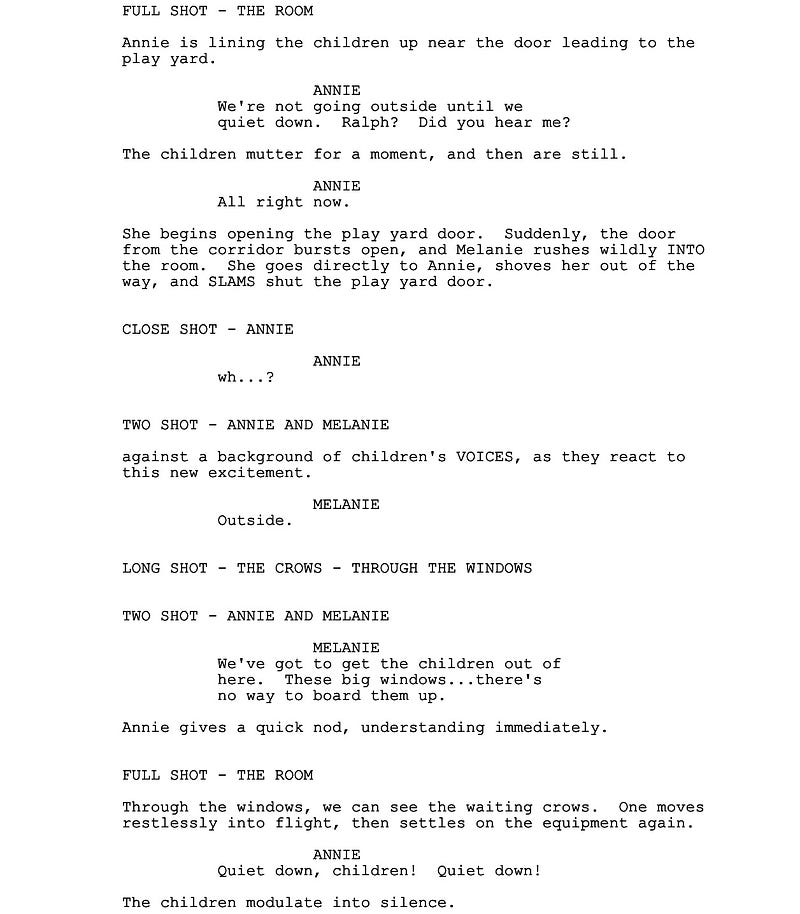
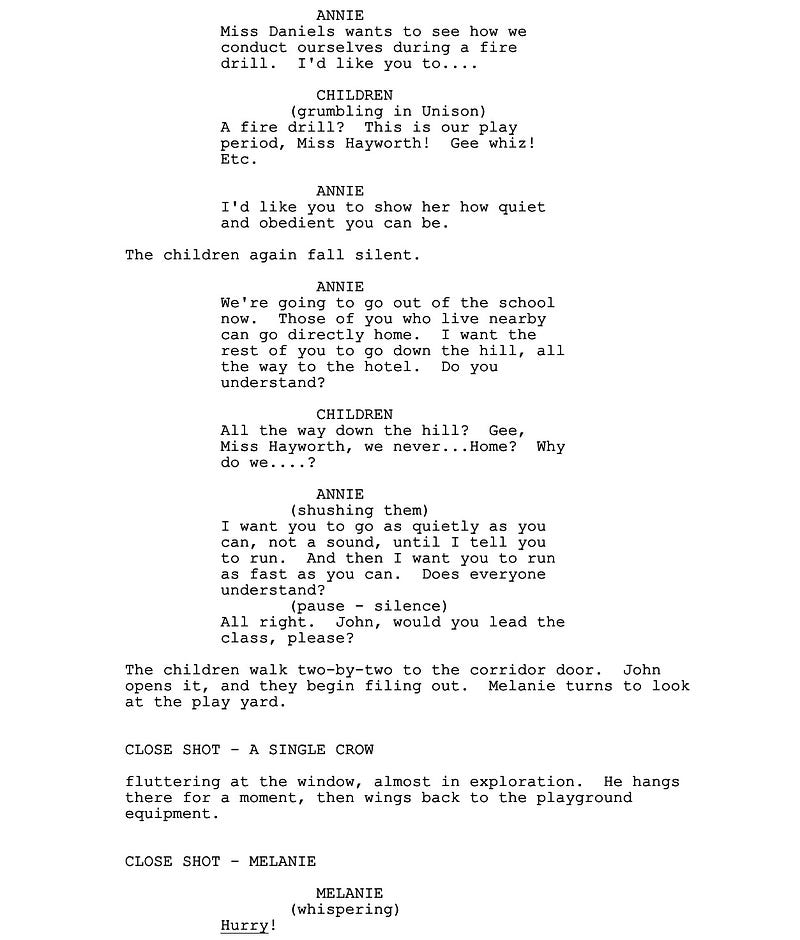
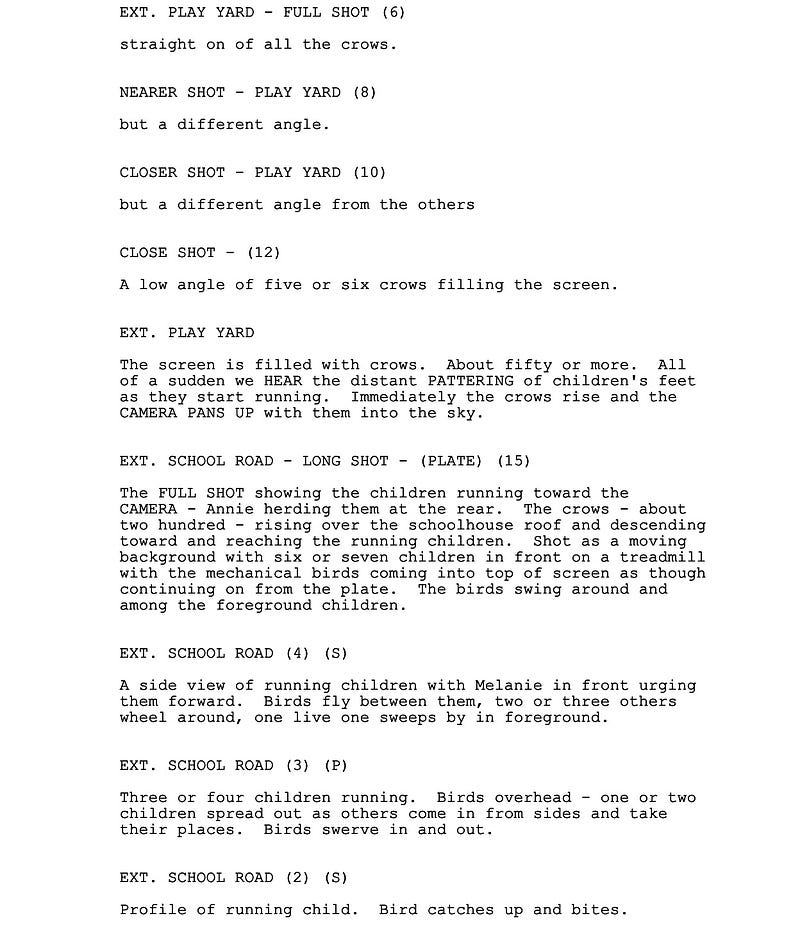
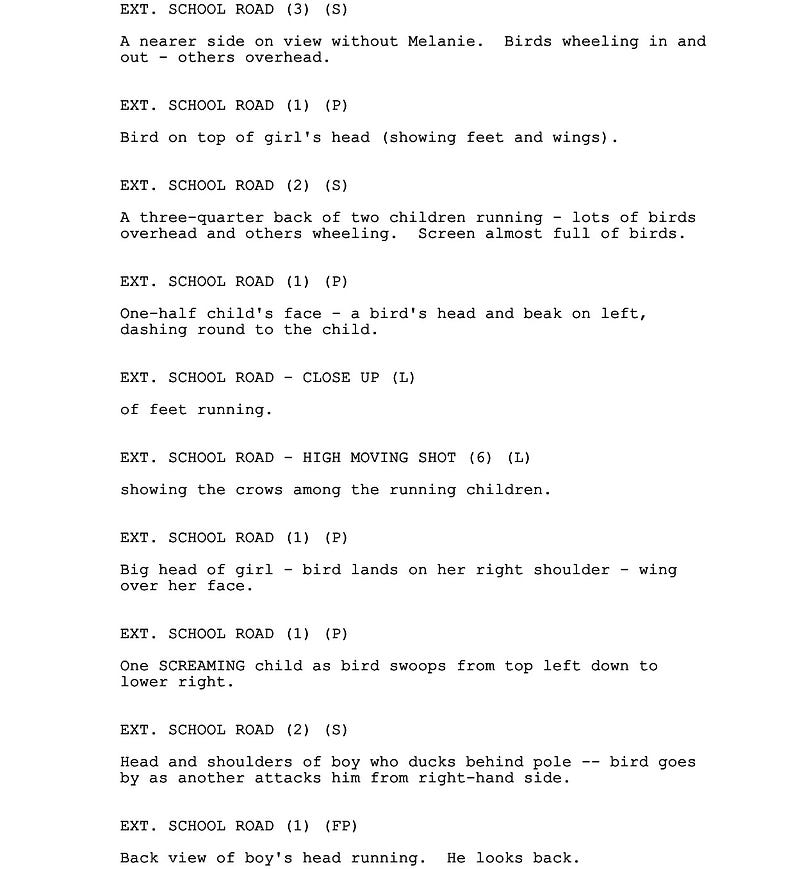
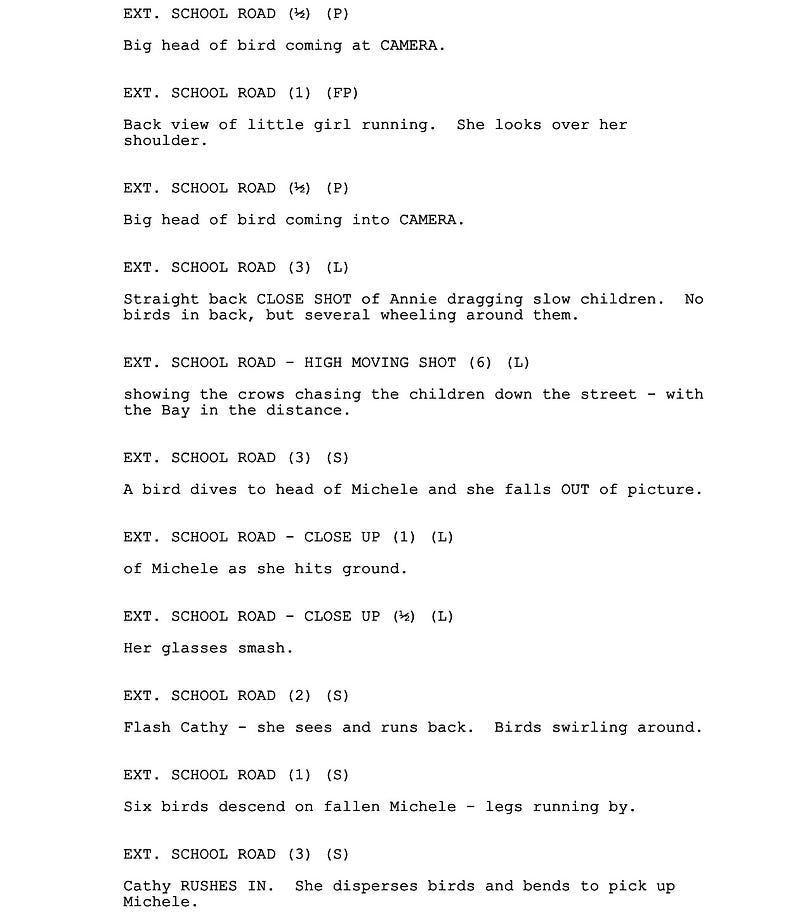

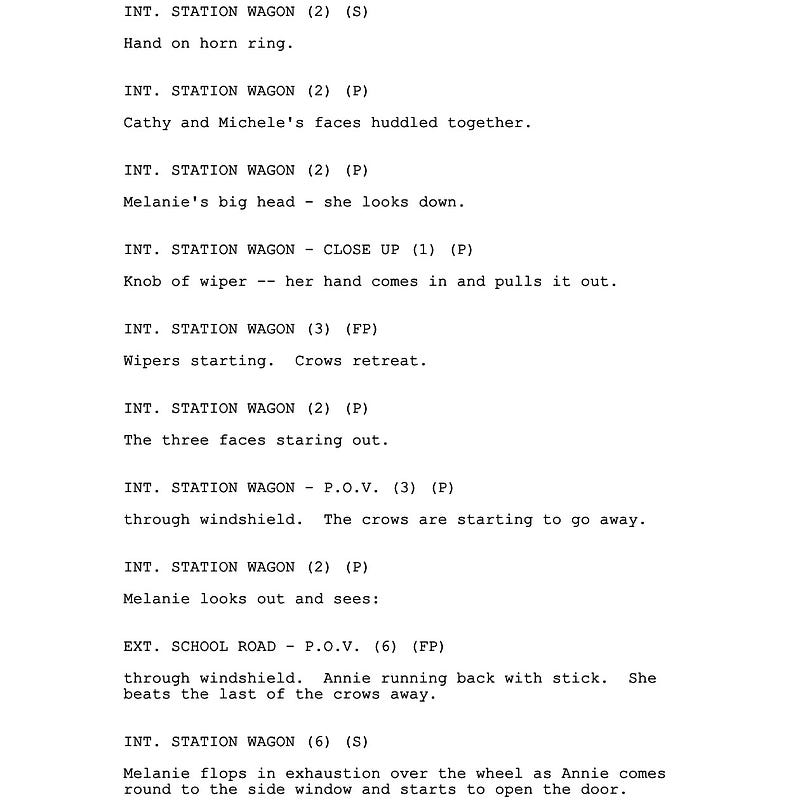
Now the movie version of the scene:
There are a few key differences between script and screen — most notably Melanie (Tippi Hedren) doesn’t turn on the windshield wipers because in the movie, she doesn’t have car keys — but for the most part, the script is a shot-by-shot blueprint for the movie. This is not surprising because that is how Hitchcock operated. Here is an excerpt from an interview with screenwriter Ernest Lehman who wrote North By Northwest:
Hitch and I acted out the entire crop-dusting sequence in his living room. Then I incorporated every move into the script, and that was the way he shot it.
Storyboarding is really an illustrator’s work for the director. A motion picture illustrator puts pictures on paper and puts them on boards. In story-boarding a script for a Hitchcock film, the illustrator is told what pictures to put on the boards by the script, which has benefited from my conferences with the director. Of course, I participate in what is going to appear on that storyboard, because even without the storyboard the script describes exactly what is going to be on the screen. Hitch would have it no other way. The script even describes the size of the shot, whether it’s a medium or a tight close-up, whether the camera pulls back and pans to the right as the character walks toward the door, whether it tilts slightly down and shoots through the open doorway, getting the helicopter as the lights go on outside. That’s why Hitch says it’s a bore for him to get the picture on the screen, because it has all been done already in his office [emphasis added].
What can contemporary screenwriters take away from this script to screen post? Here are a few things.
- The scene reminds us that movies are primarily a visual medium. Just look at those pages, one image after another in quick succession.
- The screenplay, over 50 years old, represents a style whereby the script was a blueprint to produce a movie, even down to individual camera shots. Screenplay style has moved away from directing jargon and production lingo, evolving into a more literary feel.
- While it is uncommon to use camera shots in contemporary scripts, we can indicate them through the use of individual paragraphs. For example, let’s take the action inside the car and strip away the camera direction:
INT. STATION WAGON
The faces of the three — Birds are fluttering on the rear
window.
Melanie starts to slam hand on horn ring.
Crows attacking side window.
Hand on horn ring.
Cathy and Michele’s faces huddled together.
Melanie’s big head — she looks down.
Knob of wiper — her hand comes in and pulls it out.
Wipers starting. Crows retreat.
The three faces staring out. Through windshield —
The crows are starting to go away.
Notice how each line suggest a camera shot without use camera lingo? This style allows writers to ‘direct’ the action in a more literary fashion than the production blueprint approach of yesteryear.
One of the single best things you can do to learn the craft of screenwriting is to read the script while watching the movie. After all a screenplay is a blueprint to make a movie and it’s that magic of what happens between printed page and final print that can inform how you approach writing scenes. That is the purpose of Script to Screen, a Go Into The Story series where we analyze a memorable movie scene and the script pages that inspired it.
For more articles in the Script To Screen series, go here.