Script To Screen: “Say Anything”
A memorable scene from Say Anything (1989), written by Cameron Crowe.
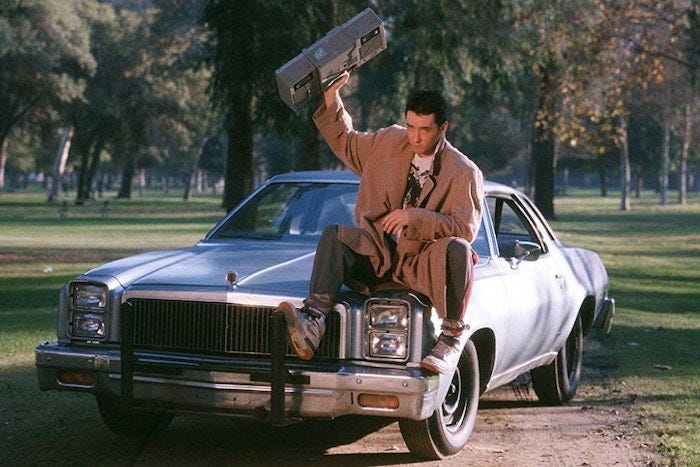
A memorable scene from Say Anything (1989), written by Cameron Crowe.
IMDb plot summary: A noble underachiever and a beautiful valedictorian fall in love the summer before she goes off to college.
Setup: Lloyd drives over to Diane’s house to deliver a message.
INT. DIANE’S HOUSE — DAY
Diane is lying on her bed, upset. We hear music coming from
outside. Diane lifts her head slightly.
EXT. DIANE’S HOUSE — DAY
Lloyd has driven over, and is holding a boom box high above his
head with both hands. It is playing ‘In Your Eyes’.
INT. DIANE’S HOUSE — DAY
Diane lets her head drop back onto the pillow when she realizes
where the music is coming from, and who it is.
EXT. DIANE’S HOUSE — DAY
Lloyd is still there, in the same position as before.
INT. DIANE’S HOUSE — DAY
Diane turns away from the window, trying to ignore the music.
EXT. DIANE’S HOUSE — DAY
Lloyd is still there, raising the box slightly at times, getting
uncomfortable, but still stays there. The camera slowly zooms
into his face.
Here is the movie scene:
When I googled the photograph featured above, it was tagged: “toxic masculinity.” Back in 1989 when I first saw the movie, I though the moment was charming, even romantic. Then in reading the script, these lines of scene description: “Diane lets her head drop back onto the pillow when she realizes
where the music is coming from, and who it is… Diane turns away from the window, trying to ignore the music.” When you watch the scene, it’s not entirely clear what she’s feeling. I guess when I screened it the first time, I must have thought she was conflicted about her feelings, but this scene description suggests, no, she doesn’t want to be listening to the music, i.e., she doesn’t want Lloyd to be present in her life. And in that light, the scene takes on decidedly different tone.
Or maybe we are well beyond where the public discourse about male-female relationships was thirty years ago.
One of the single best things you can do to learn the craft of screenwriting is to read the script while watching the movie. After all a screenplay is a blueprint to make a movie and it’s that magic of what happens between printed page and final print that can inform how you approach writing scenes. That is the purpose of Script To Screen, a weekly series on GITS where we analyze a memorable movie scene and the script pages that inspired it.
For more Script To Screen articles, go here.