Script To Screen: “Psycho”
The famous “truth about mother” scenes from the classic 1960 movie Psycho, screenplay by Joseph Stefano, based on a novel by Robert Bloch.
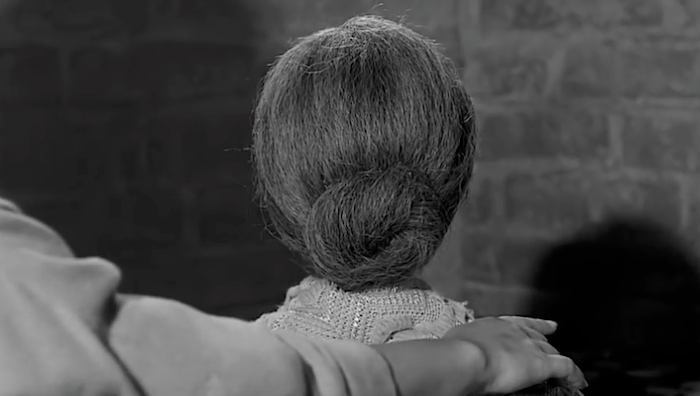
The famous “truth about mother” scenes from the classic 1960 movie Psycho, screenplay by Joseph Stefano, based on a novel by Robert Bloch.
Setup: Lila Crane sneaks around the Bates home in search of her missing sister Marion. Suspicious of Norman, Lila heads downstairs toward the basement…
INT. STAIRWAY OF THE OLD HOUSE - (DAY) Lila is on the top step, looking down toward CAMERA. She is listening, hoping to hear some human sound, some
sound she might follow, pursue. She hears nothing. She
starts down the stairs. Just below the halfway step, she
looks at the front door, sees out through the door window: LILA'S VIEWPOINT - (DAY) Norman coming. INT. STAIRWAY OF THE OLD HOUSE - (DAY) For a moment Lila panics, then she hurries down the steps,
cannot go in the direction of the front door, remembers the
stairway behind her, turns and runs in that direction. The
SOUND of Norman bounding up the porch steps can be heard.
Lila turns and dashes down the stairs which lead to the
basement, going down far enough to conceal herself,
crouching there. Norman enters the hallway, closes the door softly, listens.
He glances once in the direction of the basement stairs. He
seems about to smile, when suddenly all expression vanishes
from his face, and he appears to enter a no-place, no-time
state. He crosses to the stairway, goes up. Lila remains crouched on the basement stairs, listening to
the SOUNDS of Norman. His footsteps on the stairs followed
by the fast noises of doors opening, of fast moving about an
upstairs room. Convinced that he is searching the upstairs
for her, she decides to chance an escape. She starts up the
steps, is about to turn into the hallway when her eye is
caught by a glimmer of light down in the basement. She
pauses, looks down, sees the crack of light coming from
behind the not entirely closed door to the fruit cellar. The
swift moving SOUNDS of Norman continue to come from
upstairs. Lila is torn, knows she should get out of the house while
she has the chance, is unable to resist the impulse to check
that hidden-looking room down below, a room in which, she
desperately believes, there must lie some answer to what
happened to Mary. She turns and goes softly and quickly down
the stairs. INT. THE BASEMENT OF THE OLD HOUSE - (DAY) Lila reaches the bottom, stops, listens, hears the
stairboards creaking as footsteps fall hard and measured
upon them. She turns, pulls open the fruit cellar door,
looks in. The woman is sitting in a comfortable chair, the
back of the chair, and the woman, turned to the door. Lila
calls a harsh, frightened whisper. LILA
Mrs. Bates...? Lila goes into the room. INT. THE FRUIT CELLAR Lila goes to the chair, touches it. The touch disturbs the
figure. It starts to turn, slowly, stiffly, a clock-wise
movement. Lila looks at it in horror. It is the body of a
woman long dead. The skin is dry and pulled away from the
mouth and the teeth are revealed as in the skeleton's smile.
The eyes are gone from their sockets, the bridge of the nose
has collapsed, the hair is dry and wild, the cheeks are
sunken, the leathery-brown skin is powdered and rouged and
flaky. The body is dressed in a high-neck, clean, well
pressed dress, obviously recently laundered and hand-ironed. The movement of this stuffed, ill-preserved cadaver, turning
as if in response to Lila's call and touch, is actually
graceful, ballet-like, and the effect is terrible and
obscene. Lila gazes for one flicker of a deathly moment, then begins
to scream, a high, piercing, dreadful scream. And Lila's scream is joined by another scream, a more
dreadful, horrifying scream which comes from the door behind
her. NORMAN'S VOICE (O.S.)
(screaming)
Ayeeeeeeeeeeeeeeeeeeeeee Am Norma
Bates! Lila turns. NORMAN His face is contorted. He wears a wild wig, a mockery of a
woman's hair. He is dressed in a high-neck dress which is
similar to that worn by the corpse of his mother. His hand
is raised high, poised to strike at Lila. There is a long
breadknife in it. LILA Close on her face. She is dumb-struck. Her eyes are
screaming. BACK TO NORMAN As he is about to start forward, a man's hand reaches in
from the doorway behind, grabs Norman's wrist. Sam comes
through the door, still holding tight to the wrist, pulling
back the arm and at the same time throwing himself at
Norman, football tackle style. SERIES OF CUTS - THE FIGHT Norman and Sam, struggling. The wild fury in Norman's face,
the mad noise of his screams and vile curses. The terrified,
fight-to-the-death look of Sam. The still, staring Lila. MRS. BATES A close of her face, She appears to be watching and enjoying
the fight. Over the shot, the SOUNDS of the struggle, the
screams of Norman.
The movie version of the scene:
It’s great to do a shot-by-shot comparison of the script to the movie because they are very close, typical of an Alfred Hitchcock movie as he blocked it all out ahead of time.
One intriguing thing about the scene description: It’s very novelistic in the sense that Stefano enters ‘into’ the mindset of Lila’s character:
Convinced that he is searching the upstairs for her, she decides to chance an escape… Lila is torn, knows she should get out of the house while she has the chance, is unable to resist the impulse to check that hidden-looking room down below, a room in which, she desperately believes, there must lie some answer to what happened to Mary.
Next time some screenwriting teacher or guru says you can only write scene description that reflects what an actor can act and a moviegoer can see, that you can’t express what’s going on inside a character’s thoughts, feel free to pull out this scene description.
The simple fact is at key moments, we do have the right to engage in both editorial and psychological writing such as this scene.
I’ve referenced this film critic before — Slavoj Zizek. Here he considers the three floors of the Bates house, comparing them to Ego, Superego, and Id:
One of the single best things you can do to learn the craft of screenwriting is to read the script while watching the movie. After all a screenplay is a blueprint to make a movie and it’s that magic of what happens between printed page and final print that can inform how you approach writing scenes. That is the purpose of Script to Screen, a weekly series on GITS where we analyze a memorable movie scene and the script pages that inspired it.
For more Script To Screen articles, go here.