Script To Screen: “Pretty Woman”
Perhaps no movie demonstrates the power of ‘Disneyfication’ than the 1990 movie Pretty Woman, written by J.F. Lawton. Here is what the…
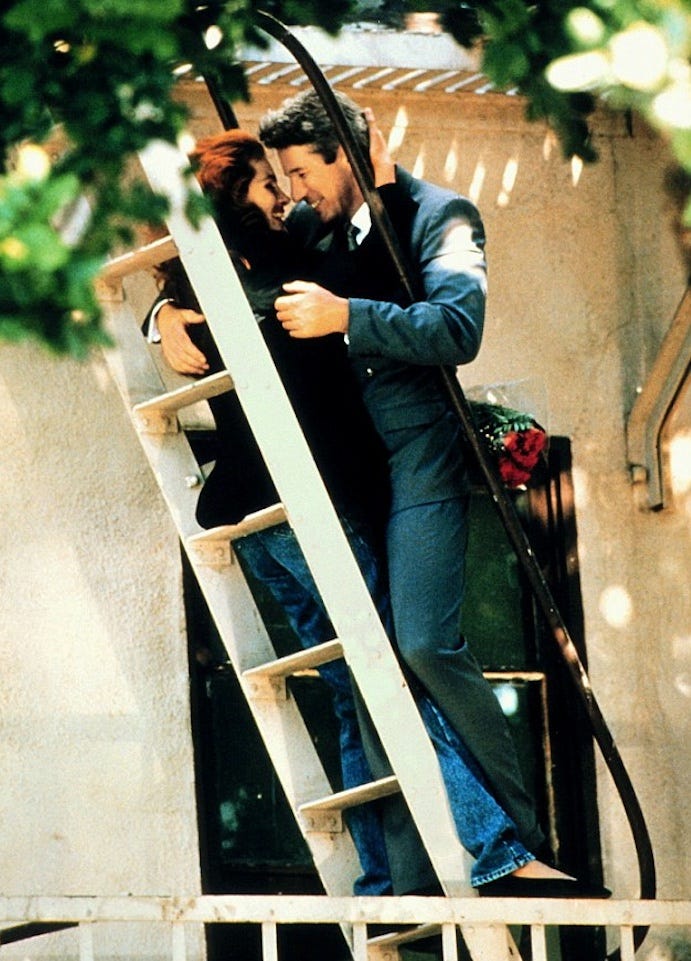
Perhaps no movie demonstrates the power of ‘Disneyfication’ than the 1990 movie Pretty Woman, written by J.F. Lawton. Here is what the movie started out to be:
The movie was initially intended to be a dark drama about prostitution in Los Angeles in the late 1980s/early 1990s. The relationship between Vivian and Edward also harbored controversial themes, including the concept of having Vivian addicted to cocaine; part of the deal was that she had to stay off it for a week. She needed the money to go to Disneyland. Edward eventually throws her out of his car and drives off. The movie was scripted to end with Vivian and her prostitute friend on the bus to Disneyland. These traits, considered by producer Laura Ziskin to be detrimental to the otherwise sympathetic portrayal of her, were removed or incorporated into the character of Vivian’s friend, Kit. These “cut scenes” have been found in public view, and some were included on the DVD released on the movie’s 15th anniversary. One such scene has Vivian offering Edward, “I could just pop ya good and be on my way”, indicating a lack of interest in “pillow talk”. In another, she is confronted by drug dealers outside of The Blue Banana, and rescued by Edward and Darryl. One example of a changed plotline was when Edward breaks into the bathroom to find Vivian flossing her teeth instead of doing drugs as he had feared. In the original script she was doing drugs.
Disney’s instincts proved dead-on as Pretty Woman went on to gross $463M worldwide on a production budget of $14M. That is some hefty ROI!
Here is the ending of the movie.
Setup: Vivian [Julia Roberts] thinks she’s not going to end up with the guy Edward [Richard Gere], but as they say in Hollywood, “Give ’em what they expect… then give ’em what they want.”
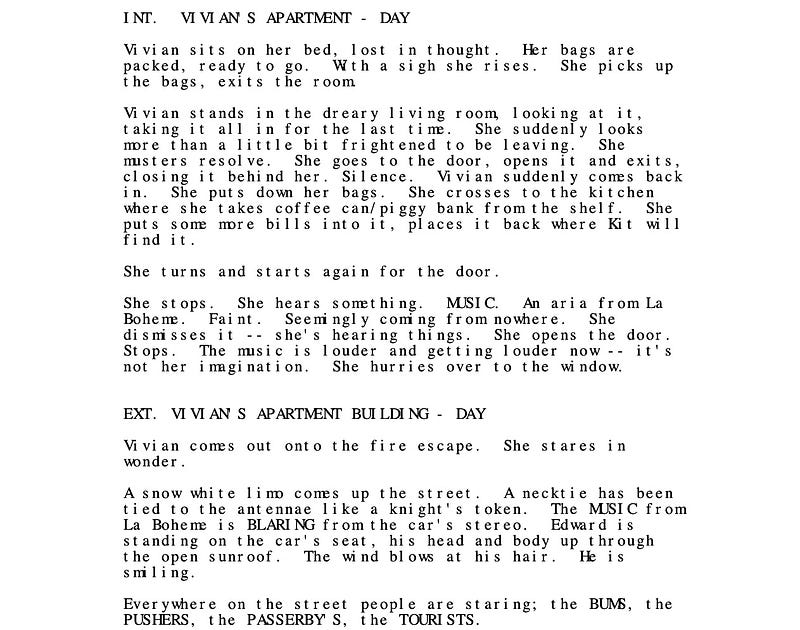
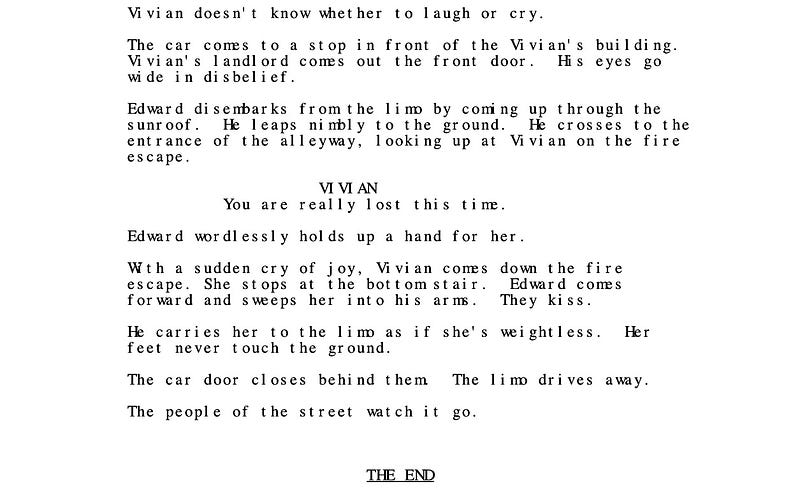
The ending scene of the movie:
One of the single best things you can do to learn the craft of screenwriting is to read the script while watching the movie. After all a screenplay is a blueprint to make a movie and it’s that magic of what happens between printed page and final print that can inform how you approach writing scenes. That is the purpose of Script to Screen, a Go Into The Story series where we analyze a memorable movie scene and the script pages that inspired it.
For dozens more Script to Screen articles, go here.