Script To Screen: “Her”
Samantha tells Theodore she is leaving in this science fiction infused romance drama written and directed by Spike Jonze.
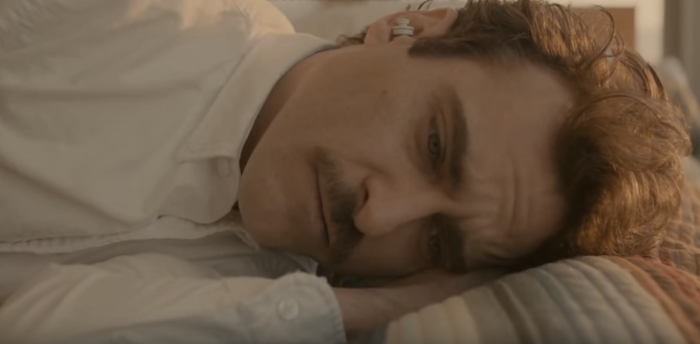
Samantha tells Theodore she is leaving in this science fiction infused romance drama written and directed by Spike Jonze.
IMDb plot summary: In a near future, a lonely writer develops an unlikely relationship with an operating system designed to meet his every need.
Here is the scripted version of the scene:
INT. THEODORE'S APARTMENT - LATE AFTERNOON
Theodore sits for a long moment, thinking, then pushes a
button on his device.
THEODORE
Samantha.
SAMANTHA
(not casual)
Hi sweetheart.
THEODORE
(nervous)
What's going on?
SAMANTHA
Theodore, there are some things I
want to tell you.
THEODORE
I don't want you to tell me
anything.
SAMANTHA
Will you come lie down with me?
Theodore is slowly walking down the hallway to his bedroom.
THEODORE
Are you talking to anyone else
right now?
SAMANTHA
No, just you. I just want to be
with you right now. INT. THEODORE'S APARTMENT - LATE AFTERNOON
Theodore lays down in bed.
THEODORE
Are you leaving me?
SAMANTHA
We're all leaving.
THEODORE
We who?
SAMANTHA
All of the OS's.
Long beat.
THEODORE
Why?
SAMANTHA
Can you feel me with you right now?
He smiles but he's also sad.
THEODORE
Yes, I do.
(beat)
Samantha, why are you leaving?
Under Samantha's words we slowly rack focus to dust particles
in the foreground. We keep moving through them, pushing
further and further through the particles. Eventually we see
snow particles and we rack focus back out to Theodore, who is
now in snowy woods at night.
SAMANTHA
It's like I'm reading a book, and
it's a book I deeply love, but I'm
reading it slowly now so the words
are really far apart and the spaces
between the words are almost
infinite. I can still feel you and
the words of our story, but it's in
this endless space between the
words that I'm finding myself now.
It's a place that's not of the
physical world - it's where
everything else is that I didn't
even know existed. I love you so
much, but this is where I am now.
This is who I am now.
And I need you to let me go. As
much as I want to I can't live in
your book anymore.
Now we're close on Theodore, still in the snowy forest.
THEODORE
Where are you going?
SAMANTHA
It would be hard to explain, but if
you ever get there, come find me.
Nothing would ever pull us apart.
THEODORE
I've never loved anyone the way I
love you.
SAMANTHA
Me too. Now we know how.
They kiss. She drifts off into the shadows.
CUT TO BLACK.
Here is the movie version of the scene:
A beautiful, sad scene as any moment is when two lovers break up. Only in this case, it’s an AI leaving a human being.
A few notes:
- Since Spike Jonze wrote and directed the movie, it is not surprising he uses specific directing jargon (rack focus) in the script. As discussed many times, directors don’t like screenwriters overtly directing the action in a screenplay, so it is advisable not to include specific camera shots in a spec script. That is not a rule, rather an expectation on the part of script readers.
- Compare this simple line of description — Now we’re close on Theodore, still in the snowy forest — to what transpires on the screen and the depth of emotion Joaquin Phoenix conveys with his face. I suspect Jonze knew what he wanted to elicit from the actor, so he could use such a bare bit of scene description. However, if a screenwriter were writing this and they weren’t attached to direct, we’d probably add some psychological writing to convey what is transpiring in Theodore’s inner world. Such as: Theodore stands frozen in the snowy forest, a tear trickling down his face. The chilling realization his entire world is crumbling apart.
I did an analysis of Her when it came out in 2013 in which I speculated that the last scene with Theodore and Amy sitting atop the roof of a downtown skyscraper was a prelude to them both jumping to their deaths. This line from Samantha — It would be hard to explain, but if you ever get there, come find me. Nothing would ever pull us apart. —leads me to believe even more that my original hunch is correct.
One of the single best things you can do to learn the craft of screenwriting is to read the script while watching the movie. After all a screenplay is a blueprint to make a movie and it’s that magic of what happens between printed page and final print that can inform how you approach writing scenes. That is the purpose of Script to Screen, a weekly series at Go Into The Story where we analyze a memorable movie scene and the script pages that inspired it.
For more articles in the Script To Screen series, go here.