Script To Screen: “Dr. Strangelove: Or How I Learned to Stop Worrying and Love the Bomb”
Peter Sellers in one of three roles he plays in the movie: U.S. President.
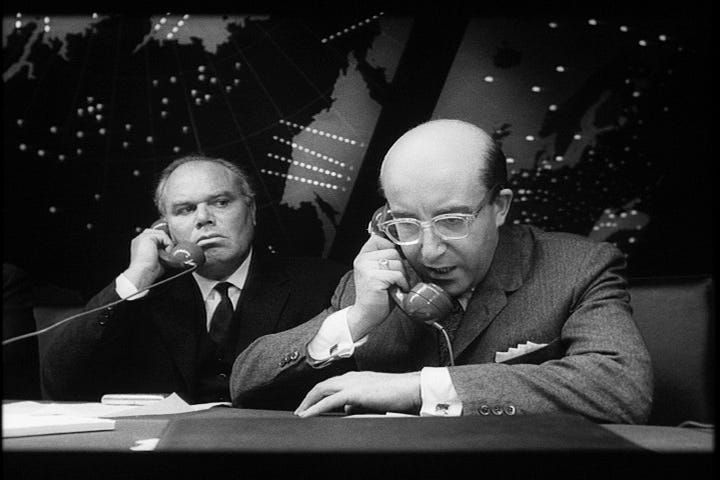
Peter Sellers in one of three roles he plays in the movie: U.S. President.
A scene from the brilliant 1964 satire Dr. Strangelove: Or How I Learned to Stop Worrying and Love the Bomb, screenplay by Stanley Kubrick & Terry Southern & Peter George, novel by Peter George.
IMDb plot summary: An insane general triggers a path to nuclear holocaust that a war room full of politicians and generals frantically try to stop.
In this scene, U.S. President Muffley, played by Peter Sellers, is forced to call Dmitri, the head of the Soviet Union to deliver some bad news.
Note: There are several versions of the supposed shooting script floating around online. Below are two examples.
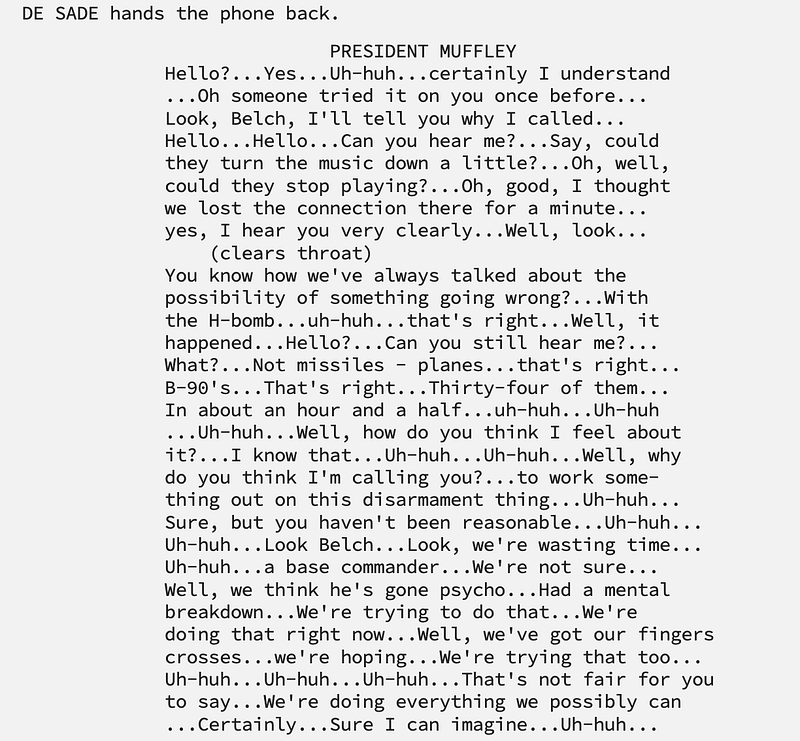
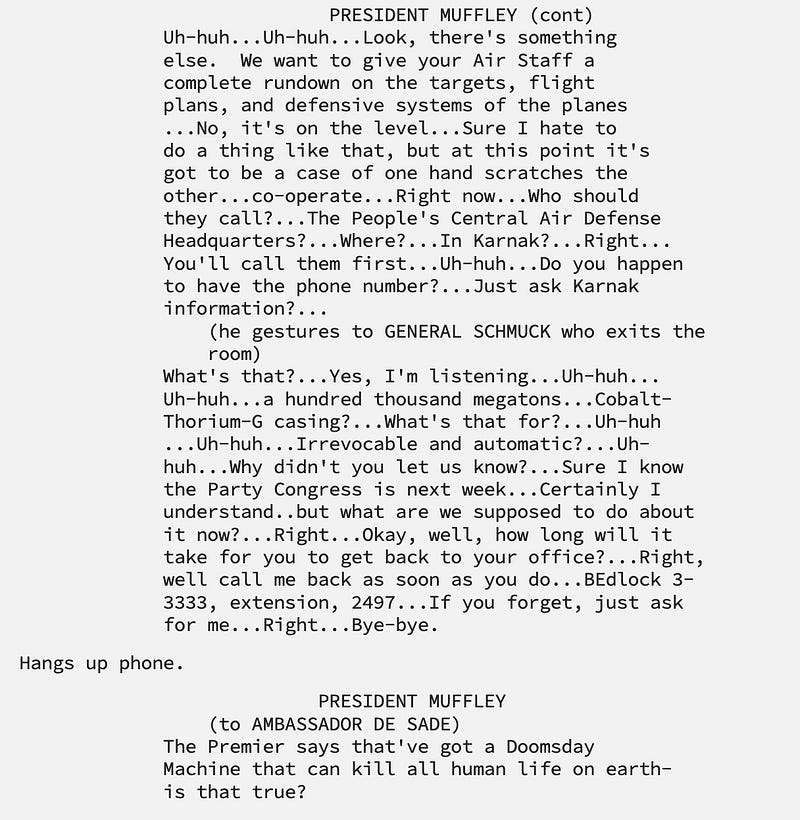
Script Example #1:
Script Example #2:

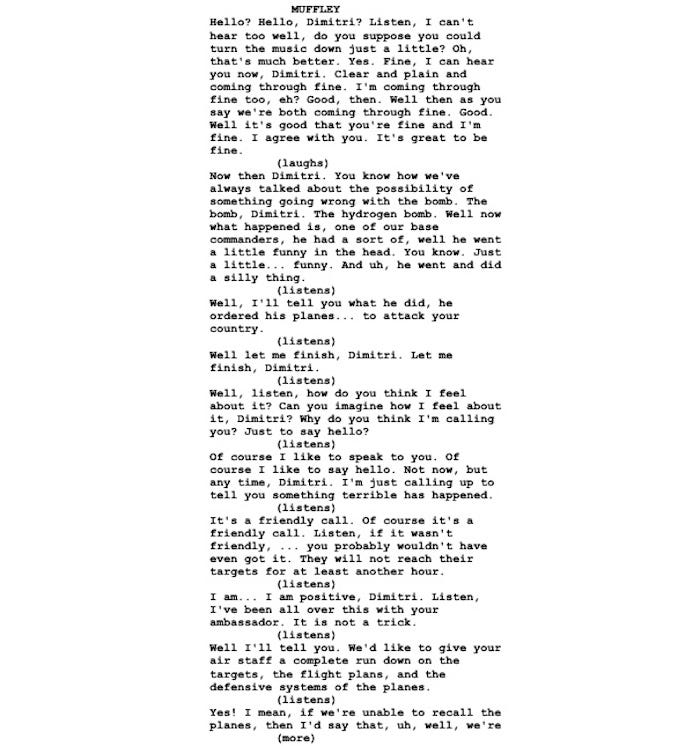
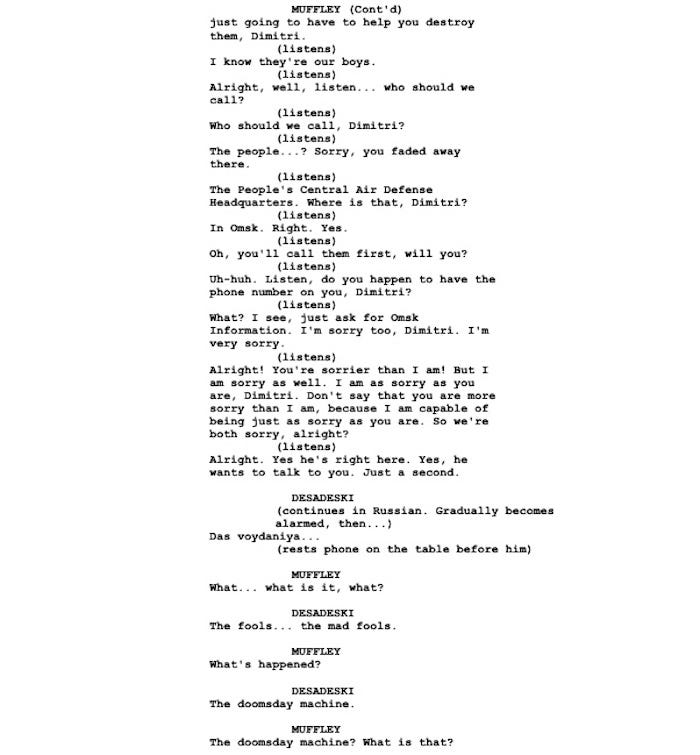

The second one appears to be a transcript of sorts because according to various reports, Sellers improvised much of his dialogue.
Here is the scene from the movie:
The dialogue as written in Example #1 covers the Beginning (saying hello), Middle (delivering the news), and End (what to do about the bombers) of the scene, as well as many of the lines in the film version. But it’s what Sellers does with the dialogue as evidenced by Example #2, improvising as only he could, that elevates the humor several notches.
What Sellers does so wonderfully is zero in on the personal relationship between he and Dmitri, suggesting that the Soviet leader is insecure about their friendship and that Muffley is equally so. It’s like the dynamic between the two reflects the very nature of mistrust that lies at the heart of the strategy both countries subscribed to at the time with regard to their respective nuclear arsenals, what was known as M.A.D. — Mutually Assured Destruction. Indeed it was this very point that inspired Kubrick to take this story, what he originally conceived of as a drama, and turn it into arguably the greatest movie satire of all time.
The writing in the script is great. Sellers’ performance as three characters in the movie makes the film something truly special.
One of the single best things you can do to learn the craft of screenwriting is to read the script while watching the movie. After all a screenplay is a blueprint to make a movie and it’s that magic of what happens between printed page and final print that can inform how you approach writing scenes. That is the purpose of Script to Screen, a Go Into The Story series where we analyze a memorable movie scene and the script pages that inspired it.
For more articles in the Script To Screen series, go here.