Script To Screen: “Do the Right Thing”
Latent anger turns to hostility into violence in this intense scene from the 1989 movie Do the Right Thing, written by Spike Lee.
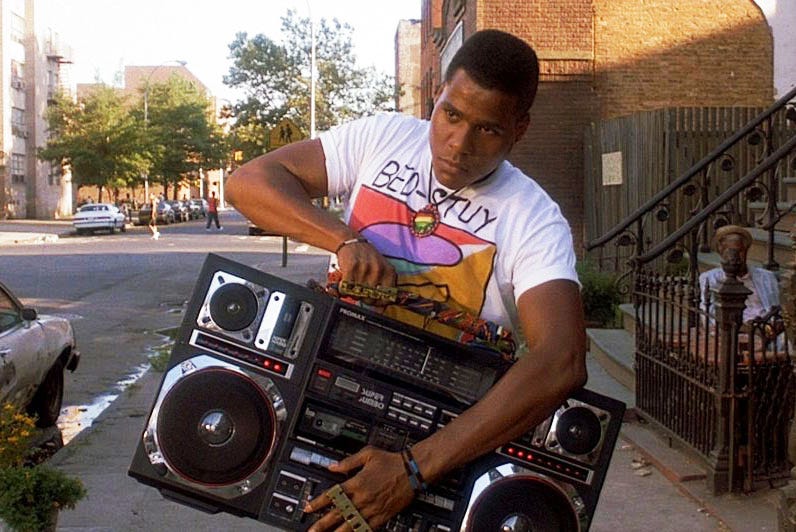
Latent anger turns to hostility into violence in this intense scene from the 1989 movie Do the Right Thing, written by Spike Lee.
IMDb plot summary: On the hottest day of the year on a street in the Bedford-Stuyvesant section of Brooklyn, everyone’s hate and bigotry smolders and builds until it explodes into violence.
The text of the conflict: The locals want some “black faces” on the pizzeria’s wall of fame. The owner of the joint wants them to turn off the music. A looming racial divide lies underneath and explodes in this scene.
ANGLE--DOORAhmad, Cee, Punchy, and Ella enter. SAL
We're about to close. AHMAD
Just four slices, regular slices.
Please. To go! SAL
OK, but that's it. It's been a
long day.Mookie goes over to the table where Ahmad, Cee, Punchy, and
Ella sit.MOOKIE
Look, I want you to get your
slices, then outta here. No
playing around. AHMAD
You got it. MOOKIE
Good. No joke. We all wanna go
home.OH NO! We hear the dum-dum-dum of Radio Raheem's box. As
everyone turns their heads to the door, Buggin' Out and
Radio Raheem are inside already. We have never heard the
rap music as loud as it is now. You have to scream to be
heard and that's what they do. SAL
What did I tell ya 'bout dat noise? BUGGIN' OUT
What did I tell ya 'bout dem
pictures? SAL
What da fuck! Are you deaf? BUGGIN' OUT
No, are you? We want some Black
people up on the Wall of Fame. SAL
Turn that JUNGLE MUSIC off. We
ain't in Africa.Ahmad, Cee, Punchy, and Ella start to dance while Mookie
takes a seat, the impartial observer that he is. BUGGIN' OUT
Why it gotta be about jungle music
and Africa? SAL
It's about turning that shit off
and getting the fuck outta my
pizzeria. PINO
Radio Raheem. RADIO RAHEEM
Fuck you. SAL
What ever happened to nice music
with words you can understand? RADIO RAHEEM
This is music. My music. VITO
We're closed. BUGGIN' OUT
You're closed alright, till you get
some Black people up on that wall.Sal grabs his Mickey Mantle bat from underneath the counter
and brings it down on Radio Raheem's box, again and again
and again. The music stops.CLOSE--RADIO RAHEEM'S BOXRadio Raheem's pride and joy is smashed to smithereens.
It's going to the junkyard quick.ANGLE--PIZZERIAThere is an eerie quiet as everyone is frozen, surprised by
the suddenness of Sal's action, the swings of his Mickey
Mantle bat. All look at Radio Raheem and realize what is
about to happen.ANGLE--RADIO RAHEEMRadio Raheem screams, he goes crazy. RADIO RAHEEM
My music!Radio Raheem picks Sal up from behind the counter and starts
to choke his ass. Radio Raheem's prized possession--his
box, the only thing he owned of value--his box, the one
thing that gave him any sense of worth--has been smashed to
bits. (Radio Raheem, like many Black youth, is the victim of
materialism and a misplaced sense of values.) Now he doesn't
give a fuck anymore. He's gonna make Sal pay with his life.Vito and Pino jump on Radio Raheem, who only tightens his
grip around Sal's neck. Buggin' Out tries to help his
friend. Mookie just stands and watches as Ahmad, Cee,
Punchy, and Ella cheerlead.
The movie version of the scene:
The movie reflects a number of directing choices Spike Lee made not reflected in the script. A lot more dialogue, yelling and swearing, extending the buildup toward Sal’s destructive act. The use of ‘dutch angle’ camera shots, visually reinforcing the imbalance at work in the rising conflict. Close up after close up after close up. None of that indicated in the script.
What is in place in the script is interesting: Spike Lee very specifically comments on the interior life of Radio Raheem:
Radio Raheem’s prized possession — his box, the only thing he owned of value — his box, the one thing that gave him any sense of worth — has been smashed to bits… Now he doesn’t give a fuck anymore. He’s gonna make Sal pay with his life.
Not only that, Lee provides some social commentary:
(Radio Raheem, like many Black youth, is the victim of materialism and a misplaced sense of values.)
Not that I would recommend doing a ton of the former and any of the latter in a spec script, this proves once again that the supposed ‘rule’ — A screenplay cannot include ‘unfilmables’ — is simply wrong. As screenwriters, we have the right to (A) comment on the moment and (B) go inside a character to get a sense of what they are feeling. We have to be judicious in doing that, but it is one of the tools in our writer’s resource. And if you read contemporary movie scripts, especially spec scripts that sell or make the annual Black List, you will see writers providing commentary in scene description when they feel the need to drive home a point.
One of the single best things you can do to learn the craft of screenwriting is to read the script while watching the movie. After all a screenplay is a blueprint to make a movie and it’s that magic of what happens between printed page and final print that can inform how you approach writing scenes. That is the purpose of Script to Screen, a series on GITS where we analyze a memorable movie scene and the script pages that inspired it.
For more articles in the Script to Screen series, go here.