Script To Screen: “Do the Right Thing”
Latent anger turns to hostility into violence in this intense scene from the 1989 movie Do the Right Thing, written by Spike Lee.
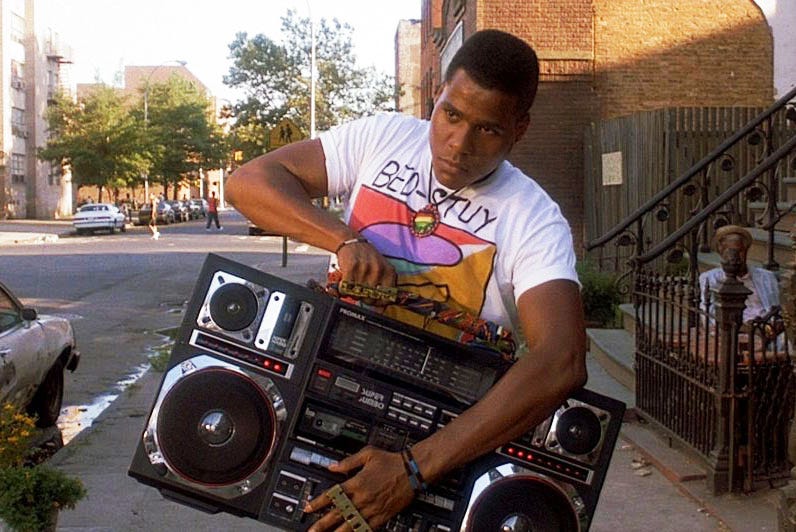
Latent anger turns to hostility into violence in this intense scene from the 1989 movie Do the Right Thing, written by Spike Lee.
IMDb plot summary: On the hottest day of the year on a street in the Bedford-Stuyvesant section of Brooklyn, everyone’s hate and bigotry smolders and builds until it explodes into violence.
The text of the conflict: The locals want some “black faces” on the pizzeria’s wall of fame. The owner of the joint wants them to turn off the music. A looming racial divide lies underneath and explodes in this scene.
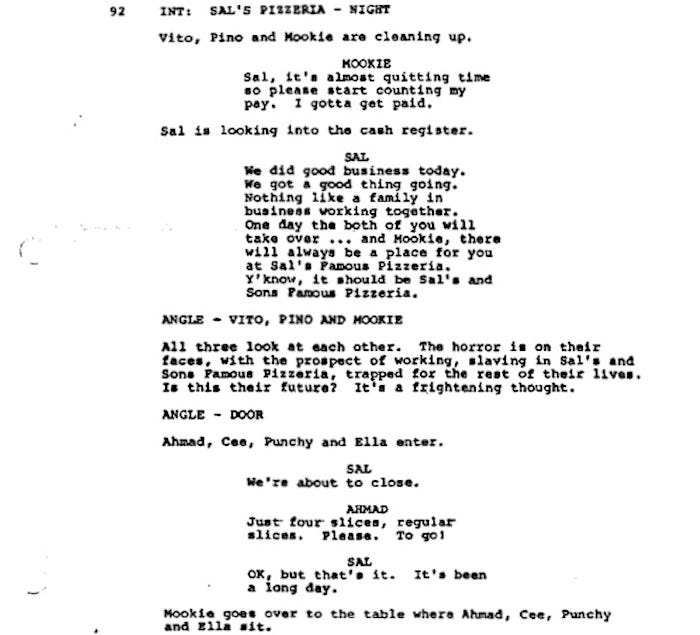

The movie version of the scene:
The movie reflects a number of directing choices Spike Lee made not present in the script. A lot more dialogue, yelling and swearing, extending the buildup toward Sal’s destructive act. The use of ‘dutch angle’ camera shots, visually reinforcing the imbalance at work in the rising conflict. Close up after close up after close up. None of that indicated in the script.
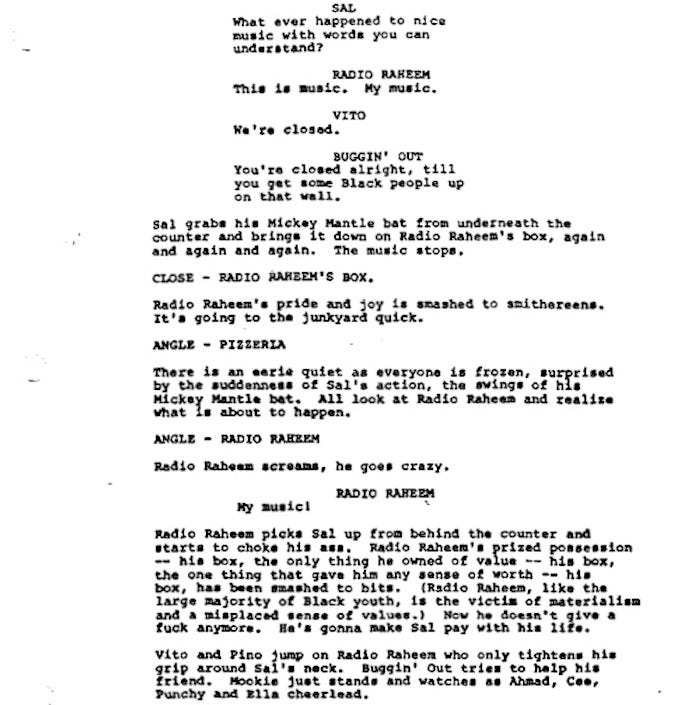
What is in place in the script is interesting: Spike Lee very specifically comments on the interior life of Radio Raheem:
Radio Raheem’s prized possession — his box, the only thing he owned of value — his box, the one thing that gave him any sense of worth — has been smashed to bits… Now he doesn’t give a fuck anymore. He’s gonna make Sal pay with his life.
Not only that, Lee provides some social commentary:
(Radio Raheem, like many Black youth, is the victim of materialism and a misplaced sense of values.)
Not that I would recommend doing a ton of the former and any of the latter in a spec script, this proves once again that the supposed ‘rule’ — A screenplay cannot include ‘unfilmables’ — is simply wrong.
As screenwriters, we have the right to (A) comment on the moment and (B) go inside a character to get a sense of what they are feeling. We have to be judicious in doing that, but it is one of the tools in our writer’s resource.
If you read contemporary movie scripts, especially spec scripts that sell or make the annual Black List, you will see writers providing commentary in scene description when they feel the need to drive home a point.
One of the single best things you can do to learn the craft of screenwriting is to read the script while watching the movie. After all a screenplay is a blueprint to make a movie and it’s that magic of what happens between printed page and final print that can inform how you approach writing scenes. That is the purpose of Script to Screen, a Go Into The Story series where we analyze a memorable movie scene and the script pages that inspired it.
For more articles in the Script to Screen series, go here.