Script To Screen: “Black Swan”
The dramatic climax of the 2010 psychological thriller Black Swan, screenplay by Mark Heyman and Andres Heinz and John J. McLaughlin, story…
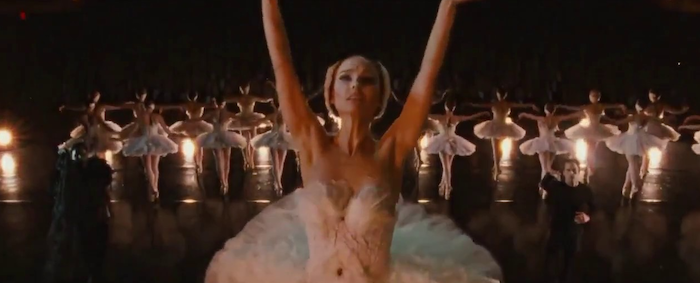
The dramatic climax of the 2010 psychological thriller Black Swan, screenplay by Mark Heyman and Andres Heinz and John J. McLaughlin, story by Andres Heinz.
Setup: Deep into her mental collapse into Dissociative Identity Disorder, Nina believes she has killed her rival Lily, but in fact, she has stabbed herself moments before she is to dance the final number in her debut performance in the role of a lifetime.
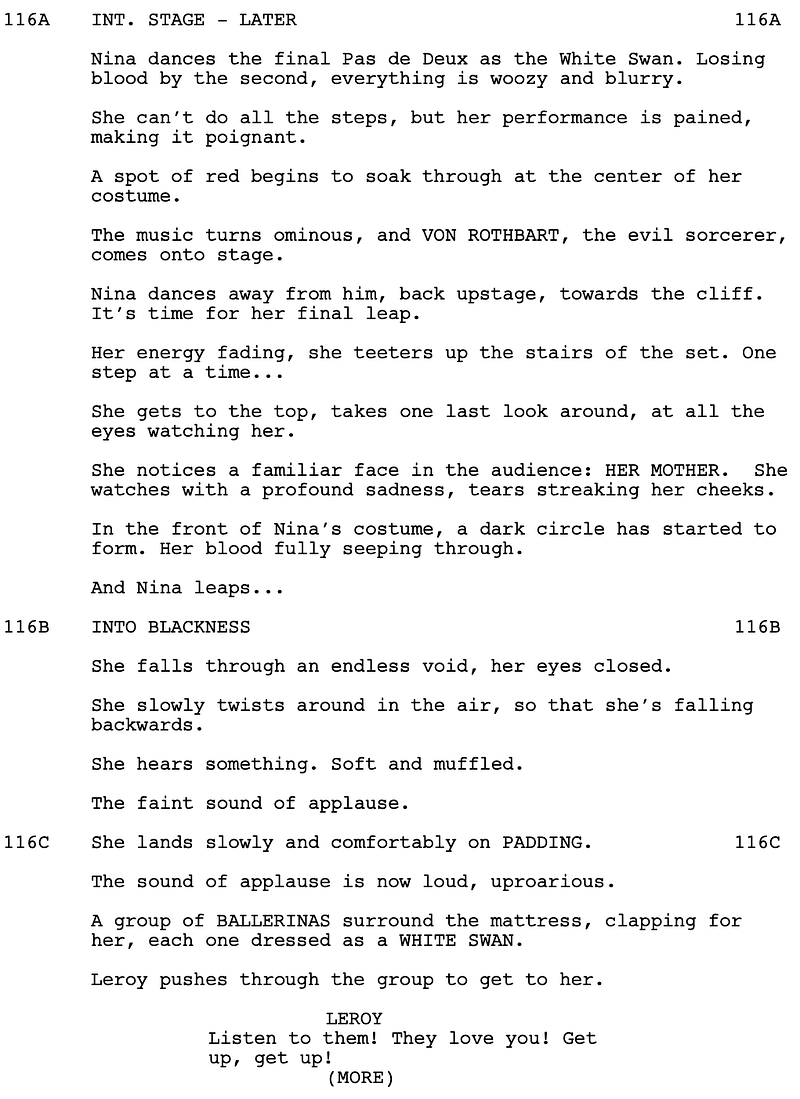
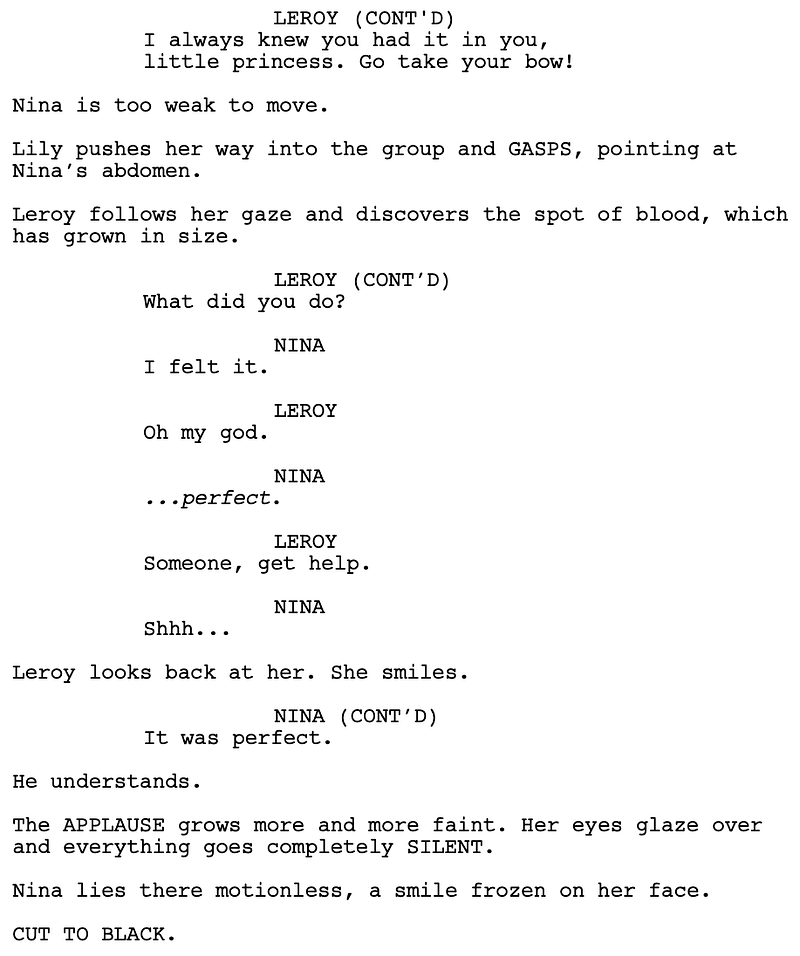
Here is the movie version of the scene:
The movie scene mirrors the structure of the script, however, many of the moments are elongated for more profound psychological impact. For example, the visual exchange between Nina and her mother is described this way: “She notices a familiar face in the audience: HER MOTHER. She watches with a profound sadness, tears streaking her cheeks.” In the movie, the shots break down like this:
01:28: Nina peers down into the audience and finds her mother.
01:29: Her mother locks eyes with Nina, a combination of rapture and sadness.
01:35: Gaze fixed on her mother, Nina is overcome with emotion.
01:36: Her mother completely locked on her daughter’s face.
01:38: As if emboldened by her mother’s presence, Nina fights back tears, then raises her arms as she moves into the final part of the dance.
The focus on the mother-daughter visual connection right before Nina descends off-screen only to [presumably] die suggests that director Aronofsky came to see this relationship as being the central one in the story. Thus, when Nina says, “It was perfect,” she is not only acknowledging her own personal goal, she is also tacitly responding to the years of pressure her mother has directed toward Nina. Now that Nina has performed “perfectly,” she can die, free from her mother’s overbearing pressure.
One of the single best things you can do to learn the craft of screenwriting is to read the script while watching the movie. After all a screenplay is a blueprint to make a movie and it’s that magic of what happens between printed page and final print that can inform how you approach writing scenes. That is the purpose of Script to Screen, an ongoing Go Into The Story series where we analyze a memorable movie scene and the script pages that inspired it.
For more articles in the Script To Screen series, go here.