Script To Screen: “As Good As It Gets”
The final scene from the 1997 movie As Good As It Gets, written by Mark Andrus and James L. Brooks.

The final scene from the 1997 movie As Good As It Gets, written by Mark Andrus and James L. Brooks.
Plot Summary: A single mother/waitress, a misanthropic author, and a gay artist form an unlikely friendship after the artist is in an accident.
In this scene, Melvin (Jack Nicholson) travels in the middle of the night to see Carol (Helen Hunt) to express his feelings about her, one last attempt to convince her to be with him.
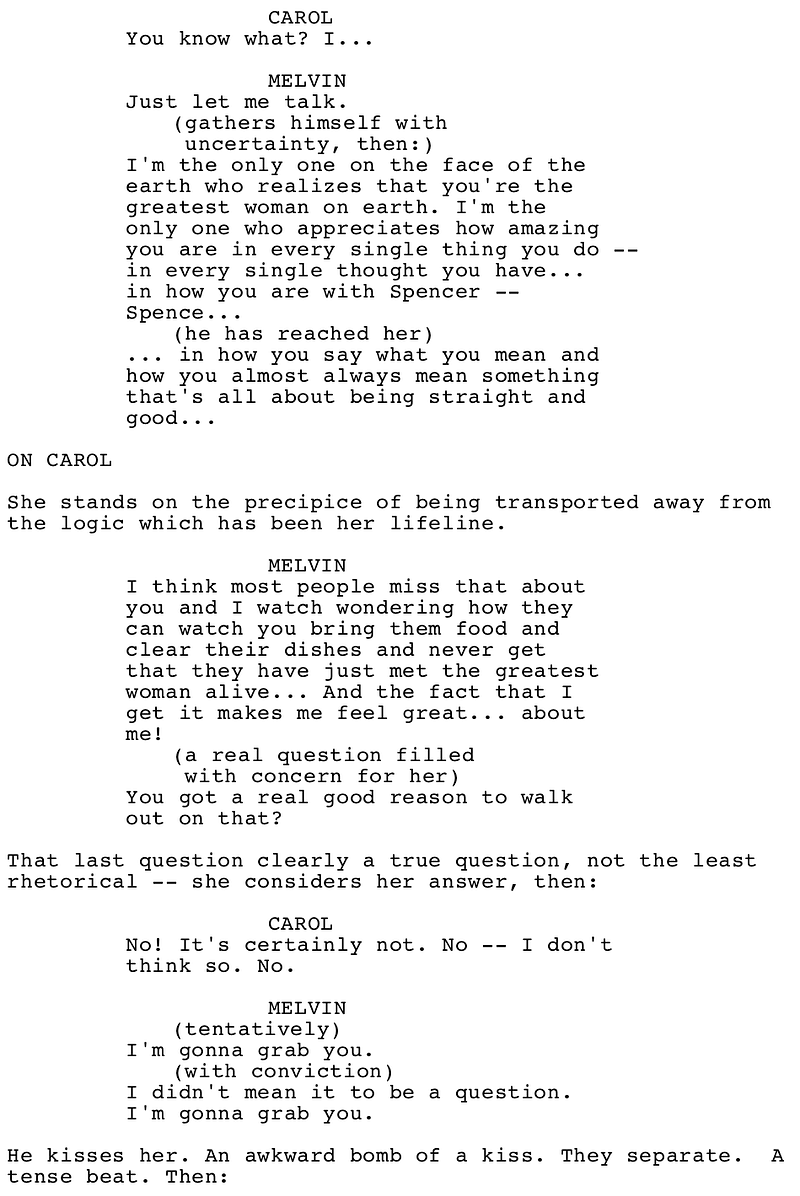
Here is the scene from the script:
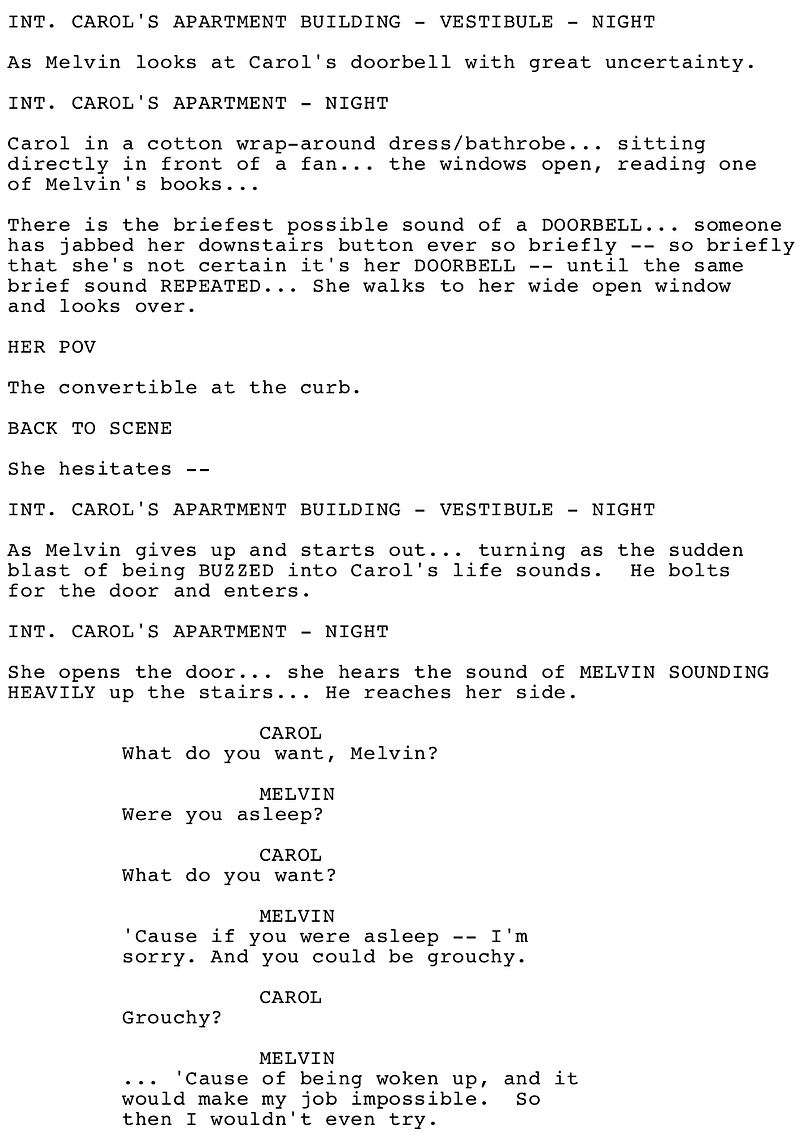
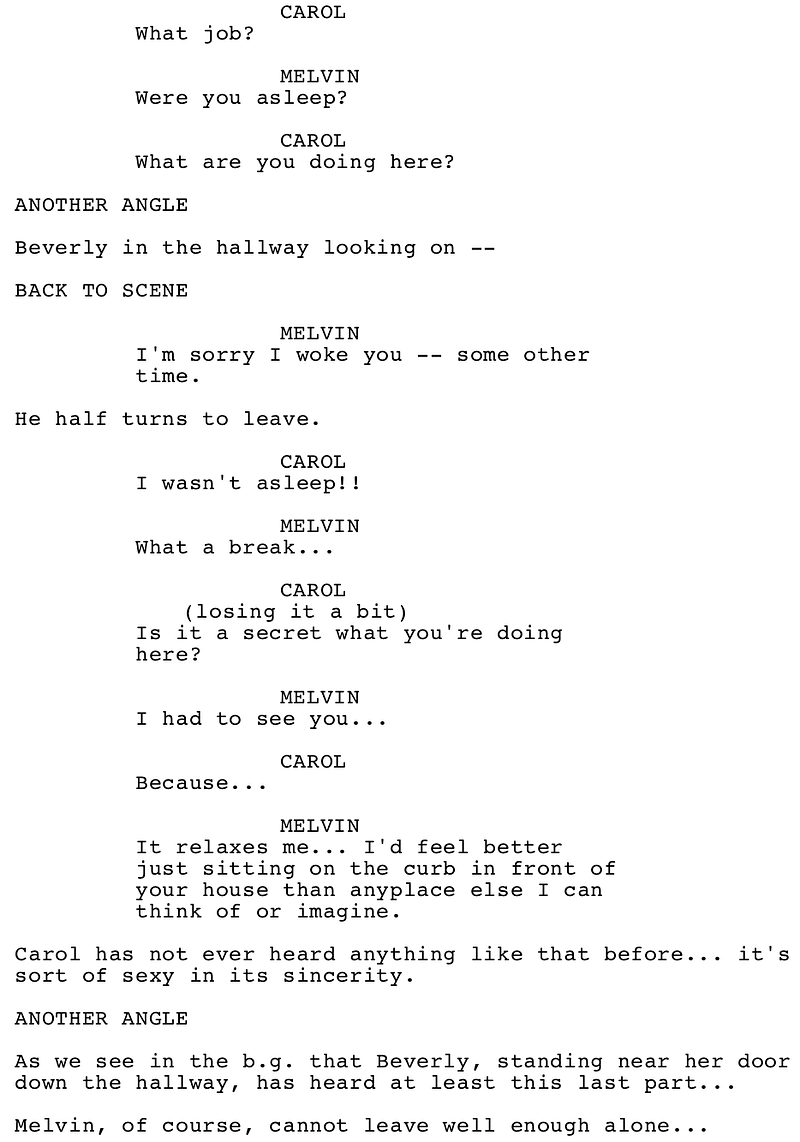
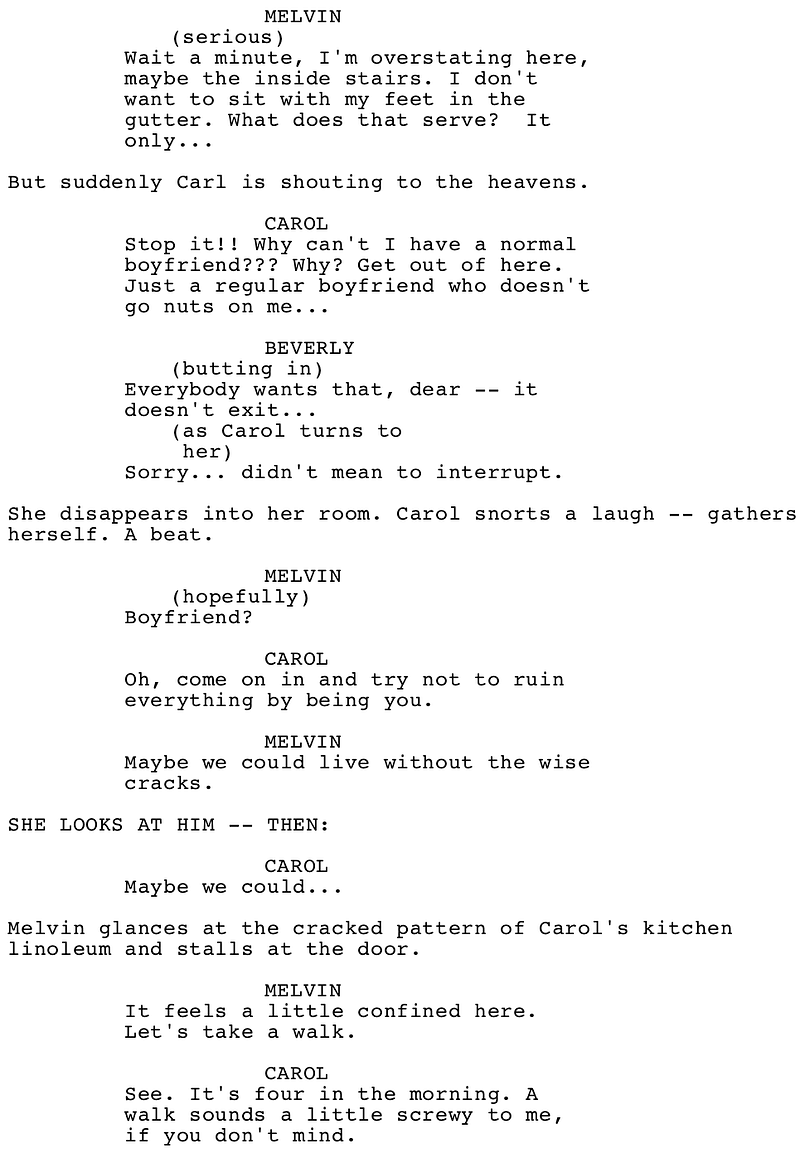
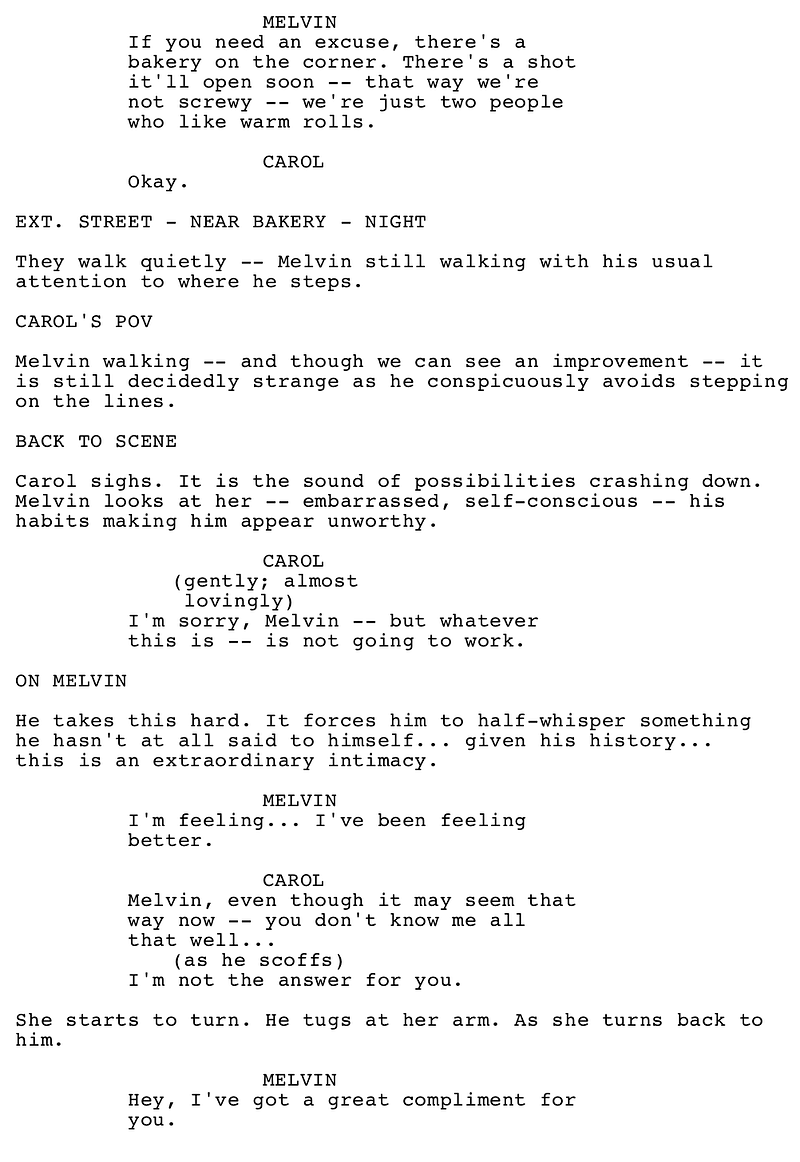
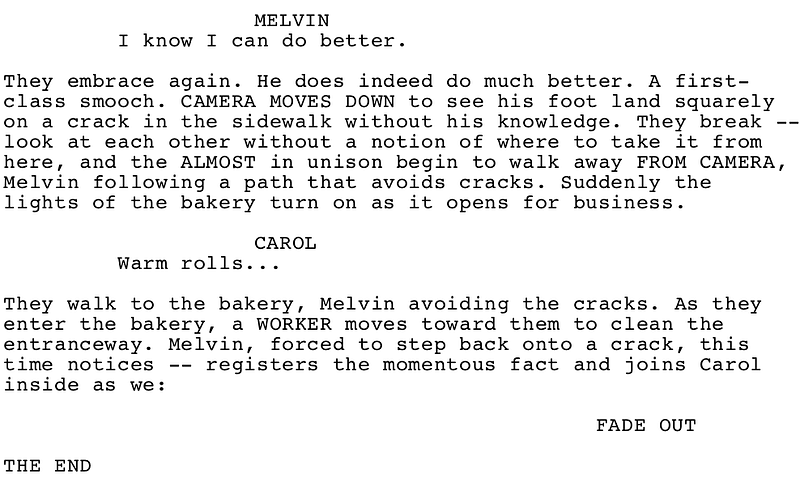
Here is the scene from the movie:
There are some subtle changes in the movie. At the end of his monologue, instead of “You got a real good reason to walk out on that,” Melvin says, “Is that something bad for you to be around?” Both of them cast her choice in a negative light: “walk out on that” compared to “something bad”. I think the second line works best because the first line suggests a real option for her: to walk away. Plus the second line compels her to confront the reality of what she just heard which is far away from being something bad.
Another small change. Helen’s response in the script is ten words, three of which are the word “no.” In the movie, she only says the one word: “No.” My guess is this was a situation where Hunt as she “considers her answer” nailed all of those mixed emotions on her face for the camera to see. The only word needed was the single “No.”
A final note: One thing about Brooks’ scripts is the evocative scene description. Consider this:
She stands on the precipice of being transported away
from the logic which has been her lifeline.
That is a wonderful piece of psychological writing that clearly evokes the dynamic tension at work within her emotional self. I should note it’s also an example of a so-called “unfilmable.” So if you run into one of those scripturalists who insist you can only write what a moviegoer can see or hear, just point them to this Oscar winning screenplay.
What other differences do you notice in the transition from script to screen? Head to comments and share your observations, and about the movie in general.
One of the single best things you can do to learn the craft of screenwriting is to read the script while watching the movie. After all a screenplay is a blueprint to make a movie and it’s that magic of what happens between printed page and final print that can inform how you approach writing scenes. That is the purpose of Script to Screen, a Go Into The Story series on where we analyze a memorable movie scene and the script pages that inspired it.
For more articles in the Script To Screen series, go here.