Script Analysis: “Tár” — Part 1: Scene-By-Scene Breakdown
A week-long analysis of the screenplay for the award-winning drama. Download. Read. Discuss.
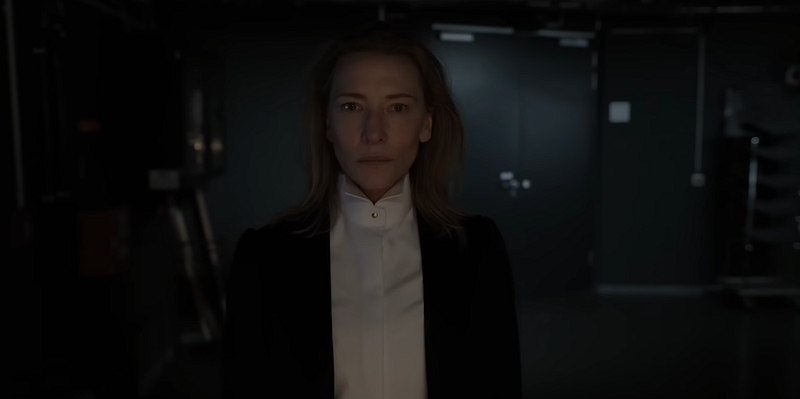
A week-long analysis of the screenplay for the award-winning drama. Download. Read. Discuss.
Reading scripts. Absolutely critical to learn the craft of screenwriting. The focus of this bi-weekly series is a deep structural and thematic analysis of each script we read. Our daily schedule:
Monday: Scene-By-Scene Breakdown
Tuesday: Plot
Wednesday: Characters
Thursday: Themes
Friday: Dialogue
Saturday: Takeaways
Today: Scene-By-Scene Breakdown.
Here is my take on this exercise from a previous series of posts — How To Read A Screenplay:
After a first pass, it’s time to crack open the script for a deeper analysis and you can do that by creating a scene-by-scene breakdown. It is precisely what it sounds like: A list of all the scenes in the script accompanied by a brief description of the events that transpire.
For purposes of this exercise, I have a slightly different take on scene. Here I am looking not just for individual scenes per se, but a scene or set of scenes that comprise one event or a continuous piece of action. Admittedly this is subjective and there is no right or wrong, the point is simply to break down the script into a series of parts which you then can use dig into the script’s structure and themes.
The value of this exercise:
- We pare down the story to its most constituent parts: Scenes.
- By doing this, we consciously explore the structure of the narrative.
- A scene-by-scene breakdown creates a foundation for even deeper analysis of the story.
This week: Tár (2022). You may download the script here.
Written by Todd Field
Plot summary: Set in the international world of Western classical music, the film centers on Lydia Tár, widely considered one of the greatest living composer-conductors and the very first female director of a major German orchestra.
Tár
Scene-By-Scene Breakdown
By Karen Liu
GoIntoTheStory.com
1: The Overture by Hildur Guðnadóttir is heard at full tilt, horned voices cut by the tick-tock of a metronome, punctuating the end credits which roll out in its entirety in a single black frame. One after the other, side-by-side, like players are seated on a cramped stage.
1: Open on a smartphone displaying the face of LYDIA TÁR (49) asleep
on the calfskin headrest of a G550. Someone is texting snide back-and-forth comments about Tár over the plane wifi.
1: Tár’s face awake now, clearly in another location and space. Her neutral eyes are focused on something in the middle-distance. A ‘musical’ composition follows, made up of the seemingly random sequence of various sounds and pauses like the smacking of lips; enunciation of the letters S, P, T, CH, K, and B; the hocking of phlegm; a water bottle being squeezed and crinkled, the double clicking of a ballpoint pen, etc. Throughout the moment, Tár’s face is a cubist mask of winces and grimaces born of terror that modulates into unmitigated rage, an indication of this woman’s heightened relationship and sensitivity to each and every sound surrounding her. A hand squirts Purell into Tár’s, then passes her a glass of water and pill in a paper cup. Tár barely nods before washing it down. The swaying back of her assistant FRANCESCA LENTINI (32) is revealed as she departs with the empty glass into the backstage area of the renowned Alice Tully Hall inside the Lincoln Center in New York. Celebrated New Yorker writer ADAM GOPNIK enters and moves toward Tár as the symphony of noises diminuendo into ambient sound, asking her if she is ready.
1–3: Applause rings out as we see the wheels of a Steinway being rolled out across the floor. We cut back and forth between the talk Adam Gopnik is hosting with the sight of a stack of Deutsche Grammophon LPS being dealt out like playing cards, covering the entire floor of an apartment. We see bare feet contemplating these album covers featuring the faces of great men of music, from Walter to Bernstein. Toes pausing, then pushing album covers to the side like a game of scrabble, rearranging, rejecting, and reordering. Francesca is seen in the background, working like a servant. We hear Adam Gopnik’s reverent introduction of his guest, Tár, describing her as “one of the most important musical figures of our era” before running through her resume of incredible accomplishments, and the prestigious orchestras she has served as conductor. During this lengthy rundown, we zoom in on the album cover featuring Claudio Abbado, hunched over a score resting on the back of a theatre chair, giving the impression of “an honest laborer in honest clothes.” This cover details a Abbado’s sport coat draped across an adjacent chair, his right hand using a red pencil to work over a green baize clothbound score of Mahler’s Symphony №5, and the toes demonstrate that this particular album means something powerful. These same toes rise from the floor to make room for the arrival of someone else’s BARE FOOT, then slowly descend to caress them. We see Red Velvet Theatre Chairs being set down by BURLY FINGERS, boxes of red pencils being opened, and stacks of scores in varied hues of green. It’s apparent that these flashes are taking place inside Tár’s Charlottenburg apartment in Berlin, with Francesca overseeing logistics. While Gopnik recounts the story about how Tár worked with the New York Philharmonic to organize refugee concerts in Zaatari which was attended by over seventy-five thousand people, we see Francesca and Tár meeting with famed bespoke suit tailor EGON BRANDSTETTER who studies Claudio Abbado’s album cover in order to fully replicate the same suit. A barefoot Francesca guides a group of DELIVERYMEN who carry in an enormous full length gilt mirror as we hear Gopnik discuss Tár’s period when she “became known for championing contemporary composers,” a list that includes “the likes of Jennifer Higdon, Caroline Shaw, Julia Wolfe, and Hildur Guðnadóttir” and “programming their worlds alongside composers of the canon.” He acknowledges the controversy stirred in Classical Music circles, to which he quotes Tár responding with “These composers are having a conversation … and it may not always be so polite.” In this moment, we see Tár seated in a theatre chair facing the mirror in her apartment, tilting her head to ape Abbado’s pose for her own self-portrait.
4–5: Adam Gopnik is on the homestretch of speaking to Tár’s impressive achievements. He speaks about her being only one of 15 EGOT recipients, as we see the back of a REDHEADED WOMAN sitting in the audience come into center frame. Gopnik brings up Eliot Kaplan, who supported her founding the Accordion Conducting Fellowship which mentors and launches female conductors. From the back of the hall, we see Francesca perfectly lip syncing along with Gopnik, in a robotic and unnerving manner. Gopnik brings us and the assembled audience up to date with what Tár has been up to. Elected in 2013 to be Berlin’s principal conductor to succeed Andris Davis, Gopnik references Tár’s mentor Leonard Bernstein, and how the two share a particular affinity with the composer Gustav Mahler. Tár is now about to achieve the distinction of completing Mahler’s entire cycle with a single orchestra, as she sets out to finally do a live recording of the 9th and final piece, Symphony Number 5, which had been previously canceled and rescheduled due to the global pandemic. Gopnik also plugs Tár’s book, Tár on Tár as a great stocking stuffer in time for the holiday season. He wraps up this very long introduction by addressing Tár, “From all of us at the New Yorker, thank you, Maestro for taking the time to be with us today.”
5–9: The interview can finally begin and Gopnik doesn’t hold back. “At some point I saw you visibly flinch as I read your bio. Did I leave something out or are you self- conscious about the incredibly varied things that you’ve achieved?” At long last, we hear the voice of this incredibly accomplished prodigy, and she is smooth as she defends herself. “Well, in today’s world, varied is a dirty word. Our era is one of specialists. And if someone is trying to do more than one thing, it’s often frowned upon.” The discussion then jumps into gender politics, and Tár claims she has nothing to complain about, and credits both Nadia Boulanger and Antonia Brico as the women who had to do the heavy lifting so other women like her can claim the position of conductor. Gopnik then maneuvers the conversation to define what is the role of the conductor, explaining that “Many people think of a conductor as essentially a human metronome.” Tár partially agrees, claiming that “Keeping time is no small thing.” She gives the impassioned explanation, “Time is the essential piece of interpretation. You cannot start without me. I start the clock. My left hand shapes, but my right hand, the second-hand, marks time and moves it forward. However, unlike a clock, sometimes my second-hand stops… which means time stops. The illusion is that, like you, I’m responding to the orchestra in real-time, and making a decision about the right moment to restart the thing, or reset it… or throw time out the window altogether. The reality is that from the very beginning… I know precisely what time it is, and the exact moment we will arrive at our destination together.” Gopnik then asks Tár what was the most important thing she learned from her mentor, Bernstein. Again, Tár does not disappoint. “Kavanah, it’s Hebrew for: attention to meaning, or intent. What are the composer’s priorities, what are yours?” The two continue on to a discussion on the rise of the role of the conductor, and how historically the principal violinist used to lead the orchestra. Tár then shares a funny and charming anecdote about French composer Jean Baptiste Lully who used to pound the floor with a pointy staff, likely disturbing and upsetting the musicians. That technique ended “during a performance when he accidentally stabbed himself in the foot with the thing, and died of gangrene.” Tár brings the discussion back to the topic of time, and links it to Beethoven. Tár then raves about her mentor’s experimentation to bring about a new experience with music and its performance to celebrate “the joy of his discovery.” Gopnik takes this opening and questions her about her own discovery. Tár shares about what she has observed in Mahler, and describes Symphony Five as a mystery. “The only clue he leaves us is on the cover of the manuscript itself. The dedication to his new wife, Alma. And so if you’re going to partner with Mahler on his fifth symphony, the first thing you must do is try and understand that marriage.” Tár takes a spiritual and philosophical approach to the piece, referencing how the past and present converge when the performer and creator are aligned. She further explains how her mentor Leonard Bernstein “believed in teshuvah, the Talmudic power to reach back in time and transform the significance of one’s past deeds.” However, unlike her mentor who took a tragic approach to Mahler’s symphony given that Mahler’s wife eventually left him for someone else and his professional career suffered when he was diagnosed with ill health, Tár announces that she will instead focus on the time when that symphony was born, a brief period in Mahler’s life that celebrated young love. Gopnik asks how long was that, to which Tár quips “seven minutes,” sparking a chuckle from the audience.
9–11: During the ‘Card Member Special Experience’ reception in the Geffen Theater Promenade, Tár is engrossed in a conversation with a YOUNG MATRON, her eyes delighting on well-kept details of the young woman’s figure, make-up, hair, nails, 10-carat Marquis-cut diamond ring, shoes, and a very distinctive red handbag. The Young Matron expresses her admiration that Tár has chosen to focus on love. “I know it’s said you should leave the tears for the audience, but do you ever find yourself overwhelmed with emotion up there on the podium?” Tár can’t resist. “It does happen… there’s an expectation/reward cycle with some works. Spots in them I find so incredible, that when I’m conducting I’m not hurrying exactly. But I can’t wait to get to that spot, and it does it… does it every time.” Francesca is trying to get her attention, but Tár ignores her in order to continue engaging with the Young Matron who expresses her realization that the experience is as much physical as it is emotional. Tár reveals, “It can take hours to return to ‘normal.’ You say things after that others remember, but that you won’t. Sleep is impossible.” Francesca intervenes, reminding Tár of her lunch with Mr. Kaplan, whose driver is waiting. Tár grabs both hands of the Young Matron and apologizes for having to cut their conversation short. The Young Matron reintroduces herself as Whitney Reese, and asks if she may text her.
11: On the screen of a smartphone, we see the Carlyle Hotel Piano Room Suite done up in a style best described as late Elaine Stritch, who was a Tony Award winning Broadway and theatre actress that performed a cabaret act in the Cafe Carlyle. Over this image is a text exchange commentary on the suite having once been the preferred room of Plácido Domingo, with Tár relishing in the irony. The phone drifts back into the hall, and the door whispers shut.
11–15: At the famed French restaurant, Le Bernardin, ELIOT KAPLAN (50) is served a glass of Corton-Charlemagne by wine director ALDO SOHM. Eliot expresses satisfaction, but Tár covers her glass with her hand, expressing regrets but she has a class to teach at Juilliard. She makes a remark about lifting the restrictions on the Accordion Conducting Fellowship that supports female conductors the two of them have founded. “It feels quaint to keep things single-gender. We’ve made our point, and honestly had no trouble successfully placing any of them.” Eliot tactfully reminds her, “Yes, all but one.” Tár is defensive. “… she had issues.” Eliot is subtle, noting that the student’s father holds considerable influence on their ability to continue financing the program. Eliot then displays his ability to wrangle Tár at this moment. “Alright, so you want to torpedo Accordion’s founding principal? We’d likely lose donors.” Tár concedes. “Maybe it’s something to revisit down the line.” Eliot brings up her forthcoming birthday, but it’s clear Tár does not seem to be welcoming this milestone. She notices a BRIONI-CLAD MAN, dining with a SHORT MAN, at a nearby table who appears to be staring while Eliot attempts to persuade her to reveal some of her trade secrets. After Eliot praises her assistant Francesca for refusing to let him see Tár’s notations, Tár is unable to ignore the staring man any longer. “That gentleman sitting over there with the gnome, is urgently focused on our table. At first I thought it might be me he was looking at, but I believe he’s got his eye on you.” Eliot tells her to ignore him, prompting Tár to tease him about leaving so the man can speak to him. Once again Eliot begs Tár to let him peek at her performing score, but Tár is firm. She is also in a hurry to fly back home, as she needs to fill a vacancy. The two gossip about the various performers Tár inherited from the previous conductor that she is contractually obligated to retain, but Tár agrees with Eliot’s poor assessment of her predecessor’s favorite, SEBASTIAN. Tár finally gives in and gives Eliot a tip on how she handles conducting, but then blunts his moment of victory with “There’s no glory for a robot, Eliot. Do your own thing.”
16–21: A superball mallet strikes the harp of a detuned piano. Onstage at a Recital Hall, MAX (24), a BIPOC pangender student, conducts a STUDENT ENSEMBLE in rehearsal for Anna Thorvaldsdóttir’s Ró. This is interrupted by the sound of Tár’s baton striking the stand, and she calls for the students to stop. She joins the aspiring conductor at the podium, and asks why they decided to study at Juilliard. It’s clear Max is slightly intimidated by her. “Uh… it’s the best music conservatory in the country?” Tár dismisses Max’s answer, citing several other highly distinguished music schools, and points out Juilliard is a brand. She probes Max to find the spark which led them down their journey of pursuing music. “There was a teacher, or graduate somewhere down the line that conjured something in your imagination. Someone you aspired to be yourself. Who was it?” Max smiles. “Sarah Chang.” Tár notes that Max is a violinist, and empathizes with their excitement to play new music. Prompted by another student OLIVE KERR’s praise for the “incredible atonal tension” from Max’s conducting, Tár challenges the class. “I agree. About the tension part. Now you can intellectually contemplate, or masturbate about the felicity of the so-called atonal, but the important question here is what are you conducting? What is the effect? What is it actually doing to me?” She heads to where Max sits, their nervousness palpable as their knee bounces. “Good music can be as ornate as a cathedral or as bare as a potting shed. So long as it allows you to answer both of those questions.” Max stumbles, providing a vague answer. Tár points out that though a composition may be vague, the conductor must have personal conviction. She returns to Max, and asks about Bach’s Mass in B minor. Max demurs, citing that they’re not into that composer. Tár is shocked, having a hard time processing that this student has not followed the same paths of study she and another famed female conductor had felt was so important. She then asks Max if they have ever played or conducted Bach. Max tries to make Tár understand. “Honestly, as a BIPOC pangender-person, I would say Bach’s misogynistic life makes it kind of impossible for me to take his music seriously,” and comments that Bach had sired over 20 children, to which Tár acknowledges, but still rebuffs. “But I’m unclear what his prodigious skills in the marital bed have to do with B minor.” This train of discussion, along with Max’s bouncing knee is starting to really aggravate Tár. She starts pacing again. “Okay, sure. It’s your choice. A soul selects her own society. But remember the flip-side of that selection closes the valves of one’s attention. Of course, siloing what’s acceptable or not acceptable is a construct of many, if not most, symphony orchestras, who see it as their imperial right to curate for the cretins. So, slippery as it is, there’s some merit in examining Max’s allergy. Can classical music written by a bunch of straight, Austro-German, church-going white guys, exalt us individually, as well as collectively? And who, may I ask, gets to decide that?” She moves to the piano bench and gestures to Max to join her. She playfully begins the C Major Prelude from Bach’s Well-Tempered Clavier. She makes a clown face, claiming that this piece is so well known and basic, that a child or Schroeder from Peanuts can play this along with the greats like Glenn Gould. She tries one last chance to win Max over as she plays the first change. “It’s not until it changes. When you get inside, that you see what it really is. A question, and an answer.” She plays passionately, trying to get the students to hear what she does. She finally asks Max for their thoughts.“You play really well? But… nowadays? White, male, cis composers? Just not my thing.” Max’s knee starts bouncing up and down again. Tár snaps, her hand reaches over and stops it. “Don’t be so eager to be offended. The narcissism of small differences leads to the most boring conformity.” She walks towards the other students, as if she’s now siloing Max by turning the others against them, and proceeds to verbally tear a strip off of their arguments. “The problem with enrolling yourself as an ultrasonic epistemic dissident is, if Bach’s talent can be reduced to his gender, birth country, religion, sexuality, and so on — then so can yours. Someday Max, when you go out into the world and guest conduct before a major, or minor, orchestra, you may notice that the players have more than lightbulbs and music on their stands. They’ll also have been handed rating sheets. The purpose of which is to rate you. What kind of criteria would you hope they use to do this? Your score reading and stick technique, or something else?” Max gets up and heads towards the exit, calling out “You’re a fucking bitch!” But Tár must have the final word. “And you are a robot! Unfortunately, the architect of your soul appears to be social media. If you want to dance the mask, you must service the composer. Sublimate yourself, your ego, and yes, your identity! You must in fact stand in front of the public and God and obliterate yourself.”
22: We see a laptop screen, where Tár’s Wikipedia page is being updated with coverage from the New Yorker interview from earlier that day. The nimbleness of these changes tell us this is a regular habit. We also observe an exchange with Tár concerning her partner Sharon Goodnow.
22–23: From behind the same Redheaded Woman at the New Yorker interview, we watch Francesca cross from a pharmacy to The Carlyle Hotel. We cut to watching Francesca entering the hotel room with a garment bag from Mr. Ned, another tailor who makes handmade bespoke men’s suits. Tár models the new outfit, as Francesca relays Mr. Ned’s comments. She then mentions that Tár’s mother has texted, asking for a visit. Tár’s dismissive. “Next trip.” Francesca deftly moves on to the next topic — dinner. Tár decides to stay in and put the piano in her suite to use. She states that Francesca must have friends in New Haven she would like to meet with, but Francesca admits she does not. “Should I stop by later for notes?” Tár tells her that won’t be necessary, then proceeds to ignore her until Francesca realizes she has been dismissed for the evening. Just as Francesca is about to depart, she reaches into her bag and presents to Tár a tastefully wrapped book-sized package, explaining that it had been left at the front desk for her, with no note or explanation. Tár accepts, and returns to her work on the cello line, as Francesca wishes her employer a good night and departs.
23: In the hotel suite bathroom, Tár is primping herself, looking to impress. From the other room, Jessica Hansen’s voice is heard reading NPR program breaks, and Tár impulsively imitates the radio announcer. At first, she is satisfied with her mimicry, but it turns into concern. She suddenly turns and looks out into her suite, sensing another presence, but it is empty.
23–25: As Francesca and Tár ride in the back of an ultra luxurious Mercedes Maybach through the Battery Tunnel, Tár expresses her dissatisfaction on Eliot Kaplan’s last minute notice that he has booked them on a connecting flight through Munich to Berlin. Francesca tries to comfort and smooth over the brief but inconvenient stop, citing that Special Services will be standing by. Tár asks Francesca if Deutsche Grammophon has agreed to her request to release an LP. Francesca checks her phone and confirms no response to the drafted email she had sent on Tár’s behalf. Tár moves on to the next item in her agenda — Francesca’s honest take of the New Yorker interview. Francesca shares she felt it went well, but Tár calls her out. “Francesca, if you have any real interest in conducting, then you need to be able to speak your mind.” Francesca timidly admits she did not agree with Tár’s statement that Mahler’s wife, Alma, had betrayed him, and then feeling encouraged, she starts with “Alma was a composer too, but Mahler insisted she stop writing music. He said there was only room for –” but Tár cuts her off. “One asshole in the house?” Tár argues that Alma had agreed to the rules that Mahler had set out for her, and that it was her decision. With a burst of energy, Francesca answers in French, “If woman has the right to mount the scaffold; she must equally have the right to mount the tribune.” She even sticks her tongue out at the gloating Tár. There’s an underlying tension between them, a clue that they were ex-lovers. Francesca notes a familiar-looking red handbag, and asks Tár about her evening, to which Tár simply states, “Uneventful. Any of Sharon’s pills left?” Francesca says no, but passes her a pharmacy bag containing another prescription. Francesca then brings up the receipt of “another weird email from Krista” and asks how she should reply. Tár is sharp. “Don’t.” Francesca is wary. “This one felt particularly desperate.” We hear Tár say in German, “Hope Dies Last.”
25–26: In the airplane lavatory, Tár locks the door, Purells her hands, and takes her prescription medicine. She then unwraps the book, revealing a first edition of Vita Sackville-West’s Challenge, a fictional retelling of the true lesbian love story between the author and Violet Keppel, whose literary counterpart kills herself when her lover leaves, a reference to Violet Keppel’s threats of suicide in her despair over being separated from the author. Tár turns to the title page, and sees West’s signature crossed out, and below it, a repetitive geometric pattern scrawled, like a maze. Tár takes a breath, rips the page out, and shoves both the page and the book into the trash. She returns to her seat, and works out an anagram for ‘Krista.’ The first three: traiks, straik, kraits. She puzzles out “at risk.”
26–27: Tár returns to her home in the middle of night, and habitually begins
turning off lights left on everywhere. She enters her library sitting room to find SHARON GOODNOW (40) pacing in her underwear. Sharon has not been able to find her blood pressure medication, and can feel her symptoms strongly. Tár heads to the bathroom, and pulls out of her handbag a pill. She returns to Sharon, and lies that she found the pill on the counter. Sharon confirms it’s the right one, and takes it. She then inquires about Tár’s new red handbag. Tár lies again, telling her that it was a gift from Eliot Kaplan. Tár offers it to Sharon, who declines, saying it suits her better as she tries to catch her breath. Tár goes to put on a record, proclaiming, “Let’s slow things down to sixty beats a minute.” She takes Sharon into her arms and they slow dance to the Basie Band playing Neal Hefti’s Li’l Darlin’. Sharon explains that she tried reaching Tár several times last night. Tár brushes it off, saying she was sleeping, but Sharon is skeptical. Tár tells her not to be a scold, then sings to her softly. “When I get to feelin’, a feelin’ / For something there ain’t too much of / My sweet lil’ darlin’ gives me her love.” Sharon shares that their daughter Petra is “starting to disappear into herself.” Tár is concerned, so Sharon explains “She keeps coming home with bruises on her shins, and when I ask her about it she gets quiet. I hope it’s just playground football and not a Biodeutsche thing.” In addition to Sharon’s worries about the potential for some form of racial bullying at school, she acknowledges the emotional and mental toll of the isolation from the pandemic on Petra, and hopes they can help her find a friend. Tár’s solution is to personally start teaching Petra the piano, which satisfies Sharon. They kiss tenderly as Sharon confirms to Tár that her heart is better now.
28: Next morning, Tár is awakened by her clock radio broadcasting the final movement of Shostakovich’s Symphony no. 5. Percussion driving the screaming brass. Tár sarcastically says to herself, “Knock, knock… who’s there? Walter? Lenny? No it’s you MTT! Why do you insist on holding things up like that? Your business here is rejoicing. Not screaming like a fucking porn star!” The piece concludes, and the DJ confirms that it’s in fact Michael Tilson Thomas conducting.
28: Tár spots her six year-old adopted Syrian daughter, Petra in the background as she prepares for her day in the bathroom. Tár asks why she is lurking, and when Petra doesn’t say anything, she offers to help.
28–29: Tár informs Sharon that she will drive Petra to school. In the backseat of Tár’s Porsche Taycan, it’s a very different Petra, who responds happily to Tár’s rhyming lines, and together in sync, they recite “All the birds of the air fell
a-sighing and a-sobbing, when they heard the bell toll for poor Cock Robin.”
29: Outside Petra’s elementary school, Tár asks Petra, “Which one is she?” Petra points out JOHANNA, a perfect blond Aryan child in a red jacket. Tár directs Petra to go inside the school. After Petra is safely inside, Tár then approaches Johanna who is surrounded by a group of girls. She crouches down to Johanna’s level, and tells her in German, “Hello, Johanna. I’m Petra’s father. She’s told me a lot about you.” The other girls share complicit looks before abandoning their friend. Johanna is frozen. Tár continues. “I know what you’re doing to her. And if you ever do it again, do you know what I’ll do? I’ll get you. And if you tell any grown-ups what I just said — they won’t believe you. Because I’m a grown-up. But you need to believe me: I will get you. Remember this Johanna, God watches all of us.” Her intensity is terrifying. Tár gets up and walks away, waving at another arriving parent as Johanna watches her perform her perfect parent act.
29–30: Tár arrives at work. In the Berlin Orchestra Hall, Backstage Hallway, she greets the behind-the-scene hands of the orchestra. Francesca waits
with Purell and informs Tár everyone is waiting for her in the chamber hall. Tár shakes her head and slips into the Ladies Room. While she is washing her hands like a surgeon, the sound of 60 BPM HEEL STRIKES brings her gaze to the mirror in time to see an attractive YOUNG WOMAN disappear into a stall. Tár dries her hands and starts out, but curiosity gets the best of her. She squats to peer under the stall, taking note of the Young Woman’s boots.
30: In the Chamber Hall, Tár enters and approaches Sharon, who we discover is the Concertmaster. Sharon is whispering to one of the FOUR PLAYER/AUDITORS. At the Auditors table is an older man, SEBASTIAN BRIX (70, Assistant Conductor), who steps aside so Tár can take his place. He starts clicking a pen nervously when he explains that they thought she was not coming due to a scheduling conflict. Tár shoots Sharon a look. When Sebastian asks if she would like him to take notes, she reaches out her hand to stop his nervous clicking, and dismisses him. Now fully in charge of the room, Tár notes that the group has narrowed the candidates to only three, and gets ready to rate the first individual who is seated behind a screen for this blind test.
30: A series of jump cuts take us through THREE UNSEEN PLAYERS solo auditions. As the last player finishes their piece, we glimpse Tár’s audit sheet and the 1 thru 5 category checks for all three players. The sound and the glimpse of the 60 BPM HEEL STRIKES exiting the room makes Tár adjust her rating sheet.
31–33: Tár meets her predecessor, ANDRIS DAVIS (82) inside The Savoy Havana Bar. The walls adorned with framed B&W photos of famous dead people. Other than Marlene Deitrich, nearly all are white males of classical music. Tár pokes at a salad while listening to old man stories, hoping she never becomes such a creature. In spite of it all, he’s one of the rare individuals she can be direct and honest with when he asks her about her writing. “Not so well. I keep hearing something and getting excited only to catch myself in pastiche.” Andris surprises her with the little known fact that Beethoven used to copy out in his sketchbooks twenty-nine bars of Mozart’s forty. This depresses Tár so Andris cheers her up with praise on her manuscript that he just finished reading. He passes her an envelope containing a blurb for her book, and though it’s clear she is touched by what he wrote, she’s not a fan about his suggestion to use it on the cover. The two continue to shower each other with praise and appreciation, and we learn that one of the reasons Tár chose Berlin was so Sharon could stay close to her family. Sharon’s sister Heika interestingly, also once upon a time held influence at Deutsche Grammophon, the top record label in classical music. When Tár makes a remark about Heika’s voice and how it was an obstacle to getting writing done, Andris observes, “Schopenhauer measured a person’s intelligence against their sensitivity to noise.” Tár’s comeback is to state the famous philosopher also threw a woman down the stairs, and like we observed Tár say to Max earlier, Andris answers, “Yes, though it’s unclear that this private and personal failing is at all relevant to his work.”
33: Outside the Savoy, Andris’ car pulls up and the DRIVER gets out to open the door for Andris, but Tár waves him off. “You’re late.”
33: At her old apartment, Tár begins a ritual that involves candles and breath. There are three frames on the wall: a 1912 portrait of the German mathematician David Hilbert. A drawing of his curve in its sixth configuration. And a B&W photo of a 24-year-old Tár, whose face is painted with a Kené pattern, as is the tribal elder of the Shipibo-Konibo shaman who emits smoke onto her. Tár settles in and picks out the score she’s composing. We may glimpse the Redhead in the background, out of focus. While Tár works, she feels like someone is there and looks around. Seeing no one, she adjusts the notation, and carries the sheet over to the piano, takes a seat, and plays a phrase. She stops and turns as if someone might be sneaking up on her. She brushes her shoulders and repeats woosh-breaths to escape the feeling. In the kitchen she pours herself some tea, but is distracted by a faint repetitive two-tone electronic chime. Returning to the Common Room, Tár stops and stands listening, trying to figure out if the sound was real or a memory. She returns to her work at the piano.
33–34: Tár is out on her daily run underneath the S-Bahn Trestle, passing posts that include images of herself facing off with Mahler, like a prizefight. She goes along the Lakeshore, and stops to catch her breath when she reaches one of Berlin’s park grounds. Her ears prick to something like wood cracking followed by a woman crying in terror, and or agony. She scans, then sprints towards the source, but sees nothing. The scream grows distant, but at the same time more terrifyingly desperate. When she is lying awake in bed, the sound still echoes in her head.
34: At the piano again, working over her composition, she stops, niggled by something. That faint two-tone interval again. Something electronic, as if coming through the wall. Again she stands and looks around, shuts the door, then returns to the piano. Using only her index finger, Tár continues the electronic interval letting it naturally progress, like a child playing around, singing it, then using both hands for the crashing chords.
34–35: Inside the Grosser Saal/Großer Saal, one of Salzburg’s most beautiful event venues, Tár is leading a rehearsal, in her element. They are playing Mahler V, Movement I, Trauermarsch, Bar 20 To 34. The sonic power of one of the world’s greatest orchestras with players from across the globe. She addresses them mostly in English. This is where we see the why and how of who Tár is. The art of the particular. The discipline. The only real reason that people put up with her. After providing some feedback to try to get them to play as if “we’re hearing it from a great distance,” Tár then calls out, “Is Harald nearby?” Over a loudspeaker, a MAN’S VOICE confirms. She asks him to rig something for the group. Right away we see the FIRST CHAIR TRUMPET standing backstage, horn raised, staring at a monitor displaying Tár on the podium, hands gesturing the downbeat, and he attacks the triplets. The distance achieves the desired effect.
35–36: The rehearsal continues. Tár continues to critique the performance, until TWO VIOLINISTS start a small squabble. Tár calls for just the strings, and just as they start, she stops them. “No, much too slow. It has to vanish immediately. Sharon?” Sharon perfectly demonstrates what Tár is after.
36: It’s post rehearsal when Tár drops into the recording booth and is greeted from behind a bank of monitors and sliders by HARALD (45), Chief Lighting/Video Technician, and CHRISTIAN (40), Chief Sound Mixer. Christian is enthusiastic in his review on what they’ve recorded, expressing regret that they are not laying this one down direct-to-disc, a method to bring listeners as close to the experience of the performance as possible as it removes the temptation of perfection from the artists and engineers in favor of capturing a moment in time. Tár agrees, and requests that they send her the video files from the stage left A camera.
36–37: In one of the audience sections of the hall, Tár sits in an aisle seat, making notes, with Sharon and Francesca seated nearby. Sebastian stands in Tár’s periphery, waiting to be summoned. This bothers Tár, so she finally calls him over. Sebastian squats, and whispers, “ One small thing Maestro. During the scherzo, the clarinet solo is a bit too loud. It really should be an accompanying figure to the first violins — but other than that I’d say we’re in very good shape.” He finishes this with nervously clicking his ball-point pen. Tár thanks him. After he leaves, Tár asks the other two women if it was a fair assessment. Sharon says no and provides evidence. Francesca agrees with Sharon. “Sebastian likes to sit in the stalls — — there’s no problem with the balance in the circle. It’s going to sing in the hall.”
37–38: Tár, Sharon, and Francesca sit in the Concert Hall with photographer, KARL (28) and stylist TANYA (23) who are making a presentation using examples of past work, including come-hither images of Lola Astonova, Janine Jansen, and Natalie Cleina, a ‘color me interesting’ cover featuring Víkingur Ólafsson, and a super-serious image of Anu Tali. They’re awful. Karl shows Tár a few more samples, and she pretends to like them. “Really wonderful work, Karl. But I’m wondering if we might try something a little less considered.” Moments later, Francesca stands with Karl and Tanya looking at Tár adopting the same pose from Abbado album cover. Francesca tells Karl, “Something simple like this. I’m not sure how you would want to light it.” Tár directs Francesca to have Harald dim the lighting in the Hall to half. Tár briefly lifts her eyes from the prop of her open score, and senses someone watching her. Her gaze finds a section in the hall where OLGA sits staring at her. Tár doesn’t break her gaze. Finally, Olga stands, and exits. Tár smiles to herself, and catches Francesca watching both herself and the exiting Olga.
38–39: In the Principal Conductor’s Office, Tár enters to find KNUT BRAUN, the clarinet player from the audition. He stands and Tár gestures to him to sit again. They discuss the rehearsal, then Tár gets right to business. “Sebastian thinks your clarinet solo in the scherzo is too loud.” Knut is agreeable, then Tár tells him, “I don’t agree. Your dynamic marking is higher than that of the first violin.” Knut agrees as well. Tár reveals to him, “Sebastian is getting old, Knut. I’m rotating him out. You’re the first to know.” Knut is surprised. “Oh… well… then I will organize a caucus and we will take a vote.” When Tár tells him firmly that he will not, Knut actually pushes back. “A vote must be taken.” Tár wins the argument by saying, “I’m familiar with the electoral conclave. But the appointment of the assistant conductor is entirely my decision.” She gets him to confirm that she can count on his support with the others, before dangling the carrot that she is considering who will be the replacement, and we see Knut back to being super agreeable.
39–41: Tár is running on her daily route again, until she comes to an outdoor newsstand. She rifles the culture sections of national news magazines looking for any possible reference to herself. A sharp whistle turns her attention to a man’s hand that shoots from the kiosk holding Der Spiegel. She tries to pay, but THE MAN holding the paper waves her off. At her home study, Tár has clipped a page containing her photo and story and carefully filed away. She grabs some pencils — a Blackwing 602, and Caran d’Ache red & blue correction pencil from a cabinet of working supplies. She retrieves the Mahler V performance score, and opens it at the piano. She then plays the opening triplet before closing it, then grabs her own composition and plays the cello line. Working it over again, and again, changing the A to an F. Something triggers a private memory, and she closes her eyes and exhales, relishing it, but is interrupted by Francesca who was returning some keys. There’s a nervous anxiety about her, and when Tár tells her “You can go,” Francesca blurts out, “Um. It wasn’t just the keys… I need… I need someone to hold me.” Tár finds this inappropriate, but when Francesca shows her a message from the Accordion Conducting Fellowship on her phone screen, Tár is dismayed. “Oh, no… when did this happen?” Francesca explains. “Day before yesterday. That email she sent you… it felt like–” but Tár cuts her off, “Delete it and the rest. No reason to get caught up in any intrigue.” As Francesca fights her emotions, Tár stands and takes her into her arms, suddenly cooing and calming. Their exchange hints to a previous closeness between Tár, Francesca, and this third party during a trip up the Ucayali River in Peru, with Tár defensively explaining that the other woman started making demands and was mentally unstable. Francesca mourns the other woman, saying she had so much promise, but Tár redirects the emotional moment. “Yes, she did. Almost as much as you. It’s best we forget about her. You understand, right?” Francesca apologizes again for the interruption and leaves.
41: At her laptop, Tár launches her email, and searches her sent folder “Krista Taylor.” We get a glimpse of the email headers from major and minor orchestras, with Tár’s responses forming this single damning sentence: “‘I must warn you of the danger to your orchestra in hiring Ms. Taylor.”’ She highlights and deletes the entire list.
41–42: Tár soaks in a shower, working something out with her thoughts. Later, she is sitting in the Great Room, looking out at the night sky. Sharon enters, pours both some wine, and shares that Petra went to sleep right away, and seemed to be in a better mood. Tár is pleased to hear this. Then Sharon mentions she has met the new cellist, Olga Metkina, commenting she is a strong player, but that her facial posture is a bit much. “Her legato. It looks like she’s on the verge of climaxing.” Tár acknowledges that Olga is young, and Sharon clues in that the two have already met. Tár shares that Francesca is arranging a welcome lunch, but Sharon pushes back as Olga’s invitation to the orchestra is conditional, and that they need to wait until they can see that she fits in. Tár changes the subject by asking Sharon if she has taken her pill. Sharon thanks her and goes to do so.
42: Sharon and Tár are asleep. Three seconds of silence followed by the tick-tock-tick-tock of 120 beats per minute. Tár wakes, rises, and leaves the bedroom to investigate, into the Hallway, and as the sound grows louder, she moves to her Home Study. She opens the door to a closet to discover her metronome is active. She stops the arm, picks up the cover to replace it, and stops when she recognizes an identical maze-like pattern drawn in blue pencil on the inside of the lid, the same pattern inked onto the title page of the book she received and disposed of in the airplane lavatory. She kills the light.
43: Driving Petra to school, Tár asks how things are with Johanna. Petra confirms that her former bully stays away now. Tár then asks her if she was drawing in her study but Petra affirms that she knows not to go there without her. Tár’s eyes zero in on the rattling coming from the passenger air vent. Something’s come loose.
43–44: The Orchestra is performing Fourth Movement, Adagietto, Bar 37 To 42, but Tár is not satisfied. “No, no, no. It’s got to be messier. Not so simple. It needs to sound like violins and cellos… but also horns. Because Mahler doesn’t give us any here. Long bow strokes. Lots of pressure.” She switches to speaking to the group in German. “Bitte Sie mussen mich anschauen. Das ist ganz frei hier. (Please you must watch. It’s completely free here). It’s got to be like one person singing their heart out…” Tár’s eyes, for the first time, meet with those of OLGA METKINA. The energy immediate and electric. Bordering on uncomfortable.
Tár, dumbstruck, averts her gaze. Sharon catches this. Tár uncharacteristically stumbles on her words, before asking the group to start again, then removes the band from her ponytail, shaking her hair out.
44–46: Sebastian is eating his lunch in his office, when Tár interrupts him. After she politely refuses his offers for tea, she sits, folds her hands, uncomfortably eyes the ballpoint pen on the table in front of him, then makes a show of taking in the packed walls and shelves full of totems and memorabilia of which she had previously made snide remarks to Eliot Kaplan. “ I forget sometimes how impressive your collection is here. Is that Kalinnikov?” As Sebastian beams and moves to the shelves, Tár takes this opportunity to snatch his ballpoint pen and hide it under her leg. As he relates a particular piece to his beginnings with Andris, Tár tells him that she would like to discuss with him about the possibility of him fronting a subscription orchestra. Sebastian is confused, as he already does. Tár tries again, “Yes, but not as a Kapellmeister. If not now, then when, Sebastian?” It dawns on Sebastian what she is really after. “You mean leave Berlin?” He protests. “But… this is my home.” Tár lectures him that their only home is the podium, and they all live out of a suitcase. As she is about to leave, Sebastian for once, drops his compliance. “It’s the girl, isn’t it?” He gets bolder. “I knew as soon as she showed up that my days here were numbered. Andris told me not to worry, but I knew.” Tár tells him she doesn’t know what he is talking about, and he finally lets her have it. “Oh, please. Just because no one dares breathe it, we know the things you do! The little favors you grant.” Tár regains the upper hand, challenging that he of all people would question her integrity. He backpedals, groveling for forgiveness but this fuels Tár. “For what? Your obsequiousness, your hypocrisy, your misogamy?” After he protests that he is not a misogynist, she spells it out for him. “Mis-og-amy — a hatred of marriage. Andris is still very much married, and you occupy an apartment on the same
floor, don’t you?” Sebastian is horrified.
46–47: Tár and Sharon clean up their kitchen together.It’s evident they are talking about Tár’s interaction with Sebastian, and she’s concerned about the things he was implying. Sharon acknowledges the scandal that ensued in the papers when they made their relationship public. Sharon points out that Tár is not in a relationship with Francesca so there should be no issue. Tár reluctantly agrees, and comments that Sebastian has already run to Andris. Sharon asks “is there someone other than Francesca you feel is more qualified?” to which Tár feels there are. Sharon counsels her to wait to make a decision.
47–48: Tár looking a bit haggard, blinking her eyes to stay awake as she shops the CAMI (Columbia Artists Management) website for conducting and concertmaster clients. There’s a knock on the door and Tár closes her laptop and acknowledges Francesca, who enters with a fruit plate and sets it up. Tár asks for an update with Deutsche Grammophon, and Francesca reports that she spoke to an assistant who said they weren’t sure why a digital-only set was decided. She did learn that they just did a full vinyl pressing for Long Yu. Tár remarks that they would since the Chinese market is incredible, and decides that she is going to follow up with an executive there and asks Francesca for the contact details. She then mentions she has called IT as her laptop is “misbehaving” and asks to borrow Francesca’s. As Francesca unlocks it for her, Tár asks her to go out and get her a cup of matcha tea. Francesca hesitates, then leaves. Tár searches through Francesca’s emails, and finds that she has not deleted the Krista Taylor emails. At first Tár is disappointed, then grows furious. She is about to log out, but instead opens up Francesca’s latest sent email.
48: We see Tár boxing out her frustrations intensely on her SPARRING PARTNER’s gloves.
48–49: Tár arrives back to find Francesca on the couch texting, her matcha now grown cold. Francesca explains wasn’t sure where to find her. Tár stretches, explains she was “Working out a kink.” Francesca offers to get her a fresh tea, but Tár tells her it is not necessary. Tár then directly asks Francesca to confirm that she had followed her direction to delete any and all correspondence with Krista. Francesca knows that there is no safe way to answer. If she makes an excuse, there will be pain. If she lies, and Tár has been snooping, things will be much worse, perhaps even fatal. So Francesca tells her that she’s not sure and will check. Tár drops the bombshell that Sebastian will be leaving, and tasks Francesca with compiling a list of suitable replacements. Francesca is visibly affected, but nods. Tár then generously tells her, “Of course, please feel free to include your own name,” and this brightens her assistant. Francesca then reminds her of her lunch with the new cellist. Tár makes a big show about rescheduling it until the orchestra votes, but decides to go anyway. Francesca doesn’t look the least bit surprised.
49–52: Inside Zur Letzten Instanz, quite possibly Berlin’s oldest bar with a history so notable that it is not impressed by anyone, Tár watches Olga looking over the menu and breaking into the unguarded smile of a child, then laughing at the menu offerings. Tár recommends the cucumber salad but acknowledges it is very light on vegetarian options. She mentions that it’s been a silly tradition to bring new members to “sup with ghosts of the past,” acknowledging that “everyone from Napoleon to Beethoven tucked into a meal at one of these tables.” Olga agrees. “Yes, and Clara Zetkin.” Tár is caught off guard, and asks if she is a musician. Olga explains, “No. She helped found social-democratic women’s movement in Germany. And KPD until Hitler came to power and she was exiled to Soviet Union.” Olga further explains, “Every March eighth we place flowers at her plaque in Kremlin Wall Necropolis.” When Tár assumes it’s to honor Clara Zetkin’s birthday, Olga treats her like a child. “No, International Women’s Day.” Tár has certainly met her match. When the WAITER appears to take their orders, Olga speaks first, ordering shashlik which is a kabob, followed by veal. Tár orders the cucumber salad. Tár watches the younger woman clearly enjoying her meal and humming. Olga catches the older woman watching her and offers her a bite of her dish. They chat about Berlin, the friends she is staying with until the orchestra makes their decision about her. We also learn that Olga’s uncle is holding for her a spot in another orchestra in case she is not selected. The two women share a common affinity for the same musicians, but Olga’s experience with her inspirations is through YouTube, instead of the records so highly prized by Tár. Tár tries to keep up by naming the conductor and orchestra Olga was referencing, but Olga again one-ups her. “I don’t know who was conducting. But [the cellist Jacqueline du Pre] did something to me. That’s when I decide to learn piece and play it with youth orchestra,” when she was only 13 years old. Olga offers to text a recording of it to her, and as she continues to enjoy her meal with gusto, Tár watches this young woman’s impressive appetite, somewhat envious of her utter lack of fear, and any kind of pretense. She picks at her cucumber salad wishing for something else.
52: Tár watches a video of The Moscow Youth Orchestra, with the THIRTEEN YEAR-OLD OLGA performing Elgar’s Cello Concerto. The ferocity of her performance leaves Tár breathless, her attraction transposed into a kind of awe and respect. The moment is interrupted by the muted electronic two-tone interval heard before. The sound stops, and as Tár returns to watching Olga’s performance, there’s a sharp knock at the door.
52: Tár opens the door which reveals the desperate, portly pale ELEANOR dressed in a rumpled black pantsuit and orthopedic shoes, and is developmentally disabled. After Tár greets her, Eleanor asks her in German, “My mother’s paper arrives each morning at six. It’s missing. Do you have it?” Tár responds in the negative, and when Eleanor tries to press on, she apologizes, and closes the door.
52–53: In the middle of the night, Tár once again wakes to a tone emanating within the house. She goes to the kitchen, and when she opens the refrigerator, the tone stops. Her back tenses. She turns, but no one’s there.
53: We see Tár running now on her daily route, but this time as if something’s behind her.
53–54: Tár is listening from the back of the hall to the orchestra perform Adagietto, Bar 98 To End, but is distracted. We cut to her conducting the same piece. She looks exhausted. She praises the orchestra and calls it a day. As the musicians start packing up, she makes an announcement. “Before we break, I know many of you are curious what the companion piece will be. I’ve been thinking quite a bit about it and wondering if we might take an informal poll about possibly pairing five with the Elgar Cello Concerto?” ‘Tár’s eyes flick to the surprised eyes of Olga. Then Sharon’s, who closes hers, and begins a solemn process, followed by the other players who sit in silence. Listening in their head, to what this might smell like. A hand beating time against a leg, the nod of a head comparing Elgar’s theme with that of Mahler’s. Tár watching this arcane process, something timeless and yet strange too, a kind of group hypnosis. One smile then another. The first BOW raises, followed by a SECOND, and THIRD. Tár watches the forest of instruments grow denser until it’s fully matured. Tár is pleased. “Wonderful. Elgar it is. Would anyone object if the soloist came from within our own ranks?” Right away, everyone focuses on First Principal Cellist GOSIA PROBOZ (45) who smiles. Tár diplomatically bucks everyone’s expectation of naming Gosia as the soloist by telling her, “As a practical matter, this task would normally fall to you. But given how much will be asked of you for the Mahler… I wonder if you would be at all bothered if we were to hold auditions?” The whole room can see where this is going, but Gosia is gracious and agrees. Tár avoids Olga’s gaze, while Gosia catches Sharon’s eye. The two section leaders are clearly uncomfortable with what just happened.
54–56: Tár strides up the aisle, at 120 BPM, to greet BRITTA MENGES (55) who represents the Orchestra. It’s clear the two women respect each other. Britta praises what she was able to hear and looks forward to the live recording performance. She brings up that Andris Davis just phoned. Tár jumps to conclusions. “He’s upset I’m rotating Sebastian.” Britta informs her it’s about something else entirely, but acknowledges that her office will need to know the identity of Sebastian’s replacement so they can prepare the press release. Britta gets back to the matter of Andris, who called about the punctuality of the driver the Board has supplied him with, which is news to them. Tár acknowledges that she has been the one paying for the service. When Britta expresses her confusion over why Andris believes that it is coming from the Board, Tár stands up for her predecessor. “Because he needs to believe that. Needs to believe he hasn’t been forgotten, Britta. The academy has von Karajan’s name on it. There are love shrines to Abbado all over this place. But the name Davis is essentially nowhere to be seen.” Britta isn’t happy with the lie, but accepts the explanation. As Tár is about to leave, Britta brings up one more request, but warns her that it is an unpleasant one. Tár makes jokes about the things she is sometimes tasked with for the sake of the donors, but Britta is very serious. “No, it has nothing to do with the orchestra. Do you remember an Accordion Academy fellow named Krista Taylor?” Tár casually says yes. Britta finally confirms to the audience what we have been suspecting. “Apparently she committed suicide.” Tár slumps forward, as if hearing this news for the first time. She expresses condolences to Krista and her parents, but then something strikes her. “I’m confused, Britta. Why have you been put in the position to deliver this terrible news? Why didn’t Accordion contact me directly?” Britta then drops the bombshell. “It’s delicate, Lydia. Mr. Kaplan thought it might be best if you contacted a lawyer before speaking with anyone at Accordion,” as some accusations have been made. When Tár presses further about the accusations, Britta cuts her short. “He didn’t say. But they were brought to Accordion’s counsel. Mr. Kaplan said he is certain nothing will come of it, but one can’t be too careful.” Tár looks furious but also frightened.
56: From her office, Tár makes a phone call, asking to speak with a Mr. Singer immediately.
57: Tár sits in her home study reading an obituary for Krista Taylor from the Mount Kisko Daily Voice that includes a picture of Krista conducting a youth orchestra at 17. Laughing. No tattoos, no wine glass, just a baton and a heartbreaking smile. The accompanying text reads Krista Sides Taylor, 25, died unexpectedly on November 4 at her Murray Hill apartment. Funeral services will be private.
57–58: Lunch with Andris again at the Savoy. It’s evident Tár is exhausted. Andris empathizes. “I was the same before a recording date…” but then he gets to business. “Lydia, are you absolutely certain about Sebastian?” When Tár affirms this decision, Andris is shrewd, and questions who she plans to replace him with. “Possibly Andrew Crust. He’s been assisting Otto Tausk at the VSO.” Andris probes. “Not the girl?” Tár doesn’t even acknowledge the question. But she still needs his advice. “Andris? Did you ever have an issue with a student or colleague? Where that person…” Andris right away queries if someone has made a complaint about him. When Tár denies this, he continues, “Because at this point they’ve missed their chance. I’m out of the game. Thank God I never had to be pulled from the podium like Jimmy Levine… or hunted like Charles Dutoit.” Andris is no fool. He knows she is asking for a reason, but Tár tries to play it off. “There’s just been so much of this kind of thing in the news lately.” Andris agrees, and tells her the world has changed. “Well, nowadays being accused is the same as being guilty. But I suppose this was also the case many years ago with Furtwängler and a bit with Karajan too.” The two discuss the talent and skill of these men, with Andris focusing on Furtwängler. Even though the German conductor and composer never joined the Nazi party, and had done everything in his power to support the Jews and fight against anti-semitism at the time, “he was required to be denazified.” While Tár expresses her incredulity of equating sexual impropriety with Naziism, Andris warns her, “Either way you have to be ready. For years I made sure all the hangers in my closet were facing the same direction.”
59: Sharon is reading in bed. Tár inquires how many cellists will be auditioning. Sharon tells her there is no one, although one individual, Martin, dislikes Gosia enough to be willing.
59–60: Back in the Chamber Hall, with the same ADJUDICATORS as before: Sharon, Knut, ANOTHER ORCHESTRA MEMBER, and of course Tár. The four sit waiting as Francesca hands out score sheets and pencils. Francesca informs Tár that there will be two auditions. Screenplay writer Todd Field describes them as: ‘The first played on the faces of those in the rake. The second pushing the stage like a cat stalking its prey. The movement in sync with the long dramatic phrase leading up to the cadenza. The piece ends. The unseen player behind the screen departs. Sharon, Tár and Knut are bowled over and there’s no hiding it.’ Moments later, results are in. Sharon reads the tally, “well, it’s unanimous,” but they have a problem. “She’s not officially been invited to become a member of the orchestra.” Tár points out, “She wouldn’t need be to solo for us.” Knut reminds her of the rules. “I believe the criteria for the audition was ‘all section players.’” Everyone watches Tár who weighs her options carefully. She gambles. “Then her audition gets thrown out. Francesca, please ask Martin to step back in so we can give him the news.” Sharon stops her. “No, wait.”
60: The door of the Outside Chamber Hall opens, and Olga emerges with the biggest smile she’s ever had, or will have, on her face. She sprints away.
60: Inside Tár’s office, Tár arrives to find Francesca working a whiteboard calendar, filling Olga’s name into Tár’s master rehearsal schedule. Tár brings up the matter of Sebastian’s replacement. “I’ve made a decision regarding Sebastian’s replacement… and I want you to know it wasn’t an easy one. This position brings with it enormous responsibility, and my personal affection for you aside, I will have to go with someone more… more experienced.” We stay on Francesca’s face as she processes Tár’s choice.
60: Tár wakes to the tone again, and stumbles around the kitchen looking for its source. The tone stops. She turns as if sensing something else in the room. She falls back into bed. Knowing she won’t sleep, and wondering how long this feeling will continue.
61–62: In her apartment, Tár sits at the piano making notations. Once again the two-tone interval sounds from somewhere beyond the wall. She grimaces, puts her hands to her ears. There’s a loud knocking at the door. Furious now, she stands, strides to the door, flings it open, yells, “Leave me alone. I don’t have your–” and finds Olga standing there confused by the outburst. Tár is apologetic, and invites her inside. The two get to work to prepare Olga for her solo. They pause for a tea break, Tár uncertain if Olga is actually being agreeable with her. While Tár prepares the tea, Olga starts playing the composition we recognise that Tár has been working on throughout the film. Tár’s ears perk to it, she smiles and allows herself to experience it another way. Tár returns to the studio and watches Olga play the piece with the delicacy and sophistication of Constance Keene. It comes to an abrupt halt. Tár apologizes. “That’s as far as I’ve gotten.” Olga praises it, but recommends a change to improve it. “A to B flat… yes, that’s it.. oh, I like that sound.” She plays it again, her way, not Tár’s. Indifferent to the power differential and the boundary line she just crossed. Tár should banish her from the piano and her composition, but instead finds herself turning a corner she never saw coming.
62: Tár sits alone in her car after dropping Olga off where she is staying with friends, watching the young woman cross the street, turn, and give a big goofy wave. Tár raises her hand and gives a tiny wave back. Then watches Olga disappear into the building.
62–63: Tár returns to the home she shares with Sharon, and discovers ANGELA (80), Sharon’s strict, proper, frightening mother sitting alone in a high-back chair knitting. Angela tells Tár in German, “Sharon is out with her sister. From the way they were whispering I’d say that they’re up to no good. The child is in its room.” Tár goes and peeks inside Petra’s bedroom. No Petra. Just dozens of dolls on the floor carefully arranged in a half-moon configuration facing a small stool on top of which lies a white stabilo pencil, and a craft table filled with drawings and clay moldings of the pattern. A toy orchestra. Tár calls out for her daughter, then follows the sound of the child humming the interval into her office. Tár pulls back the curtains and sees a tiny mummy of a figure twisting in the sheers. Petra says she’s hiding from her grandmother, who directed her to tidy up the toys in her room. Tár plays along, and just like Francesca, informs Petra “they’re all ready for you.” The two get on the bedroom floor with Petra’s orchestra of dolls. Petra decides she’s going to give everyone a pencil, representing the baton. Tár responds wryly, “Everyone? They can’t all conduct honey… it’s not a democracy.”
63: Inside Grosser Saal, Olga is tearing up the Elgar Concerto, Figure 72 To End like a player possessed. Tár shuts the iris. The TAP, TAP, TAP of bows on stands. Both Tár and the other performers seem pleased. Tár announces to everyone, “Very nice. We’ll go back to the Allegro Molto after the break.” Sharon watches Tár kneel down and shower Olga with attention.
63–64: A MAN’S VOICE asks “How long were you acquainted with Ms. Taylor?” Now we’re in Tár’s office, where we see Tár sit facing a microphone on a stand across from a SMART- LOOKING MAN taking notes. She’s confident in her response. “I’ll need to double-check with my assistant, but cumulatively speaking, I believe not more than a few months.” The Smart-Looking Man switches off the recorder, and thanks her for her time, letting her know that “This recording will exist on a protected server under attorney client privilege with Mr. Singer.” The man continues to discuss the upcoming deposition, which catches Tár off guard. The man is surprised by Tár’s reaction. “Yes, I assumed you were aware. Mr. Singer’s office said they’d been coordinating with your assistant.”
64: We see Tár striding past OFFICE ASSISTANTS at 120 BPM. We see Tár on her mobile leaving a voicemail. “Francesca, you had better get your
pretty little ass here right now!”
64: At Human Resources, LINA GREFF (45), the orchestra’s head of HR, explains to Tár that “The only communication we’ve received from Francesca… was an email to my assistant in the middle of the night, tendering her immediate resignation. Stating she would be in contact when she had more details to provide.” When Tár demands to know what details, Lina is smooth. “A new address I suppose. In the meantime, we’ve been trying all morning to find someone suitable to assist you on a temporary basis. For now perhaps your new assistant conductor would be the right fit.” Tár advises that he is not available until he finishes a Five Live performance.
64–65: Tár’s rage-driving her Taycan. “That two-faced little bitch!” Sharon tries to sooth her, the speed at which they are traveling at making her nervous. “Imagine her hurt, Lydia. That position was thought to be hers.” Tár lashes out at her partner. “Don’t you dare try and defend her.” She leans on the horn as another car merges into their lane. Sharon again tries to console. “I know how much you depended on her.” But Tár is still focused on rage and vengeance, her words telling us how little she knows how or what Francesca did for her. “She’ll come galumphing back. I have a dumbphone like every robot. How hard can it be to text all day?” Sharon finally asks Tár to slow down. Tár doesn’t, so Sharon puts her foot down. “Slow down! Or drop me off!”
65: We see The Taycan pull to the shoulder. Sharon’s left there holding her violin case. Tár quickly accelerates and screeches away.
65: Outside the Hufeisensiedlung/Horseshoe Estate in Berlin, Tár is pounding on a door. “Francesca! Francesca, open up!” A BLOND CHILD, wearing a red jacket, in the yard next door, stares over at Tár who tries the door, and when it opens, she moves into a hallway. Flinching at the sight of a SHADOW cast against the wall from the bedroom, the shape and sway looks as if it might be Francesca’s hanging body. Tár snatches a scarf hanging from an open window dancing in the breeze, the source of the shadow. It feels monumental in a room that looks as if it has been hastily emptied. Her feet cross a floor strewn with red-penciled pages. She reaches down and grabs a few. The first has the maze-like drawing we’ve seen before scrawled across its length. The second has something lined out and next to it is written “more lies.” The third a proof watermarked tile leaf of Tár on Tár marked with curves and arrows to form the anagram Rat on Rat. A hand falls on Tár’s shoulder. She turns and finds a FIERCE-FACED WOMAN staring back at her. The Fierce-Faced Woman tells her in German, “You’re trespassing, Fräulein.”
66–67: A dreamlike montage ensues. Whispers build from Francesca’s lips to others’ ears, then diminuendo into the pulse of a drum, accompanied by something writhing, replaced by a Shipibo-Konibo shaman, face adorned with a Kené pattern, followed by a tableau of still water under the vast Amazon rainforest. Floating on that water, the small sofa bed of Tár’s Charlottenberg apartment with Tár asleep on it. A spark and her chest ignites as a water-snake glides straight towards the bed. Her hand rises and falls. She wakes to someone pounding on the door of the apartment, accompanied by the sound of the interval. She quickly rises, opens the door, and finds Eleanor standing there looking even more desperate than before. In German, Eleanor commands her, “Come now!” before turning and fleeing down the hallway. Tár, in spite of herself, follows Eleanor into a room frozen in time. The furnishings, decor and telephone haven’t changed since the 1950’s. The smell makes her cover her face. The sound of the very familiar electronic two-tone interval coming from the other room draws her forward, where Eleanor stands looking down at the floor where an impossibly undernourished OLD WOMAN lies naked, wearing only a cotton-webbed gait belt, used by medical professionals to lift patients. The Old Woman’s backside, legs and feet are covered in feces, as she stares up helplessly. Eleanor gestures to an ancient porcelain transport toilet, explaining “We must transfer her.” Tár adopts a reassuring attitude, and goes to take the woman’s outstretched hand, but Eleanor screams at her. “Not the hand! Use the strap!” Tár squats, grabs one side of the belt, Eleanor grabs the other, and together they manage to pull the woman to her feet and over to the commode. Tár, unsure of her role now, looks away, and sees a small white plastic box adorned with “Smart Caregiver,” blinking red on a table, sounding the two-tone warning. Mystery solved. Eleanor dismisses her so Tár leaves.
67: Back at her apartment, Tár strips out of her night gown, and washes off in the kitchen sink. She looks up to the sound of someone pounding on her door and shuts off the water. She throws on a robe, and opens it to reveal Olga who rushes inside, dripping wet from the rain. Olga apologizes for being late, and asks for a towel after noticing Tár’s pajamas and sofa bed layout. Tár, now dressed, hands the young woman the towel who dries her hair as Tár makes up the sofa bed. Their eyes meet and they share a laugh at this awkward, almost domestic moment.
67–68: Tár again drives Olga home in the drizzling rain, the vent still rattling. Olga invites Tár to join her and some musician friends to watch a small concert. Tár thanks her for the invitation, but declines as she must get home. Olga notes that Tár has a child, and tells her she doesn’t plan to have any children. Tár tells her, “Pets are better for some people,” which prompts Olga to pull out a teddy bear from her bag and waggle it at Tár. They reach their destination and Olga gives Tár a friendly peck on the cheek before getting out of the car. Tár watches her cross the street, turn, and give a big goofy wave. This time Tár waves back. She’s about to pull out when she sees the bear sitting on the passenger seat. She rolls down the window to call after Olga but she disappears into the building recess.
68: Still holding the bear, Tár crosses the street and enters the building met by sounds that could be Olga singing Tár’s composition, the notes echoing as casual as bird song. Tár follows the sound into an open courtyard littered with stained mattresses, a rusted wheelbarrow, and other detritus. The windows of every unit boarded up, covered with tags. The Doppler effect here makes it impossible to accurately peg the direction of Olga’s voice. Tár descends a staircase, and finds herself in a long corridor whose ceilings are dripping water, enough to pool all over the floor. She peers into abandoned, squatter-like rooms, as the singing disappears. All she hears now is the dripping fluid. As Tár calls out for Olga, she hears the sound of an animal skittering behind her, but when she turns, the corridor is empty. Tár pushes on, but keeps hearing that same sound. At this point she just wants to get out of there. Turning again, she is confronted by a BLACK GERMAN SHEPHERD staring at her. She backs away slowly, then runs up an outside stairway, taking the steps two at a time. Her toe catches, and she face- plants. CRACK! The sound is like the breaking of cartilage.
69: Back at home, Tár is building a makeshift ice pack with a dish towel and uses a rolling pin to break up the ice. Tár turns. Sharon shrieks. And for the first time we see the damage: Tár’s right cheek is completely swollen over a very bloody eye. LaMotta after the Valentine’s Day Massacre (boxing match.) Moments later, Sharon tries to dress Tár’s wounds as she asks her why she didn’t call the police. Tár lies to her. “I fought. He ran. What’s to tell.” After Sharon leaves to get some painkillers, Petra crawls in and stares at Tár’s face. She remarks in German, “Was someone mean to you.” Tár answers in the affirmative. Petra crawls onto Tár’s lap, reaches up and gently touches the undamaged part of her face, telling her “You’re the most beautiful person I know.”
69–70: The household is asleep while it rains. The Hamburg Steinway offers the
appearance of a casket containing someone lying in state. We hear Petra calling out, “Lydia!… Lydia!” and it wakes up Tár while Sharon continues to sleep. Tár sits up, and as she leaves we get a glimpse of Krista sitting in a chair across the room staring back at her. Tár heads into Petra’s bedroom and crawls in with Petra to calm her by holding her foot. After telling Tár that she is better, Petra looks past Tár to the doorway, as if someone’s there. Tár follows the child’s frightened gaze, and they embrace.
70: We hear Trauermarsch, 1st Movement Bar 406, 2nd Movement Bar 1–4 as we see Tár mount the podium with her face cut and swollen and bruised. Players look away, not wanting to make her uncomfortable. Tár is quick. “Alright. Give me some eyes, please. Let’s shoo the elephant from the room. What the hell happened to her face? Did she schedule a nose and eye job, then decide to bail before the surgeon finished the other half?” Her joke breaks the tension and they laugh. Then Tár repeats the lie. “I was attacked.” Sounds of concern from 100 people. Tár’s eyes meet Olga’s. She keeps it light. “You should’ve seen the other guy.” And then brings everyone back to work.
70–71: It’s Post Rehearsal, and Tár and Sharon are going through notes. Sharon tries to rub Tár’s shoulder, but she flinches and pulls away, complaining it burns. Sharon insists that Tár sees a doctor, but she claims that he is booked until next week. When Sharon tries again, Tár remains firm, and Sharon knows not to push it. She looks up to see Olga waiting at the top of the stairs. Sharon tells Tár that overall she feels the balance is right, but that the orchestra should concentrate on the Elgar, Olga’s performance piece.
71: Tár, sitting with Olga now, flips pages on her score, and explains, “I’ll try to hold them back here. They’re getting caught up in the power of your glissando and are trying to match it.” Olga gets direct. “Where were you attacked, Maestro?” Tár tells her it doesn’t matter, then reaches into her bag, retrieves the bear, and hands it to Olga. Olga is pleased to have it back and thanks Tár.
71–72: Tár is being examined by her PHYSICIAN, and she flinches, her shoulder is burning. The Physician makes their prognosis. “You’ve damaged some nerves. The burning sensation you’re feeling is called Notalgia paresthetica.” Tár misunderstands. “Nostalgia?” The Physician corrects her, and informs Tár there is no treatment but makes a suggestion. “Eventually it goes away. An adjustment might help. You’re somewhat crooked.”
72–73: Tár is back at her apartment working on her composition. She nods, satisfied. Grabs a pencil and on the front page signs “For Petra.” Stands, sits again, crosses it out, and writes something else. Her phone pings, she checks a text from Britta containing a link. Clicks on it. We hear her voice saying, “A negro product exploited by the Jews,” the quote from French composer Edgard Varèse she referenced during her lecture at Juilliard in relation to Jazz. We see a YouTube video of Tár’s Juilliard Master Class posted on twitter tagged with @lydiatár, aggressively edited, in the most damning way. At least two angles here imply that there was more than one person involved with its creation. We hear her out-of-context remark on Anna Thorvaldsdóttir, “A super hot young woman?” As well as fragments of her other remark relating to Olive Kerr’s thoughts on atonal tension cut together to form the sentence “Now you can masturbate.” We see a grainy blown-up iPhone video of her hand reaching across Max’s lap at the piano bench and stopping his knee, and a cut of her remark in relation to conducting, “But what are you actually doing for me?” Her mobile buzzes “Britta” and she answers it. “Hello, Britta… yes, I just saw it… this afternoon?”
73: Tár locks her apartment up and heads downstairs. She sees a covered gurney being carried from Eleanor’s apartment by two UNDERTAKERS. She pushes herself into the corner to let them pass before following. A frightened Eleanor appears on the landing above, for the tiniest moment their eyes meet.
73–75: In the Orchestra’s Board Room, Tár sits with Britta and board members composed of players, including Knut. For once she’s outnumbered. She defends her lecture at Juilliard. “First of all, that class was conducted in a tech-free zone.” She’s interrupted by the unscrewing of a tall water bottle, followed by the fizzy fast pour into a glass, the hard landing of the bottle, then Knut draining the glass. After this, Tár continues. “Second, whoever violated that rule, edited what we’ve all seen to create linguistic traps to completely redefine my words. Look at the reverse shots on the students. There’s no way those were done in real time. It’s a hatchet job.” Britta responds. “I’m sure that’s true, Lydia. And were it just this video, we’d not be sitting here. Unfortunately it’s linked to an article in the New York Post regarding Krista Taylor’s suicide…” Tár is blindsided by this. Britta continues. “… which alludes to other Accordion Fellows they claim to have interviewed.” Britta turns to LAURA KIM (25), the Orchestra’s publicist, who advises they have not made any comment before confirming a strategy. She hands a summary of the article to Tár, who skims it, as she reads out loud “’… enticed… and groomed multiple young women to engage in sex acts for professional favors. Blocked opportunities to those who didn’t comply…’ This is total fiction!” Tár tosses it, forces a laugh, and then continues. “The Post is a how-de-do scandal rag. No serious person reads it. And so far as Krista Taylor goes, she was disturbed, fixated on me!” A MALE BOARD MEMBER requests for details. “She sent weird gifts, trolled me on-line, tried to send me signals… Vandalizing my wikipedia page to say that she was my ‘muse.’” The Male Board Member asks if Tár ever reported it, but she expresses her regrets and that she had felt sorry for her. Britta then asks pointedly, “Is this something you’ve shared with Sharon?” Tár explains that she didn’t want to burden her partner with this knowledge. Before Britta could dig in, the Male Board Member advises Tár, “We wanted to give you as much warning as possible, Lydia. Before this Friday’s donor meeting.” The Board is evidently unhappy when Tár advises she will not be attending, as she will be in New York with her book launch, and attending a deposition. She leaves.
75–76: Tár arrives home, and puts on her happy face for Sharon. “Finished my thing today.” Sharon is excited, wants to celebrate, but Tár needs to pack. Petra also happily greets her. Tár enters her office, and moves over to the performance score shelf, and stands there looking confused. There’s an empty space between Mahler IV and VI. Tár asks Sharon if she’s seen the performance score, but Sharon is surprised it is not on the shelf. Tár packs while on the phone with the Orchestra Librarian. “You’re sure it’s not in my office? What about the orchestra library? Can you look again please?”
76: In Petra’s bedroom, Petra looks asleep, with Tár holding her daughter’s foot, a gesture of comfort and affection. Tár releases it, and goes to switch off the light. Petra calls out to her, asking when she will return. Tár promises the day after tomorrow.
76–77: It’s dawn inside a private hangar. A uniformed FLIGHT ATTENDANT takes Tár’s carry-on bag as she ascends a gangway to a G550. Inside the aircraft, the Flight Attendant brings her a glass of water. Tár asks for a bottle instead, and tells the Flight Attendant they are still waiting for one more person.
77: Tár’s back in Manhattan, giving her deposition. We hear a voice saying to her, “To all of my questions pertaining to your communications with Krista Taylor
and others, your answers have been ‘I don’t know,’ or ‘I don’t remember.’” Tár is
seated behind a microphone next to MARTY SINGER. Both facing COUNSEL FOR THE TAYLOR FAMILY, and the COURT REPORTER. The Taylor Family Counsel tries again. “Is there anything I could show you that might refresh your recollection? Any document such as emails from you, or your personal assistant Ms. Lentini, that might help you recall what you did and didn’t say?”
77: At Eliot Kaplan’s office, Tár steps in. Eliot gets to his feet. No greeting. No
handshake. This is all business, and they both know it. After informing her that her book launch has been moved from the prime location of the New York Public Library’s flagship location at Bryant Park to a branch at 53rd Street, he hands her a sheet of paper. It’s the prepared statement from the Kaplan Fund. “I’m sorry to say that this will likely be the last time we see each other.” Even when down, Tár doesn’t hold back. “Well, now I can book my own plane tickets, and you can bother someone else to try and teach you how to crawl to the podium.”
77–78: In an SUV traveling along 53rd Street, Tár and Olga are being driven to the book launch. As they round the corner, Tár is confronted with the sight of DOZENS OF YOUNG MEN & WOMEN beating drums, sounding horns and holding signs emblazoned with “JUSTICE FOR KRISTA!” and “LISTEN TO THE SURVIVORS!” Tár, unnerved, looks to a seemingly oblivious Olga glued to her smartphone, and leans forward to the driver and asks, “Is there a back entrance?”
78: Tár reads from her book in the small area off rare books room, “The link between music and language is what makes music unique to human beings–”
Her eyes find Olga in the back flirting with a young man. Tár struggles to continue. “Indeed, the common metaphors used to explain music are based on the idea that music is a language… albeit a secret one, and in this way, holy and unknowable. These joyful noises we make being the closest thing any of us might ever experience to the divine…” Her exalted language is heard as we see a screen where snide texts fly over her image: “trotted out metaphor saw and
divinity bit — fuck me if she uses the word ‘allegory.’”
78: In the Carlyle Hotel Elevator, Tár and Olga ascend with the uniformed operator who smiles. As Olga and Tár step off, Tár asks Olga, “Meet downstairs for dinner, in say thirty minutes?” Olga declines. “Thank you, but I am jet lag. I go to sleep now.” Tár hides her disappointment. “Of course. I’ll probably do the same.”
79: Tár searches her name on twitter and hearts a post accompanied by a picture of her “wonderful talk by the great Lydia Tár.” She scrolls to the next post, “@Tár and her fresh meat” above a phone clip of Tár and Olga rushing together into the library entrance with one of the protestors yelling “If you’re her new girlfriend, you better watch out honey!” Her mobile rings “Sharon,” but she silences it. The hotel room phone rings. Tár ignores it until it stops. She moves to her bag, hunts a beta-blocker, looks for a bottle of water but doesn’t find any. She calls the concierge, and then tells them she’ll be down there to get it. Tár steps outside her hotel room just in time to see Olga disappear back into the elevator for a night out.
79: Downgraded to a Town Car, Lydia and Tár ride the Battery Tunnel as they head to the airport, Tár watching a completely absent Olga texting.
79–81: Tár returns home, and begins her usual routine of switching all of the lamps off. As she moves to switch the last one, she is startled with the sight of Sharon standing in the hallway. Tár cries out. “Jesus!” But Sharon remains silent. Tár moves to attack. “It was Britta, right? That is how you heard about these millennial robots trading in lies.” Sharon refuses to follow Tár’s deflection and remains calm. “I could care less about the Juilliard thing.” Tár continues ranting about Britta, and then gets accusatory. “Every time I walk out of this house she’s in your ear with intrigue.” While Tár is pulling performance scores and dropping them in a panic, she continues her diatribe about her enemies. Sharon tells her that she feels sorry for her, Tár continues to try to maintain the upper hand. Sharon finally confronts her. “I tried calling you last night. Did you have fun with her?” Tár dismisses the accusation, saying she needed an assistant to carry her bags, and tries to throw back at Sharon a mocking suggestion that she should have asked Knut to fill in the role. Sharon still maintains an icy calmness. “There are many things I accept about you, and in the end I’m sure I could get over something like this. But that’s not we’re talking about, is it?” Tár ignores her, trying to end the discussion, but Sharon refuses to back down. “These accusations from the parents of the girl who suicided?” This stops Tár cold, who for the first time realizes the extent of what Sharon knows. Sharon continues. “Do you understand what it was like to walk into my sectional yesterday and see people whispering about me? It’s got nothing to do with what they’re accusing you of — it’s a simple matter of not warning me that our family is in danger…” This triggers Tár, who lashes out with contempt, “What good would that have done? What could you possibly do to make things better?” Sharon kneels down to Tár’s level, face-to-face now, reflecting the same contempt back. “Because I deserve that! Those are the rules. You are to ask for my fucking council the way you always have. The way you did when you first arrived here as a guest conductor looking for a permanent position. You asked, what were the politics, what were the moves — — How could we swing it? Of course, those discussions took place in another bed. Or rather, on the couch of that horrible place you still can’t let go of.” Instead of owning her actions, Tár remains defensive. “Ah, the old sorrow blows in… how cruel of you to define our relationship as transactional.” This time Sharon has the final word. “There’s only one relationship you’ve ever had that wasn’t, and she’s sleeping in the room next door.” As Sharon leaves, she flings one last arrow. “Apparently this hasn’t even crossed your mind.”
81: Tár pulls into her reserved space in the Orchestra Parking Garage. As she is about to climb out she sees three BOARD MEMBERS and Andris talking next to a car ten spaces down. Tár is curious why Andris would be among them. Seeing her too now, they quickly disperse.
81: Tár enters a packed Orchestra Conference Room. Upon seeing her, thirty-five people in noisy conversation suddenly go silent and stare back at her with stone cold faces. She knows that this is it.
82: Inside the Grosser Saal, from Section K, like Quasimodo staring down on the stage, Tár watches, removed from the players running a sectional below, their mocking shared laugh might very well be at her expense.
82: At her Charlottenberg Apartment, Tár struggles to drag her luggage up the
five flights of stairs, huffing and puffing. She repeats her door ritual involving candles and breath. Blows out the match and falls into an in-between place where the specter of Krista Taylor envelops her in a fashion that appears to cause her fear and great pain. She wakes on the sofa bed, surrounded by boxes, alone with a heavy bag.
82: Running along her usual route beneath the S-Bahn Trestle, she slows down as she sees her posters with Mahler, more than tagged, vandalized. Her face is painted over with large red x’s and other forms. She catches her breath and rips one of the posters from the wall.
82: Tár parked outside Petra’s school watching parents at pick-up, quickly heads over to Petra. We stay in the car watching as Sharon approaches Tár. Body
language clear. Tár is not welcome. Sharon leads Petra away.
82–83: Back at her apartment, Tár sits on her daybed holding her head in her hands, mumbling to herself. A sharp knock on the door makes her look up. The door opens to ANNA FRANZEN, a woman who in every respect, other than complexion and wardrobe, could be Eleanor’s twin. She introduces herself, explaining that her late mother’s apartment is down the hall. Tár expresses her condolences, and inquires about Eleanor. Anna explains that Eleanor is now institutionalized. Her HUSBAND and ESTATE AGENT enter the room, so Anna gets to business. “I’m sorry to trouble you. But my husband and I are selling the place. And couldn’t help hearing the music.” Tár is pleased. “I’m glad you enjoyed it.” But it’s clear she’s misread them. The Husband speaks up. “We were wondering if there are specific hours you rehearse so we can schedule showings around them.” The Estate Agent delivers the final nail in the coffin, “We don’t want to scare potential buyers off with all the noise.”
83: Inside Tár’s apartment, we hear a mad racket, as Tár enters the frame playing a weird tune on an accordion. Singing. Or rather screaming. She looks happy, maniacally so. “Apartment for sale! Apartment for sale. Your mother’s buried deep, and now you’re going to keep! Her apartment for sale. Your sister’s in jail. You put your sister in jail. You’re all going to Hell. Your apartment’s for sale!”
83–84: It’s the big night. We see CONCERT-GOERS climbing lobby stairs, ushers unlocking the doors and the first audience members heading to their seats. Among them are Andris & Sebastian. From inside the Balcony Recording Booth
Harald & Christian watch the monitors. Harald cues his assistant, we see the house lights dim. From the Stage Right Door, FORMALLY ATTIRED PLAYERS enter to loud applause that carries over into an Empty Backstage Bathroom where Tár’s shoes appear beneath a stall door. Thunderous applause swells, the kind reserved for a star conductor.
84: At the Stage Right Wing, the FIRST TRUMPET PLAYER stares at a monitor and empties his spit valve. The applause finally dies down as he lifts his horn, and readies for the downbeat of the funeral march. — TA-TA-TA-KAA — — TA-TA-TA-KAA — — TA-TA-TA-KAAAA — Tár breaks frame, just far enough behind the player that he can’t see her. She stares out the open door to the stage. — TA-TA-TA-KAA — — TA-TA-TA-KAA — — TA-TA-TA-KAAAA —
Her expression not unlike the beginning. Wincing, frowning, grimacing. Eyes filling and spilling with unbridled rage.
84–85: The ORCHESTRA enters as Tár strides onstage, picking up speed to the podium, and body slams into Eliot Kaplan, knocking him off the podium and
chevron and also knocking the wind out of him. The music comes to an abrupt halt. Sounds of shock followed by uncomfortable urgent murmurs. Tár straightens, steps to the podium, and lifts her baton. “Alright. Give me some eyes. From the top.” The players, embarrassed, look away. Sharon goes white. Eliot calls out to her as he finds his feet. “Lydia, you’re confused.” As he reaches for her arm, she backhands him across the face. And he falls again to the stage. She leaps from the podium. “This is my score!” She kicks him in the ribs. “My score!” She kicks him in the face, calling him a “fucking little nothing” as STAFF SECURITY rush out from stage L & R and pull her away, but she still manages to get one last kick in. Spent, Tár doesn’t fight her keepers. Like someone staggering away from a gruesome car accident, she repeats she’s fine. Olga and Sharon are frozen. Knut leans forward with a pencil and draws the sign of the cross on the last measure played.
85: Back in Manhattan, Tár sits in the backseat of a Livery Car, her DRIVER chatting in Pashto into his mobile phone as they pass the Lincoln Center. She gazes out the window as a pick-up hauling a PortaJohn passes. The driver’s hand holding a pen & pad breaks the frame, and he asks her to sign the taxi voucher. Outside 5 Columbus Circle, Tár still sits at the rear of the car while the driver pops the trunk and grabs her bag. Towering above them a pile driver pounds its tempo.
85: Inside Columbia Artists Management Reception, Tár sits waiting her turn, along with a cellist who can’t be older than twelve.
85–86: Inside his office, CEO and President of CAMI Music CORY BERG sits flanked by his lieutenants SHANNON, KRISTINE, WILLIAM, STEFANA, and JAKE as he explains to Tár that the usual star agent assigned to her has “too much on her plate.” Cory defers to Jake, who steps up to show Tár her new strategy. “Well, right now it’s a reset. What we’re after is less, not more. We want to be selective, and rebuild this from the ground up. That means we need a new story.”
86: From the backseat of a traveling car, we travel Cannon Avenue in Staten Island into a small-lot pre-war neighborhood of utility poles wrapped in red, white & blue ribbons, curbs parked with panel vans & pick-up trucks. Tár stands with her bag at the door of a paint-faded two-story. Finding the door locked, she squats down, lifts a GNOME, and finds the extra key.
86: Inside the house, the place is tidy, and like Eleanor’s mother’s apartment, hasn’t changed much since before Tár was born. The Spinet Piano and its bench is now used for potted plants, knick-knacks and poorly composed photos. Tár enters a bedroom frozen in time. Music notation-themed wallpaper, keyboard bedspread, music stand gathering dust, and framed school awards for LINDA TARR. Tár steps to a wall mirror sandwiched with two snapshots: a two-year-old Tár holding a toy accordion, and a ten-year- old black-eyed Tár holding a hockey stick. She opens the closet, slides late-80’s outfits to one side, and squats down to find six shoe boxes covered in colored paper, labeled in Magic Marker in the block letter style of an eight-year-old child: “Sundries,” “Cash,“ Passport, ”My IRA,” “Jewelry,” and finally, “Little Toys,” in similar style to the ones she had in Berlin. She smiles then looks up to a SHELF with 53 carefully labeled VHS’s of each and every CBS Young People’s Concerts, revealing Tár’s true educational background and training.
86–87: We hear Tchaikovsky’s Symphony №5 over a scene clearly from the past: eager boys and girls in neat sport coats and pretty dresses seated in Carnegie Hall, their attention glued to the man in front of them conducting the NY Phil. The microphone attached to his lapel picks up his passionate grunts and groans as he sways and moves like a dancer, a boxer, Lear screaming at the sky. He brings the music to a rousing crescendo, then quickly grabs his handkerchief, mops his face and turns to the young audience, who applaud. The man’s charm is like that of an ideal dinner guest: brilliant, frighteningly articulate, warm, funny and wise. LEONARD BERNSTEIN speaks to us, “Didn’t you feel triumphant? Now we can really understand what the meaning of music really is. It’s the way it makes you feel when you hear it. Finally we’ve taken that last giant step and we’re there, we know what music means… and we don’t have to know a lot of stuff about sharps and flats and chords and all that business in order to understand music. If it tells us something. And the most wonderful thing of all, is that there’s no limit to the different kind of feelings music can make you have. And some of those feelings are so special, and so deep, that they can’t even be described in words. You see we can’t always name the things we feel. Sometimes we can. We can say we feel joy, pleasure, peacefulness, whatever, love, hate. But every once in a while, we have feelings that are so deep, and so special that we have no words for them.” We close in on TÁR remembering the effect this first had on her, as she gets back in touch with her roots. “It’s all in the way music moves. You must never forget that music is movement. Always going somewhere. Shifting and changing, and flowing. From one note to another. And that can tell us more about the way we feel than a million words can.” Her moment is interrupted by the slamming of a door.
87–88: From the Landing, Tár looks down and sees her brother TONY TARR, a ropey-looking 55-year-old man, going through the mail. She calls out to him. He looks up the stairs, and squints at her. “Oh, hi Linda — sorry, Lydia. Ma said you’d be over. You must be hiding out.” She’s silent. Wondering how much he knows. Probably a lot. She still refuses to bow down. “Why would I be hiding out?” He’s dismissive towards her and doesn’t seem to really care about the public whirlwind swirling around her. As he goes back to sorting the mail, he drops a snide comment. “Lotta loose ends. You gotta admit.” We hear Tár drop the polished articulation we’ve been so used to as she bursts out with her native Staten Island accent, “Whatta you mean?” Tony tells her, “Well, like I said, it ain’t my business… but you don’t seem to know where the hell you came from, or where you’re going.” It’s the first time we see Tár acknowledge the truth.
88: We see Tár hauling her luggage down a lonely train platform. She’s clearly not in the Western World anymore. Tár opens the curtain in her Makati Hotel Room and stares out at a new world.
88: Caught in the pouring rain, Tár speaks to a GUARD armed with an assault rifle, and asks him if she could enter the building. He asks for her identification.
88–89: Inside a small room, she sits across from THREE eager-looking MEN & WOMEN who speak Tagalog amongst themselves, who then turn back to her. One of the women explains that the Japanese Composer will not be joining the performance. Tár tells them she has been searching music libraries for a copy of the score but has not been able to find anything. An ASSISTANT presents the score to Tár, who responds with great enthusiasm. Two young people, SHIRLEY and CIRIO step forward and present Tár with a floral gift basket. Tár thanks them, and it is explained to her that she will be taken on a tour to see the sights of her new surroundings.
89: Shirley, Cirio, and Tár sit in the back of a Jeepney, traveling past a salvage yard. Tár stares at a little girl seated across from her, in another life the child’s smiling eyes could belong to Petra.
89–90: In a Longboat moving down the Bumbungan River with Shirley and Cirio, Tár, not dressed for the humidity, rolls up her sleeves and undoes buttons. She asks if they might be able to stop for a swim, but Cirio recommends they wait for the waterfall. Tár is perplexed, until Cirio explains there are crocodiles in the water, escapees from a Marlon Brando film. When Tár points out that it must have been a long time ago, Cirio’s response is simple. “They survive.”
90: At Magdapio Falls, Tár, now in the water inside Devil’s Cave, looks past the
misty three-drop curtain to the two youngsters splashing and playing on the other side. She can’t help but feel old.
90: Tár is dropped off outside the Two-Star Makati Hotel she is staying at, made to walk past a cab stand where GROUPS OF MEN direct loud sucking sounds in her direction.
90: At the hotel Front Desk, Tár stands waiting while the CONCIERGE finishes a call in Tagalog. After he hangs up, he hands her the prescription she had asked them to fill. As she pays the man, she asks him if he can book her a massage to help her with the jet lag.
90–91: At another Reception Desk, Tár is counting out pesos to the RECEPTIONIST, who then instructs her to “step over to the fishbowl.” Tár is confused. “The fishbowl?” The woman gestures for Tár to step over to a large marbled-looking plate glass window. As Tár stares through the window, she sees 30 LIGHT-SKINNED YOUNG WOMEN dressed in white robes embroidered with red numbers. They are kneeling in rows forming a semi-circle, reminiscent of a small chamber orchestra as they smile at the floor, their eyes downcast. The Receptionist directs Tár to pick a number. Tár’s right hand lifts, almost as if conducting. Her eyes drift to Number 5, whose eyes find hers. As the Receptionist confirms Tár’s choice, Tár’s face fills with horror, and she flees outside the spa. Tár lurches forward into the street, falls to her knees and vomits.
91: The next morning, to the sound of a vacuum. Tár strides down a Hotel Hallway past room after open room revealing HOUSEKEEPING STAFF changing dirty sheets in each.
91: In a Rehearsal Space, Tár stands on a podium fronting a YOUTH ORCHESTRA, finding some familiarity as she greets these very young and emerging musicians. “Good morning. Now before we begin. Let’s talk a bit about the composer’s intent with this piece.”
91: In a Street Restaurant, Tár studies the score as her humble dinner sits close by. She’s conducting passages with a toothpick.
91: Tár stands in front of a mirror dressed in a simple black suit, beating time, turning pages in her Dressing Room. Her hand finds a prescription bottle. She lifts it, as if making a decision. The STAGE MANAGER knocks, and advises her,
“Five minutes, Maestro.” Tár walks a long hallway, repeating her ritual from the beginning of brushing off both shoulders.
92: Tár stands in the wings, breathing heavily, collecting herself for what’s to come. A follow spot hits the wall beyond her. She inhales, steps into it, and walks onstage to a smattering of applause. Gestures to the youth concertmaster — Shirley — who receives bigger applause. The stage manager hands Tár a click track headset, a device that plays her a metronome, a computerized and predetermined tempo map that allows the orchestra to synchronize with the videos on the screen behind the orchestra. This is about as far away as possible to her initial claim at the beginning that she has the power as the conductor to control time. Tár thanks the Stage Manager. She puts it on, finds her posture, and is made to wait while three movie screens lower behind the orchestra, arriving to even louder applause. The lights dim. She gives the downbeat. The orchestra enters as the screens fill with flapping medieval tapestries from the high fantasy game MONSTER HUNTER. A HYPER-MASCULINE VOICE drowns the music, booming “Sisters and brothers of the fifth fleet, it’s time. I’ll keep my farewell brief — — never was much with words.” In the audience sits row after row of Filipinos cosplaying “Gajalaka” coupled with “Hunters” and dragons and dangerous-looking unicorns who stare back at us. The booming of the Hyper-Masculine Voice continues. “Once you board this ship, there is no turning back. The next ground your feet touch will be that of the New World. If any of you have lost your nerve, then step away now and let no one judge you.”
The End — Screenwriter’s Note: — MEMENTO MORI — Remember you must die
A trailer for the movie:
Major kudos to Karen Liu for doing this week’s scene-by-scene breakdown. Many thanks, Karen!
To download a PDF of the breakdown, go here.
To access over 100 analyses of previous movie scripts we have read and discussed at Go Into The Story, go here.
I hope to see you in the RESPONSE section about this week’s script: Tár.