Script Analysis: “Lincoln” — Scene By Scene Breakdown
Here is my take on this exercise from a previous series of posts — How To Read A Screenplay:
Here is my take on this exercise from a previous series of posts — How To Read A Screenplay:
After a first pass, it’s time to crack open the script for a deeper analysis and you can do that by creating a scene-by-scene breakdown. It is precisely what it sounds like: A list of all the scenes in the script accompanied by a brief description of the events that transpire.
For purposes of this exercise, I have a slightly different take on scene. Here I am looking not just for individual scenes per se, but a scene or set of scenes that comprise one event or a continuous piece of action. Admittedly this is subjective and there is no right or wrong, the point is simply to break down the script into a series of parts which you then can use dig into the script’s structure and themes.
The value of this exercise:
- We pare down the story to its most constituent parts: Scenes.
- By doing this, we consciously explore the structure of the narrative.
- A scene-by-scene breakdown creates a foundation for even deeper analysis of the story.
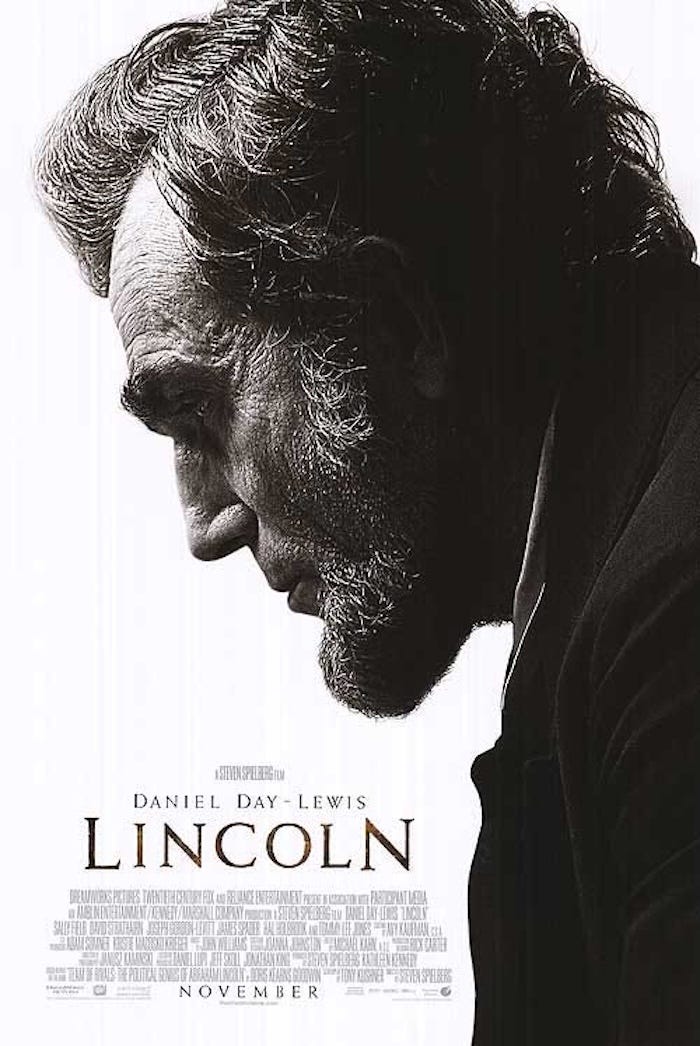
Today: Lincoln (2012). You may download the script here.
Screenplay by Tony Kushner, book by Doris Kearns Goodwin.
IMDb plot summary: As the Civil War continues to rage, America’s president struggles with continuing carnage on the battlefield as he fights with many inside his own cabinet on the decision to emancipate the slaves.
Lincoln
Scene by Scene Breakdown
By Paul Graunke
GoIntoTheStory.com
P1 Open with a scene of muddy and blood hand-to-hand fighting between Black Union soldiers and White Confederate soldiers.
P1–6 Lincoln talks to 2 Black soldiers about the battle and the upcoming siege of the harbor at Wilmington, NC. The Black soldiers point out the lack of equal pay and opportunity in the military. Two White soldiers interject themselves; one recites Lincoln’s Gettysburg Address — until called to ranks. A Black soldier finishes reciting the Address.
P6–9 Lincoln tells his wife Mary another ominous dream. Mary insists a recent “carriage accident” was an attempted assassination on him. Lincoln declares his goal of getting an amendment to abolish slavery passed before his second inauguration. Mary thinks he’s wasting his time and squandering his political capital. The amendment bill is certain fail.
P10–11 Lincoln enters his office to find his son, Tad, who has fallen asleep on the floor while studying glass negatives of photographs of the war — and of Black children, near Todd’s age, being sold as slaves. While packing him off to bed, Tad whispers that he misses his brother Willie who died three years ago.
P11–14 After a very brief speech at a flag raising ceremony, Lincoln argues strategy with his Secretary of State, William Seward. Seward, too, fears the amendment will fail. He advises Lincoln to wait until after his second inauguration, until after the war is won. But Lincoln doesn’t want to. The question of obtaining votes by discrete political patronage is raised. Lincoln disavows resorting to blatantly “buying votes.”
P14–19 An interview with a petitioner shows Lincoln’s political dilemma: some favor the amendment in the short run as a military tactic to foreshorten the war — but they also fear the long term economic and social consequences of Blacks being free and equal.
P20–22 A meeting with Preston Blair, a prominent Republican, further underscores the political dilemma. Blair reminds Lincoln that most Republicans aren’t abolitionists. He agrees to throw his support behind the 13th amendment only if Lincoln allows him to pass through Union lines to discuss peace terms with Jefferson Davis, President of the Confederacy, in Richmond.
P23–28 Lincoln’s reviews the war with his cabinet. The stakes for the battle for the port of Wilmington, NC are established: capturing the seaport will hasten the fall of the Confederacy. The discussion turns the political battle for the 13th Amendment. Lincoln explains why it is legally necessary. In spite of all the objections raised, Lincoln insists on getting the amendment passed and on his desk to sign by February 1st, 1865.
P29–30 In spite of protestations from the floor manager for the anti-slavery amendment bill, Lincoln insists he bring the amendment bill to the floor for debate in the House of Representatives and call for a vote by the end of January.
P30–31 The House leadership, including Thaddeus Stevens, leader of the radical Republicans, debates Lincoln’s tactics and motives.
P31–33 Seward instructs political operatives to offer patronage jobs to induce Democratic Congressmen to vote for the amendment. Lincoln’s name is not to be mentioned. The operatives point out that outright bribes would be more effective, but Seward rejects the idea.
P35–37 On January 9, 1865, the political battle is joined: debate in the House begins. The political operatives analyze prospects from the gallery while on the floor opposition leader, Fernando Wood, argues against the amendment. Thaddeus Steven ridicules Wood’s argument that giving Blacks the right to vote and intermarry violates natural law.
P37–40 Lincoln’s oldest son, Robert, arrives from Harvard and is warmly greeted by his mother, Mary. But a gap opens up between them: she expects him to return to Harvard in a few days, but he expresses reservations. He backs off from an open confrontation with her about enlisting.
P40–41 Preston Blair reports to Lincoln that Jefferson Davis agrees to send 3 commissioners. He urges Lincoln to negotiate peace terms.
P42–46 A series of short scenes where the political operatives offer lame duck Democrats patronage jobs with mixed results.
P47 Seward reports to Lincoln that the number of unsecured votes has been reduced from 20 to 13. But he has heard about Preston Blair’s mission to Richmond.
P48 The 3 Confederate peace commissioners cross into Union territory under a military escort of Black soldiers — much to their disdain and distress.
P48–50 Seward advises Lincoln that he must not meet the commissioners, that when word gets out of such a meeting, the amendment is doomed. Lincoln tells him to get the 13 votes before they arrive.
P50 The commissioners arrive at US Army Headquarters.
P50–52 As Lincoln dresses for a reception, Robert presses his case for being allowed to enlist in the war.
P53–54 Lincoln consoles his wife over the death of their son Willie, whose loss 3 years earlier she still mourns.
P54–58 In spite of her sorrow, Mary Lincoln rises to the occasion, radiates charm, at the reception. She also deploys her wit and her Kentucky accent to charm and mock some politicians, including Thaddeus Stevens, who, in times past, criticized her spending and suspected her of Southern sympathies.
P58–59 In a tête-à-tête, Lincoln urges Thaddeus Stevens to throttle his temper in order to facilitate passage of the amendment.
P60 An argument Lincoln has with Robert about enlisting is interrupted by a message that the shelling of Wilmington harbor has begun.
P61–63 In the telegraph office, Secretary of War Stanton impatiently waits for news about Wilmington. He stomps out in order not to hear Lincoln tell another of folksy story as he patiently waits. The news arrives that Wilmington has fallen —
P64–66 — but with many causalities. Aware that the Republicans are ‘buying’ votes while they wait for the national mood to turn against Lincoln and the amendment, Fernando Wood, the leader of the opposition, is encouraged to bait Thaddeus Stevens, incite him to say something that will undermine support for the amendment among moderates. Meanwhile, debate rages on the floor of the House.
P67–68 A key lame duck representative vacillates in voting for the amendment, so the political operative assigned to him makes an offer he (finally) cannot refuse.
P68–69 Rumors about the peace delegation from Richmond complicate the political operatives’ effort to win remaining votes. And risk their losing those already obtained.
P69–71 Ulysses S. Grant keeps the peace commissioners cooling their heels, rejecting their terms.
P71–72 Lincoln and Seward ponder the horns of the dilemma they are trapped between: they can have certain peace within a week, or pass the 13th Amendment — maybe — within ten days. But they can’t have both.
P72–76 After pondering the human toll of the war as he pardons yet another soldier, Lincoln gives a telegraph operator a message to tell Grant to convey the peace commissioners to Washington. But after reflecting on the principle of equality, Lincoln reconsiders, amends the message to have them conveyed only as far as Hampton Roads.
P77–81 Try as they might, the amendment’s opponents cannot get Thaddeus Stevens to rise to their rhetorical bait.
P81–82 Lincoln visits an army hospital with Robert. Despite the human suffering he sees, the butchered body parts, Robert insists he will enlist. The argument builds to a climax: Lincoln slaps Robert’s face when he accuses his father of acting out of fear of Mary, more than fear of him being killed.
P84–86 The showdown with Mary after Lincoln gives Robert his consent to enlist. Even though he will be posted far from the front line, she is distraught. This precipitates the climax of the conflict, the disunity, in their relationship focused around the death of Willie.
P87 Lincoln’s public and private conflicts are joined when Mary Lincoln makes the passage of the 13th amendment personal: “Since you are sending my son into the war, woe unto you if you fail to pass the amendment… You will answer to me.”
P87–88 Lincoln has a frank discussion with Elizabeth Keckley, a Black woman, dressmaker and confidant to Mary Lincoln, about the stakes and consequences of the war and the amendment.
P88–91 At last, Lincoln gets personally involved as the battle for votes comes down to the finish line.
P89–93 Per Lincoln’s suggestion, a Democrat approaches Thaddeus Stevens to cut a political deal in exchange for his vote.
P94–99 Lincoln brings the full force of his office and personality to bear on securing the remaining votes.
P99–102 The day of reckoning: the vote on the anti-slavery amendment. But it is delayed when a leading opponent reveals that the peace commissioners are on their way to Washington.
P102–104 Lincoln sends a note assuring the House that there are no peace commissioners in Washington.
P105–113 Voting begins… and after stringing out the voting for all the historical and histrionic drama its worth… the amendment passes by two votes.
P113–114 The winners celebrate. Thaddeus Steven asks for the official bill which he takes home…
P114–115 …and reads to his Black mistress.
P116–118 Lincoln meets with the peace commissioners in Hampton Roads. They bargain for the rebel states being re-admitted to the Union ASAP so they can vote against the 13th Amendment. Lincoln does the math for them: they won’t be able to muster enough states to defeat the amendment.
P118–119 Lincoln visits the ruins of Petersburg, Virginia and confers with General Grant on post-war issues.
P120–121 Lee surrenders to Grant at Appomattox. The war is over.
P121–122 On a buggy ride through spring time Washington, the Lincolns look forward to happier times.
P122–123 Lincoln goes out for the evening to Ford’s Theater.
P123–124 At another theater, Tad Lincoln screams in horror when it is announced that the President has been shot.
P124–125 He belongs to the ages.
P125–126 The movie closes with a flashback: Lincoln delivering his Second Inaugural Address.
Writing Exercise: I encourage you to read the script, but short of that, if you’ve seen the movie, go through this scene-by-scene breakdown. What stands out to you about it from a structural standpoint?
If you’d like a PDF of the Lincoln script scene-by-scene breakdown, go here.
Kudos to Paul Graunke for doing this breakdown.
To see 100+ screenplay scene-by-scene breakdowns, go here.