Script Analysis: “CODA” — Part 6: Takeaways
A week-long analysis of this movie which was a big hit at the 2021 Sundance Film Festival. Download. Read. Discuss.
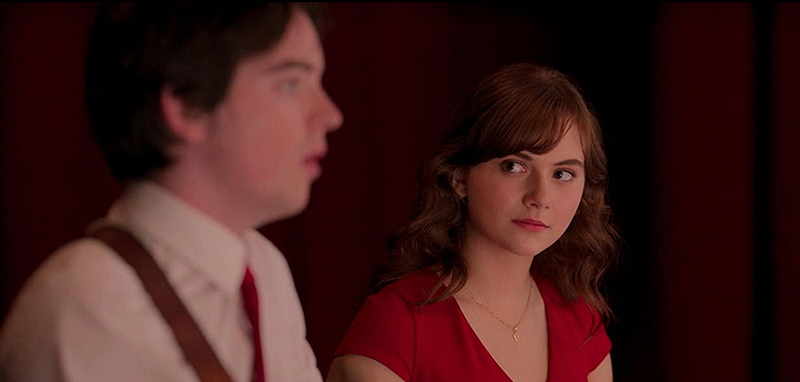
A week-long analysis of this movie which was a big hit at the 2021 Sundance Film Festival. Download. Read. Discuss.
Reading scripts. Absolutely critical to learn the craft of screenwriting. The focus of this bi-weekly series is a deep structural and thematic analysis of each script we read. Our daily schedule:
Monday: Scene-By-Scene Breakdown
Tuesday: Plot
Wednesday: Characters
Thursday: Themes
Friday: Dialogue
Saturday: Takeaways
Today: Takeaways.
This week, we have been reading, analyzing, and discussing the script and movie CODA. In some ways, today’s exercise is the whole point of the series: What did you take away from the experience of reading and analyzing the script?
Screenplay by Sian Heder, based on a motion picture by Victoria Bedos & Stanislas Carré de Malberg & Éric Lartigau & Thomas Bidegain
Plot summary: As a CODA (Child of Deaf Adults) Ruby is the only hearing person in her deaf family. When the family’s fishing business is threatened, Ruby finds herself torn between pursuing her love of music by wanting to go to Berklee College of Music and her fear of abandoning her parents.Here are my takeaways via each day’s discussion.
SCENE-BY-SCENE BREAKDOWN
This was my favorite movie at the 2021 Sundance Film Festival. Apparently, it wasn't just me who liked the film as it sold for $25M to Apple TV.https://www.indiewire.com/2021/01/apples-25-million-plus-coda-acquisition-smashes-sundance-sales-record-1234613190/One thing that struck me as I watched the movie is it had so many of the narrative elements of an 80s movie:--Teenage Protagonist--Frustrated in life with an idyllic, but seemingly unachievable goal--Challenging family life--Romantic interest--Mentor figure--And lots and lots of musicYet while the movie evokes memories of John Hughes-type films, it feels quite contemporary. Perhaps it's the setting, not the 80s suburbs, but a working class coastal town in Massachusetts. Maybe it's the unique family situation (the Protagonist Ruby's parents and older brother are all deaf, hence, CODA: Children Of Deaf Adults).Those elements contribute to the contemporary feel, but what really makes it work in this decade is how grounded the tone is with regard to Ruby's relationship with her family. There's a kind of gritty realism to their interactions, definitely a blue collar family, but one who deal with their challenging circumstances - not only running a family business, but doing so while 3/4 of their members are deaf - with a proud embrace of who they are and what they have achieved.The story aligns nicely with the Heroine's Journey as Ruby needs to forge her own path to embrace her potential as a singer, to quite literally find her "voice," and the path of her parents and brother to understand that is compelling and emotionally involving.The fact the movie succeeds so well while being conventional in almost all respects speaks to the power of the characters. Each member of the Rossi family is unique and interesting in their own right. I look forward to exploring their individual and collective story this week.
PLOT
CODA's plot aligns to a T with a "conventional" approach to mainstream commercial screenplay structure.Opening: We see her talent as a singer.Act One midpoint: In racing out of the first choir rehearsal, that reflects a Refusal of the Call.Act One end: Three things locked down: (1) She's now actively in the choir. (2) The duo with Miles. (3) Bernardo encourages Ruby to apply to Berklee and will tutor her for her tryout. All three of these put her on a path toward a Big Confrontation with her family about her involvement in the fishing business (the central conflict of the story: her dream vs. their needs).Act Two A tracks some parallel storylines including the emergence of the new family business model and Ruby's growth as a singer. Also, her budding relationship with Miles.Transition (48-54): Ruby lays out her desire to be a singer and go to music school. She has to truly commit to working with Bernardo or else he will refuse to help her. This is a tipping point for Ruby as she moves away from what we may call the Parent Path (J. Campbell calls it the path of the "should") to what the Hero Path, what Ruby's need is - to make her OWN way in the world. That sets up the narrative tension about how these two paths will resolve, especially with the pressure of the family's new business plan which only heightens the importance of Ruby's involvement in it.Act Two B leads to a crisis point where Ruby is ready to deny her own desires to continue working in the family business (All Is Lost - she misses the Berklee audition), but Leo (in a Mentor moment) insists she follow her dreams.Act Three is all about the Big Performance where Ruby's parents finally see and "hear" what singing means to Ruby, how it can impact people, etc. That moment with her father, where he feels the vibrations in her throat as she sings - terrific storytelling.The audition. She gets accepted to Berklee. Leaves the family and signs, "I love you" as she drives away.The story structure is one reason why the movie reminds me of an 80s movie. It really is a conventional story of an adolescent embracing her need and following her dreams. But there is the unique hook of the Protagonist living with a deaf family, the specificity of the fishing business and the local community, and the characters, all of whom are unique and entertaining that elevate the story into something special.As always, great characters transform even the most conventional story into a winning movie. That's next in our discussion: characters.
CHARACTERS
Once again, we have the presence of five primary character archetypes at work in a story:Protagonist: Ruby.Attractor: Miles. A traditional love interest, but a secondary storyline, not a conventional Big Romance. Her real "romance" is with singing.Mentor: Bernardo (music teacher), Leo (brother). The former is the Outsider who pushes her to go inside herself and "claim" the right to be a singer. He helps her find her voice (think Lionel in The King's Speech who has a similar role in relation to Bertie, the man who would be king). The latter is the Insider (family member) who provides support for Ruby to leave the "nest."Tricksters: Frank, Jackie (parents). I like to think of the Trickster as a shapeshifter, switching from ally to enemy, enemy to ally. In this case, if we look at Ruby's goal -- go to Berklee -- then her parents, especially Frank, are enemies for much of the movie. Eventually, they become allies in supporting Ruby's desire to go to Berklee and pursue her passion for singing.Which leads us to this: Who (or what) is the Nemesis? I would argue it is deafness. The bottom line narrative function of a Nemesis dynamic is to provide opposition to the Protagonist and their goal. In this case, deafness does that in at least two ways: (1) The fact her parents and brother are deaf requires Ruby, who can hear, to be a part of the family fishing business. Not only a part, but a major role in conducting transactions with the hearing world. This dynamic is what "enslaves" her to the Parent Path, the path of what she feels like she should do, and in so doing curtails the desire to pursue her personal dreams. (2) Deafness prevents her parents from hearing Ruby sing. If they could hear their daughter's singing voice, I would imagine they would wholeheartedly support her creative ambitions. They would also not need Ruby to act as an intermediary with hearing customers.There's also a third way deafness works against Ruby's goal, more metaphorically and that is Ruby refuses to "hear" the call she has inside, to pursue her dreams of being a singer. It's like an imposed deafness she has (originally) which she has to lose in order to hear and embrace her own Inner Voice.One final thought: As I've been typing my comments, I have consistently had a hard time typing "sing" as it has been coming out as "sign." I doubt anybody involved in the writing and producing this movie thought anything of this, but it's an interesting way to think of Ruby's arc, going from:signing --------------->>>>>>>>>------- singingMore on that when we discuss Themes.
THEMES
There are several themes at work in CODA. Seeing as the narrative aligns with the classic throughline of the hero's journey, a big one is Ruby claiming her independence by choosing to follow her life-path and not suppress her need by continuing to follow the path she has been leading, i.e., a key cog in the family's fishing business. Her own transformation, one of personal empowerment, is matched by the transformation of her family, in particular her mother, and even more specifically, her father.That veers over into another theme: family. In another iteration of this story, the choir may have played a more prominent role as a kind of surrogate family, but in CODA, the group of singers really exists as a platform for Ruby to exhibit her personal growth. Her singing is more about her solo voice and the duet she rehearses and performs with Miles. While functioning as an Attractor character, Miles is not a prominent romance figure as he is someone to enable Ruby to express positive inner emotions and feel good about them. Their relationship also underscores her growing sense that the future offers possibilities for her she had not previously imagined. Another member of the choir "family" is Bernardo who, as a Mentor, represents an alternate father figure. The combination of Bernardo, Miles, and to a lesser extent the choir itself creates a parallel "family" for Ruby and, of course, generates conflict, both external and internal.How does that conflict get resolved? I would argue the resolution points to the story's central them: Finding one's voice. The fact that Ruby trains as a vocalist and experiences some key vocal performances is a metaphor for her discovering and embracing her inner voice, the one that reflect her unconscious goal: to head off onto her own personal path, i.e., music school. Of course, the fact her father, mother, and brother are deaf lends this theme a unique flavor. Their inability to hear Ruby's singing voice makes Ruby's journey to independence that much more difficult. In fact, the parents, and in particular the father, have to quite literally see Ruby perform as a singer to finally grasp what music means to her, how it enlivens her, and how it brings her joy. So in a way, they don't so much as hear her voice as experience it visually. That adds to the distinctive way in which this central theme is explored and the primary conflict gets resolved.Those are my thoughts, three key themes: Independence. Family. Voice. I'm sure there are more and welcome other opinions and analysis.
DIALOGUE
It is perhaps the most poignant moment in the movie as well as the script: Ruby and her father seated on the trunk of the family truck. Staring at the stars. Then this:They sit for a moment.FRANK (CONT'D)
The song you sang tonight. What was
it about?RUBY
I guess it’s about sacrifice. What
it means to need someone else.FRANK
Can you sing it for me?RUBY
What, now?FRANK
Please.Ruby hesitates, then starts to sing quietly.RUBY
(singing)
Like the sweet morning dew, I took
one look at you. And it was plain
to see, you were my destiny. With
my arms open wide, I threw away my
pride. I'll sacrifice for you,
dedicate my life for you --FRANK
Louder!Ruby sings louder. Frank lays his hand on her throat to feel the vibrations. As the song continues, Ruby’s voice becomes clear and resonant, drifting up into the night.RUBY
(singing)
I will go, where you lead, always
there in time of need. And when I
lose my will, you'll be there to
push me up the hill --Frank moves his hands around on her neck to find her voice. He closes his eyes - that’s it. He can feel it. He moves his hand to her plexus, “listening.”RUBY (CONT'D)
(singing)
There's no, no looking back for us.
We got love sure 'nough, that's
enough. You're all, you're all I
need to get by.Frank opens his eyes. He takes in his daughter. He kisses Ruby on the forehead. She leans into her dad and they look up at the night sky.Frank's "dialogue" is sign language. And his "listening" to Ruby sing is feeling, also with his hands. And the spoken "dialogue" in the scene are the sung lyrics of the song which carry with their words an emotional subtext about Ruby's love for her family.It's a touching and evocative moment, all with an unconventional use of "dialogue," another example of the unique hook of the story: a child of deaf adults finding her own voice ... and her own life-path.
Here is that scene in the movie:
Major kudos to Laura Bolton or doing this week’s scene-by-scene breakdown.
To download a PDF of the breakdown , go here.
For Part 1, to read the Scene-By-Scene Breakdown discussion, go here.
For Part 2, to read the Plot discussion, go here.
For Part 3, to read the Character discussion, go here.
For Part 4, to read the Themes discussion go here.
For Part 5, to read the Dialogue discussion go here.
To access over 100 analyses of previous movie scripts we have read and discussed at Go Into The Story, go here.
I hope to see you in the RESPONSE section about this week’s script: CODA.