Screenwriting Tip: How to Handle Blocks of Scene Description
Think of each paragraph as a camera shot… with a catch.

Think of each paragraph as a camera shot… with a catch.
I used to teach a university level class called The History of American Screenwriting. It was a decade by decade review of the role of the screenwriter in Hollywood and the film business.
One aspect of the craft we studied was screenplay format and style, the lesson being this: It is always changing.
I was reminded of this while reading five screenplays written by Nicholl Fellowships in Screenwriting recipients. Since 2012, I have interviewed every Nicholl winner and those conversations include in-depth discussions of their screenplays. Reading their scripts back to back, I pick up on common themes, narrative elements, and screenplay style.
I’d like to focus on the latter, specifically how to handle blocks of scene description. To begin the conversation, let’s look at an excerpt from the 1960 screenplay for the movie Psycho.
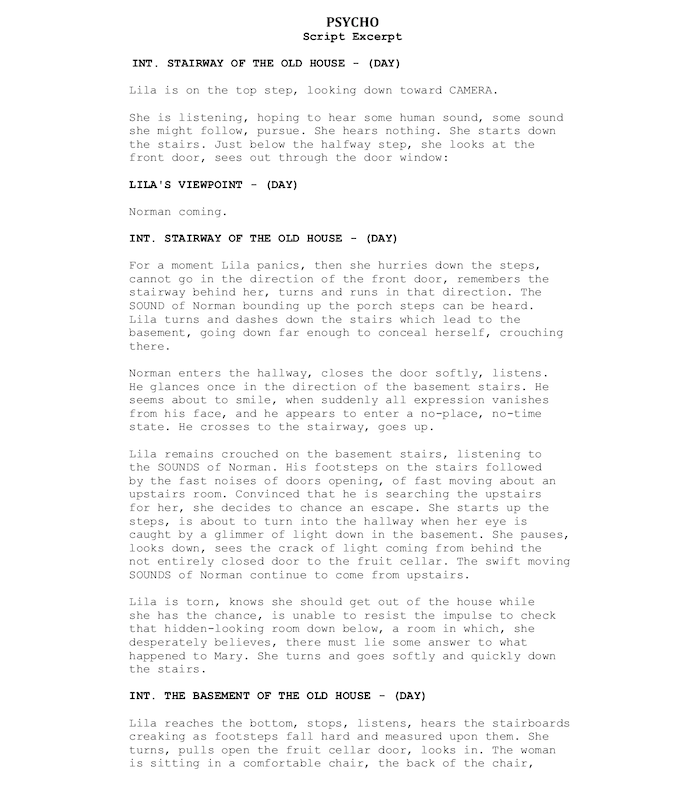
Consider the scene description under the scene heading INT. STAIRWAY OF THE OLD HOUSE — (DAY). Here are the number of lines in each paragraph: 7, 5, 10, 6. Compare to the first page from one of the 2019 Nicholl-winning scripts Princess Vietnam by Aaron Chung:

Notice the difference? No paragraph with more than three lines, most with one or two. Here is an excerpt from another 2019 Nicholl script: Lullabies of La Jaula written by Karen McDermott:
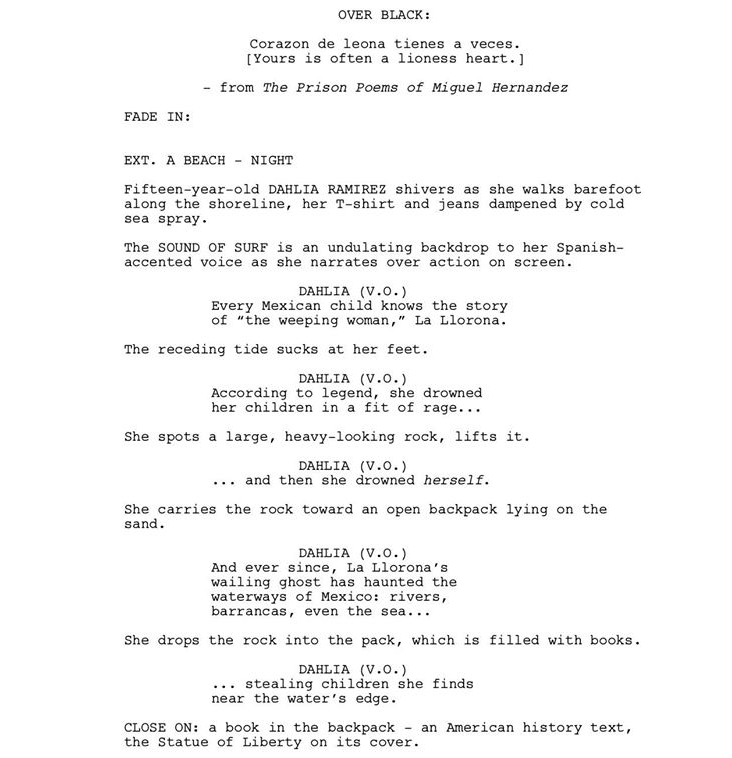
Same thing: No paragraph of scene description more than three lines, most one or two lines. How about page one from Boy With Kite by 2019 Nicholl Fellow Renee Pillai:
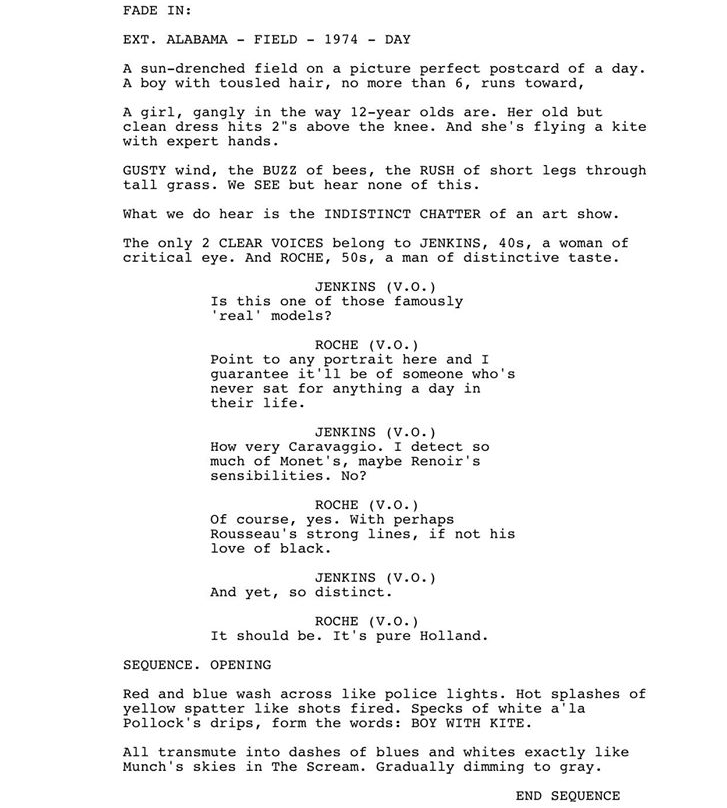
The same pattern — no paragraph of scene description more than three lines — but there’s something else at work here. Imagine watching this on screen, particularly those first three paragraphs. Note how the scene description ‘directs’ the eye to three distinct images.
What this suggests is specific camera shots.
Consider page one of the Nicholl-winning screenplay Mother written by Sean Malcolm:
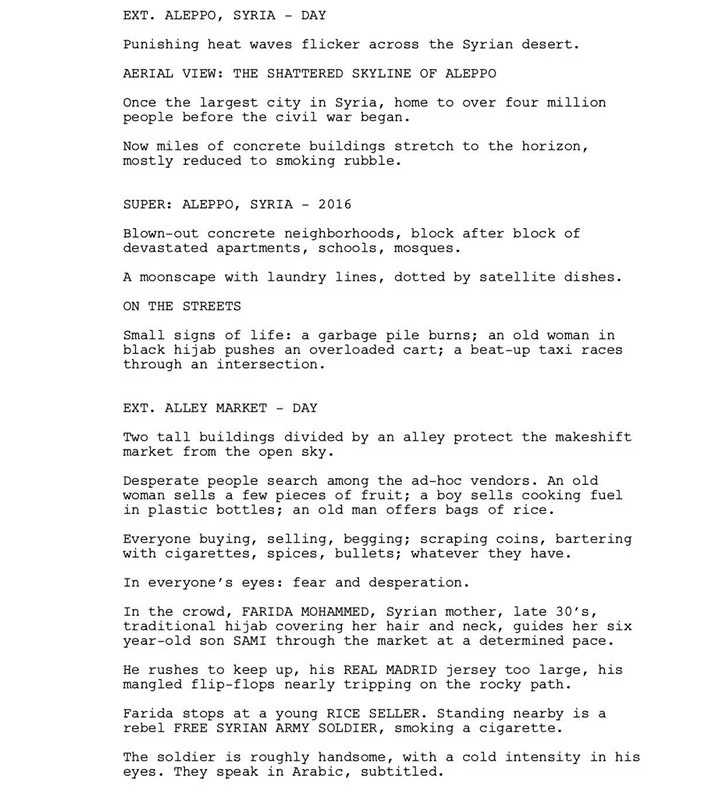
Here we see this idea of paragraphs as individual camera shots more fully fleshed out. Focus on the last four paragraphs:
- Wide Shot: Farida in a crowd with her son Sami
- Close Up: Sami’s jersey and mangled flip-flops
- Medium Shot: Farida, the Rice Seller, and the Soldier
- Close Up: The Soldier’s face
One more example from a 2019 Nicholl-winning script: Street Rat Allie Punches Her Ticket written by Walker McKnight:
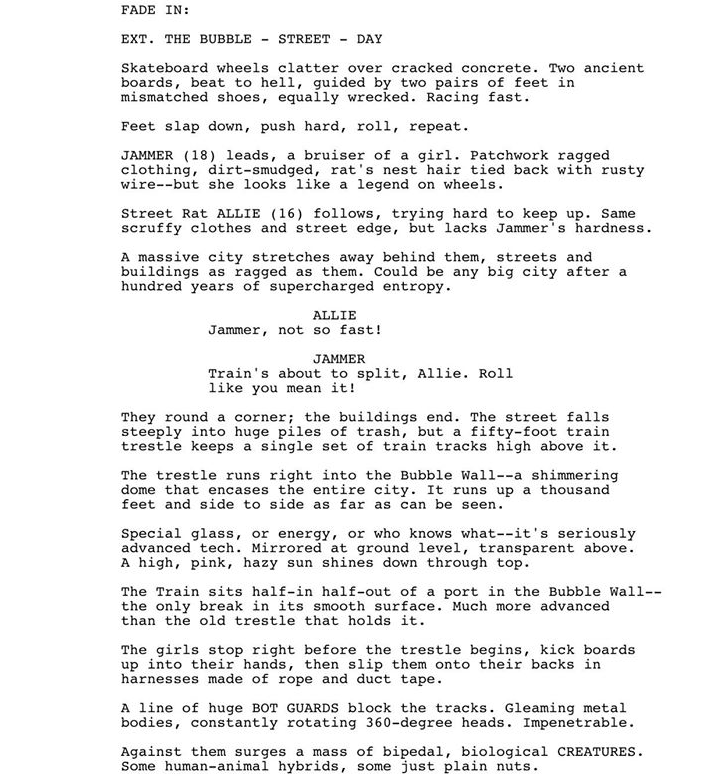
Let’s break down the camera shots:
- Close Up: Skateboard wheels
- Close Up: Feet
- Medium Shot: Jammer
- Medium Shot: Allie
- Wide Shot: Massive city
- Medium Shot pull back to Wide Shot: Train tracks
- Wide Shot: Bubble Wall
- Wide Shot (tilt up): Vertical image of the Bubble
- Wide Shot (pan): Train
- Medium Shot: The girls
- Medium Shot: Bot Guards
- Wide Shot (pull back): Mass of creatures
Again, no paragraph more than three lines and here’s the thing: If you think of each paragraph of scene description as an individual camera shot, you will naturally avoid long paragraphs.
Camera shots move. Cut. Cut. Cut. By putting on your director’s cap, you will find yourself writing 1, 2, or 3-line paragraphs.
Equally as important, you will write visually because you’re thinking visually.
Here’s the catch: Do NOT mention a camera.
No CLOSE UP, MEDIUM SHOT, ESTABLISHING SHOT, WIDE SHOT, etc.
Rather simply describe what the camera sees.
Ever since the rise of the spec script in the 80s, screenwriters have embraced a more ‘literary’ approach to a selling script. We are not bound by the style found in production drafts from the 40s, 50s, and 60s with their long paragraphs which often included extensive camera jargon and directing lingo.
Our goal with a spec script is to tell an entertaining story. Period. Indeed, if we do our job right, the reader should lose track of the fact they’re reading a script because they have been swept up into our story.
So how to handle blocks of scene description? While not a rule, I advise you to write paragraphs with no more than 3 lines. It makes for a much more readable script.
One way to achieve that goal: Think of each paragraph as its own camera shot. You don’t mention the camera, it’s just you putting on your directing cap and thinking visually.
How do YOU see each moment of each scene? Break up your description into what you see as the scene’s individual camera shots…
And you will be on your way to writing a readable, entertaining, and visually engaging screenplay.
You may read my interviews with Nicholl Fellowship in Screenwriting recipients — all 59 of them — here.