Screenwriting Tip: Aristotle and Three Act Structure
“A whole [story] is what has a beginning and middle and end.”
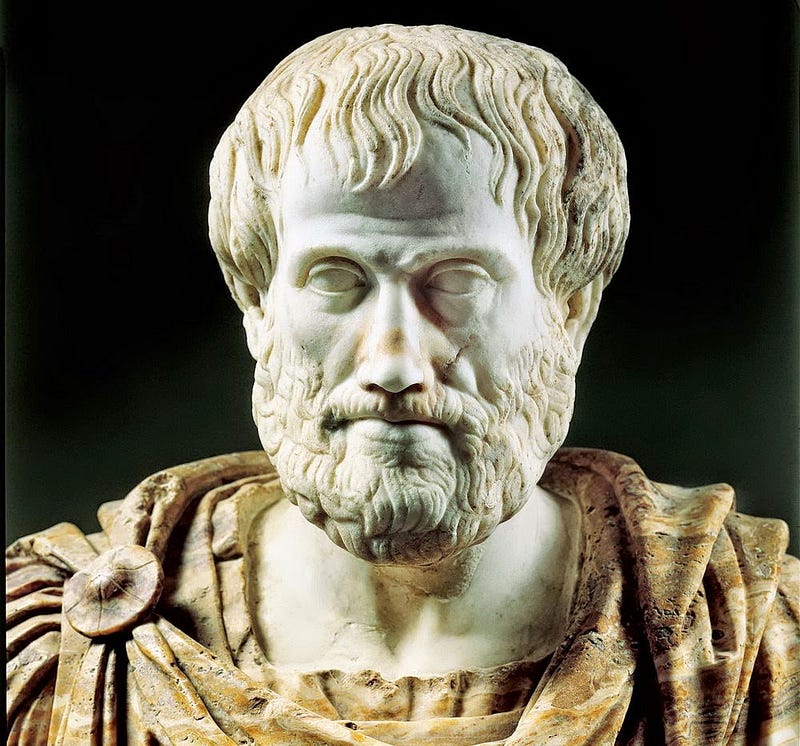
“A whole [story] is what has a beginning and middle and end.”
A screenplay is a unique literary form. It both tells a story and serves as a blueprint to make a movie. As such, understanding structure is a critical component to the screenwriting craft.
One would think given its importance to screenwriting there would be some unanimity of opinion about what that structure looks like. However if you read books, watch DVDs or attend seminars by the plethora of ‘screenwriting gurus’ out there, you doubtless will experience a dizzying array of theories, paradigms and approaches to screenplay structure: 8 sequences, 12 events, 17 plot points, 22 steps, 40 beats. There’s even one suggesting 510 stages!
Here’s the thing. Every story is different. Every writer is different. As a result, there is no secret formula, no single paradigm that is guaranteed to work. Anybody who says otherwise is either deceived or deceiving you.
However, there is an approach which has had an enduring presence in the realm of screenwriting for many decades: Three Act Structure.
Why is this the case?
In part because it has become part of the conventional way to structure a screenplay and once taken root, it’s difficult to break out of that mold. However, I think it goes way beyond convention… that there is something innate to Story and Three Act Structure.
That’s what Aristotle explored in “Poetics”:
Aristotle wrote “A whole [story] is what has a beginning and middle and end.” His articulation of each of these three parts and how they fit together is as follows:
“A beginning is that which is not itself necessarily after anything else, and which has naturally something else after it. An end is that which is naturally after something itself, either as its necessary or usual consequent, and with nothing else after it. And a middle, that which is by nature after one thing and has also another after it.”
Beginning. Middle. End. Three parts. Three movements. The number “3” is an interesting one.
· Three is first odd prime number and the second smallest prime
· There are three types of galaxies: elliptical, spirals, and irregulars
· Three basic Earth divisions: Igneous- Metamorphic- Sedimentary
· Freud suggested that psyche was divided into three parts: Ego, Super-Ego, Id
· Holy Trinity: Father — Son — Holy Ghost
· The three R’s: Reading — ‘Riting — ‘Rithmetic
There is an inherent sense of structure to the number 3: a triangle of three points; three pitches in a triad, the most basic form of a chord.
There is also a sense of finality upon experiencing that third part: third’s a charm; three strikes and you’re out.
Furthermore there are innate cycles in the physical universe that reflect three movements: Sunrise — Day — Sunset; Departure — Journey — Return; Birth — Life — Death.
So, too, in the world of ideas: Hegel’s dialectic of Thesis — Antithesis — Synthesis; classical music’s sonata form of Exposition — Development — Recapitulation.
This idea of these three movements [Beginning — Middle — End] is so fundamental to the human experience, it is little wonder it has dominated storytelling on Broadway and in Hollywood for more than a century.
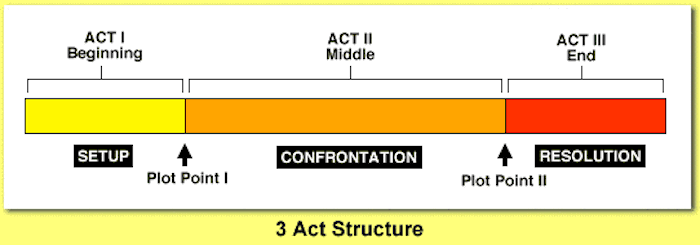
More than likely you have run into this concept. You may be so familiar with it, the very idea might seem rather obvious. Indeed, there are those who deride Three Act Structure as an outdated approach to screenwriting. I disagree. And I urge you in the strongest sense possible: Do not stray from Beginning — Middle — End.
First on a pragmatic level, whereas people involved in the moviemaking process may have varying ideas or understanding of story, it’s almost guaranteed they will all know the concept of three acts. Agent or manager, studio executive or producer, director or actor, everyone uses Act One, Act Two, and Act Three when discussing a script.
More importantly and directly related to screenwriting per se, these three movements of Beginning, Middle, and End undergird all aspects of the craft:
- Every scene should have a Beginning — Middle — End.
- Every sequence should have a Beginning — Middle — End.
- Every subplot should have a Beginning — Middle — End.
- Every screenplay should have a Beginning — Middle — End.
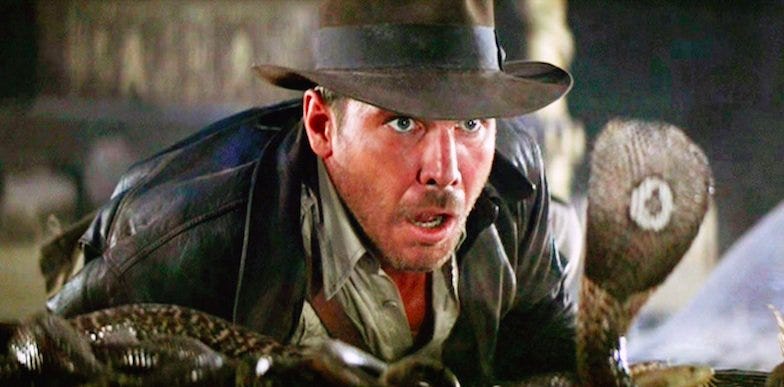
Let’s look at one of the paradigmatic action-adventure movies Raiders of the Lost Ark (screenplay by Lawrence Kasdan, story by George Lucas and Philip Kaufman) to see Beginning, Middle and End at work at all levels of the story.
Screenplay
Beginning: After learning the Nazis have discovered Tanis, the possible burial site of the Ark of the Covenant, Indy travels to see Marion in order to retrieve the headpiece of the staff of Ra. However Nazi henchman Toht attacks Marion only to be saved by Indy. Her bar destroyed, Marion declares herself to be Indy’s partner, and they head off to Egypt.
Middle: After numerous adventures including Marion’s presumed death, Indy manages to find the Ark of the Covenant, only to have it taken by the Nazis, then he steals it back, and sets off by boat with Marion. But the Nazis trump Indy by catching up to the boat via submarine, retaking the Ark and Marion.
End: After catching up to the Nazis and threatening to blow up the Ark, only to have rival Belloq cause Indy to give up his plan, the Nazis open the ancient artifact. While Indy and Marion keep their eyes shut, murderous spirits emerge from the Ark and destroy all the Nazis and Belloq. The Ark is placed in storage by the U.S. government.
Sequences
A sequence is a string of scenes anywhere from 10–20 pages, each with its own Beginning, Middle and End. A screenplay is often comprised of many sequences: Opening, Eight Sequences, Denouement.
Here is a breakdown of each sequence in Raiders of the Lost Ark:
Opening
B: Indy advances through the booby-trapped cave and obtains the gold statue
M: Indy races through the cave as it attacks him with a various traps
E: Belloq takes the gold statue while Indy barely escapes
Sequence One
B: Back to teaching, Indy gets a message from colleague Marcus Brody
M: Indy questioned by U.S. Army department reps re the Ark of the Covenant
E: Indy determines to go after the Ark
Sequence Two
B: In Nepal Indy asks Marion for the headpiece, but she sends him away
M: Toht inquires about the headpiece, then starts to torture her for information
E: Indy and Marion fight Toht, escaping with the headpiece
Sequence Three
B: In Egypt Indy meets up with trusted colleague Sallah who provides info on Nazi dig
M: Enemy agents surprise Indy and Marion, the latter ‘killed’ in an explosion
E: Bitter at Marion’s death, Indy meets with Belloq about the Ark
Sequence Four
B: Indy learns the Nazis have obtained one-half of the headpiece via Toht’s burned hand
M: With the Nazis digging in the wrong location, Indy descends into the map room
E: Indy discovers the right location to find the Ark
Sequence Five
B: Indy learns Marion is alive, but can’t release her or else he’ll be found out
M: Indy and Sallah dig up the Ark, but it’s taken by Belloq and the Nazis
E: Indy and Marion are sealed into the snake-filled Well of Souls
Sequence Six
B: Indy and Marion escape from the Well of Souls
M: The airfield attack
E: Indy chases after the Nazi truck carrying the Ark and steals it
Sequence Seven
B: Indy and Marion take off by ship with the Ark on board
M: Nazis stop the boat, board it, take Marion and the Ark onto their submarine
E: Indy travels with the sub to the island, threatens to blow up Ark, but gives up
Sequence Eight
B: With Indy and Marion tied up, Belloq and Nazis open the Ark
M: Spirits arrive, at first beautiful, then deadly
E: Belloq and the Nazis are killed, while Indy and Marion remain alive
Denouement
B: Indy meets with U.S. officials who resist his pleas about the Ark
M: Indy heads outside to meet up with Marion
E: The Ark is revealed in storage, then burns a hole in its wooden container
Subplot
Here are some subplots (secondary plots tied but subordinate to the main plot) in the movie tracked per Beginning, Middle and End:
Indy and Marion
B: They start as combatants because Marion is still angry at how Indy broke her heart
M: While on their adventures, they rekindle their romance
E: They end up as lovers
Indy and Belloq
B: Belloq once again bests Indy by stealing the gold statue
M: Belloq vs. Indy in trying to find and control the Ark
E: Belloq wins the ‘battle’ (control of Ark), but loses the ‘war’ (killed by spirits)
Indy and Sallah
B: Sallah provides key information to Indy about the Nazi dig for the Ark
M: Sallah helps Indy to find and uncover the Ark
E: Sallah secures passage for Indy, Marion, and the Ark on the boat
Indy and the U.S. Army Department
B: They solicit Indy’s advice re the Ark, causing him to decide to go after it
M: Indy does the government’s bidding by seeking the Ark
E: With the Ark in hand, the government has no need for Indy and ignores his pleas
Indy, Marion, and Toht
B: Toht fails to obtain the headpiece from Marion, but his burned hand provides clue to Nazis
M: Toht interrogates Marion in Egypt in vain, tosses her into Well of Souls with Indy
E: Toht killed by deadly spirits
Scenes
This three-beat movement of Beginning, Middle and End pertains to scenes as well. Here are — and why not! — three scenes from Raiders of the Lost Ark to demonstrate:
Indy and Brody meet with Eaton & Musgrove (U.S. Army Department)
B: Eaton and Musgrove question Indy about a mysterious intercepted Nazi cable
M: Indy explains the significance of Tanis as the possible place where the Ark is located
E: Indy provides details about the Ark of the Covenant and its reputed powers
After Marion’s ‘death,’ Indy meets Belloq in a bar
B: Drinking alone, Indy is escorted by German henchmen to see Belloq
M: Belloq discusses their mutual affection for history and interest in the Ark
E: Sallah’s children rush in to save Indy from being killed
Indy and Marion escape from the Well of Souls
B: Indy and Marion are sealed into the Well
M: Fending off snakes, Indy scales a pillar
E: Swinging the pillar, Indy bashes through the wall allowing he and Marion to escape
Summary
Understanding story structure is one key to screenwriting. Aristotle’s concept of Beginning, Middle and End is fundamental to structure at all levels of storytelling from scenes to sequences, subplots to the entire screenplay. These three movements are innate to narrative.
NOTE: When I lead my Prep: From Concept to Outline workshops, we actually break down the middle of their stories into two parts as it naturally tracks with the psychological journey of the Protagonist: Act Two Part A (Deconstruction), Act Two Part B (Reconstruction). But those parts still represent the Middle of the story.