Screenwriting Lessons: “The Wizard of Oz” — Part 3: Trickster
Ally. Enemy. Enemy. Ally. Shapeshifting personified.
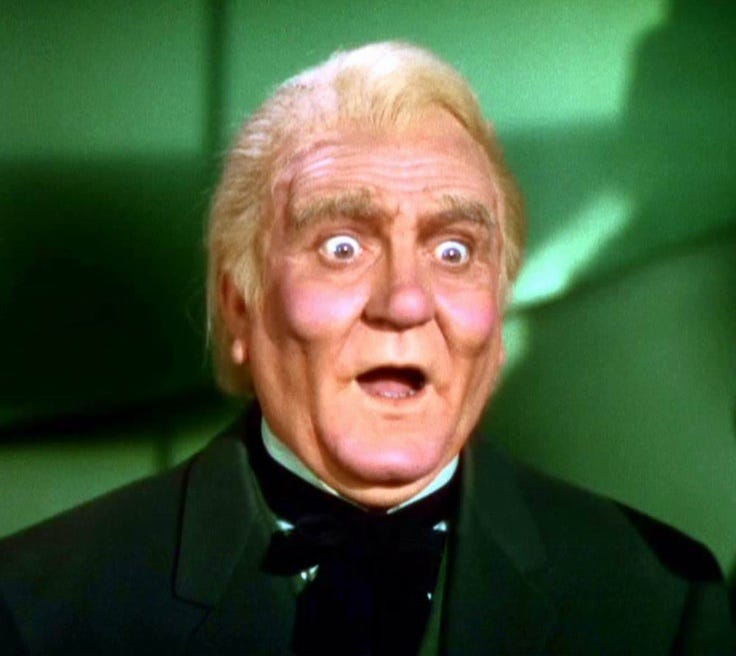
Ally. Enemy. Enemy. Ally. Shapeshifting personified.
Joel Coen of the Coen brothers has said: “Every movie ever made is an attempt to remake The Wizard of Oz.” True or not, all I know is I constantly reference the film in my teaching. Why? Because it contains so many classic narrative elements.
Therefore I was inspired to take on a week-long series focusing on screenwriting lessons we can draw from The Wizard of Oz.
Today: Trickster.
Trickster is a loaded word. The root — “to trick” — implies guile, deceit, fraud, cheating. However, in the realm of mythology and folklore, the trickster archetype can have a much more elevated status. One definition for trickster is:
“Supernatural figure appearing in various guises and typically engaging in mischievous activities, important in the folklore and mythology of many primitive peoples and usually conceived as a culture hero.”
“Culture hero.” How does a conniving figure end up in that esteemed position? To answer this, we have to think about human experience as the ancients did, divided into two realms: the Ordinary World and the World Out There.
The Ordinary World is home, where we live — the places we know, the people with whom we are familiar. Because we know this place, these people, the Ordinary World is safe.
However, if we move beyond the boundaries of the Ordinary World into the World Out There, all bets are off. We do not know these new places, we do not know these new faces. Who can we trust? The same question pertains when someone from the World Out There enters our Ordinary World. Can we trust them?
That is the Trickster’s job: to test strangers in order to ascertain their true nature. They use their guile and smarts to test the character of strangers.
“The principle of ambivalence is incorporated into the myths and rituals of primitive peoples to an extraordinary degree… That personification of ambivalence, since we are dealing with primitive perceptions and not abstract conceptualizations… is… most directly realized in the figure of the trickster.” — “The Trickster,” Paul Radin
Ambivalence. Ambiguity. This is the psychological terrain of the Trickster.
In order to succeed, the Protagonist needs to have confidence that what they have learned and who they have become has taken hold in their very soul. To prove that, they need to be tested beforehand. That’s the main function of the Trickster.
In The Wizard of Oz, we have a classic Trickster, one of the greatest examples of shapeshifting in movie history: Frank Morgan plays five different roles: Professor Marvel, Gatekeeper, Guard, Carriage Driver, and the Wizard of Oz. With the exception of the Carriage Driver who has no dialogue, each of these characters tests Dorothy:
- Professor Marvel tests Dorothy’s will to run away by fabricating a story about Auntie Em falling ill with concern over Dorothy’s whereabouts.
- The Gatekeeper informs Dorothy and her compatriots that “nobody can see the great Oz,” and Dorothy has to prove her mettle — and show off her ruby red slippers — to gain entrance to the Wizard’s castle.
- The Guard sends Dorothy and her friends away, causing Dorothy to ‘confess’ how she didn’t appreciate Auntie Em, how she’ll never forgive herself for the pain she caused to her aunt, causing the guard to weep and allow Dorothy to come inside.
- And, of course, the great Wizard himself who directs Dorothy and the others to bring back the Wicked Witch’s broom, the biggest test of all.
Even when the Wizard is defrocked — “Pay no attention to that man behind the curtain!”— and agrees to take Dorothy back to Kansas with him (Ally), he ends up flying away leaving Dorothy stranded in Oz.
One trick, shapeshift, and test after another, each of them testing Dorothy’s will. That’s the role of the Trickster!
Actually there’s another Trickster in The Wizard of Oz, a character who constantly gets into trouble, but also helps to save Dorothy’s skin. Indeed this little fellow kicks off the entire narrative by digging up Miss Gulch’s garden. Yes, you guessed it: Toto.
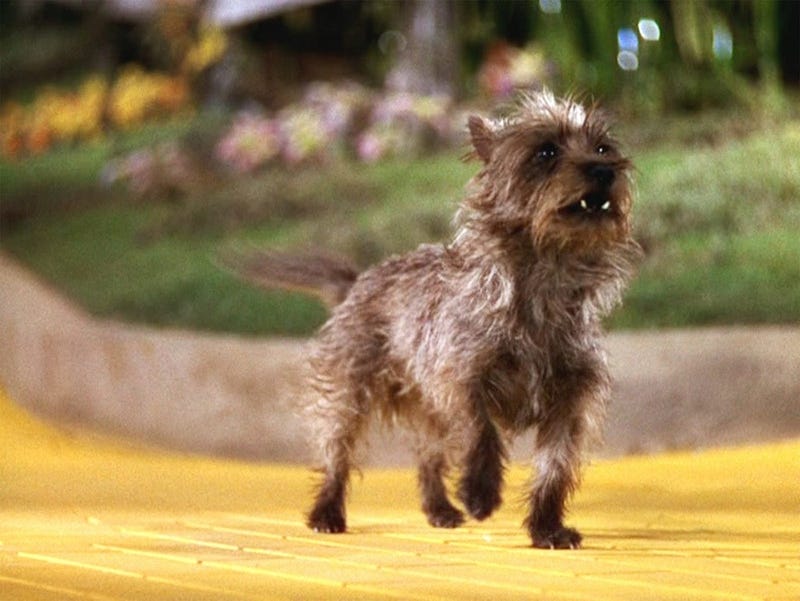
In your stories, be on the lookout for a character who tests the will of your Protagonist, who shapeshifts from Enemy to Ally, Ally to Enemy.
You might just have a Trickster on your hands!
Tomorrow: Ordinary Character, Extraordinary World.