Screenwriting Back to Basics, Day 1: Writing Scenes
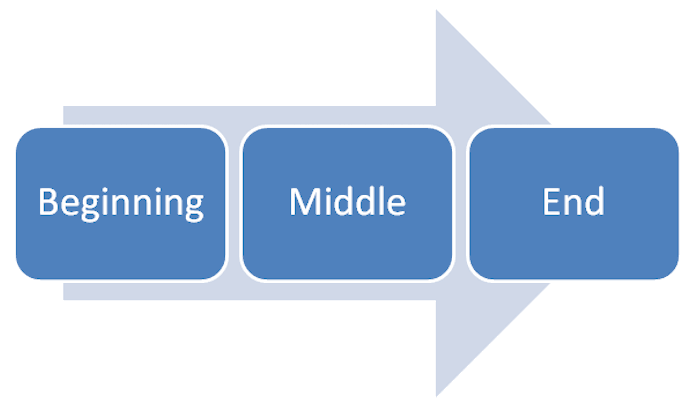
With every scene, you should ask yourself this question: What is the scene’s Beginning, Middle, and End?
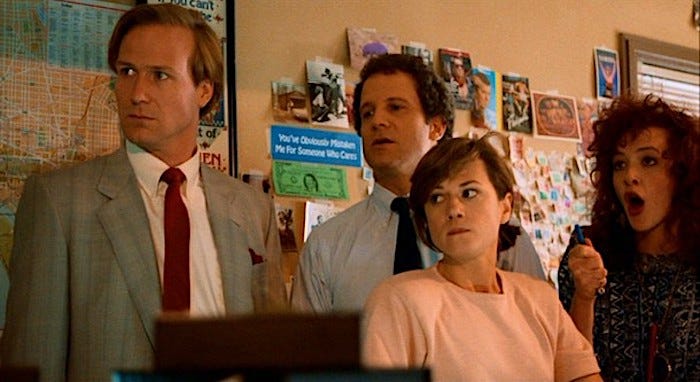
With every scene, you should ask yourself this question: What is the scene’s Beginning, Middle, and End?
As we prepare for the 2024 Zero Draft Thirty September Challenge, which begins September 1, a five-part series on Screenwriting Back to Basics.
Today: Writing Scenes.
Just as we think of a story with three acts or movements, so each scene has its own tripartite structure. Therefore, as we approach working out a scene, we need to think about what constitutes each of its three parts: Beginning. Middle. End.
A master at this is writer-director James L. Brooks (Terms of Endearment, As Good As It Gets). From his wonderful movie Broadcast News (1987), let’s look at how he introduces the three major characters in the story: Tom Grunick (William Hurt), Aaron Altman (Albert Brooks), and Jane Craig (Holly Hunter). Brooks creates a story opening in which he juxtaposes the three characters as young people, selecting a revelatory moment in each of their lives that provides insight into what is at the core of their being. First Tom:

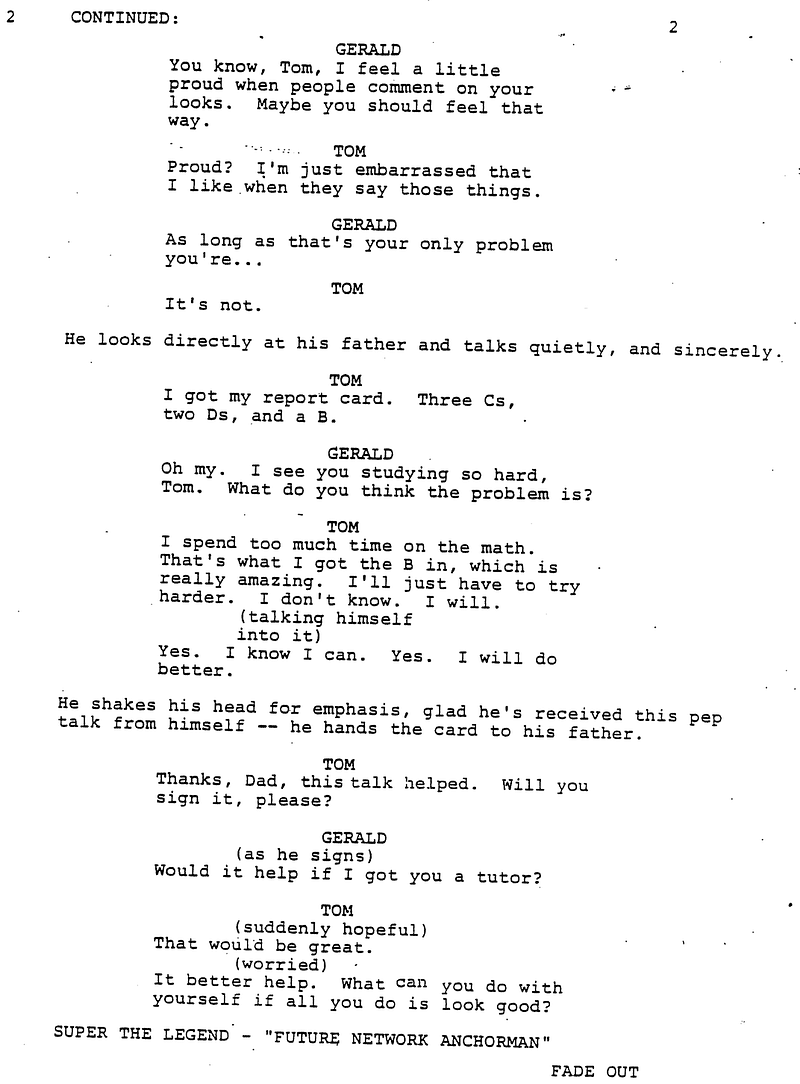
Beginning: Tom unnerved about people’s reactions to his good looks.
Middle: Toms poor performance in school
Ending: The father signs the report card and offers to get Tom a tutor.
Key note: Each beat in the scene has its own emotional center. The Beginning is Tom’s embarrassment about his good looks. The Middle is Tom’s despondence about his grades. The Ending is Tom’s elation about getting a tutor. As such, there is a flow of these emotions as Brooks takes us on a little psychological journey with an upbeat ending to transition us out of the scene and into the next, where he introduces Aaron:
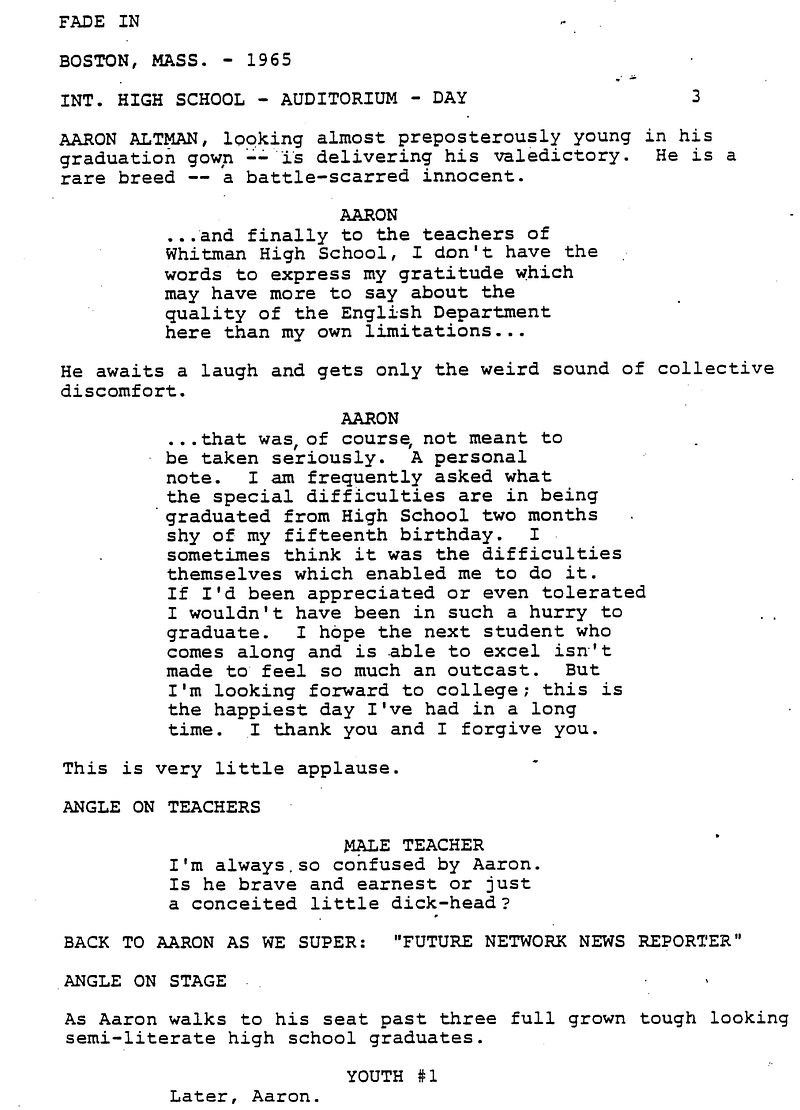
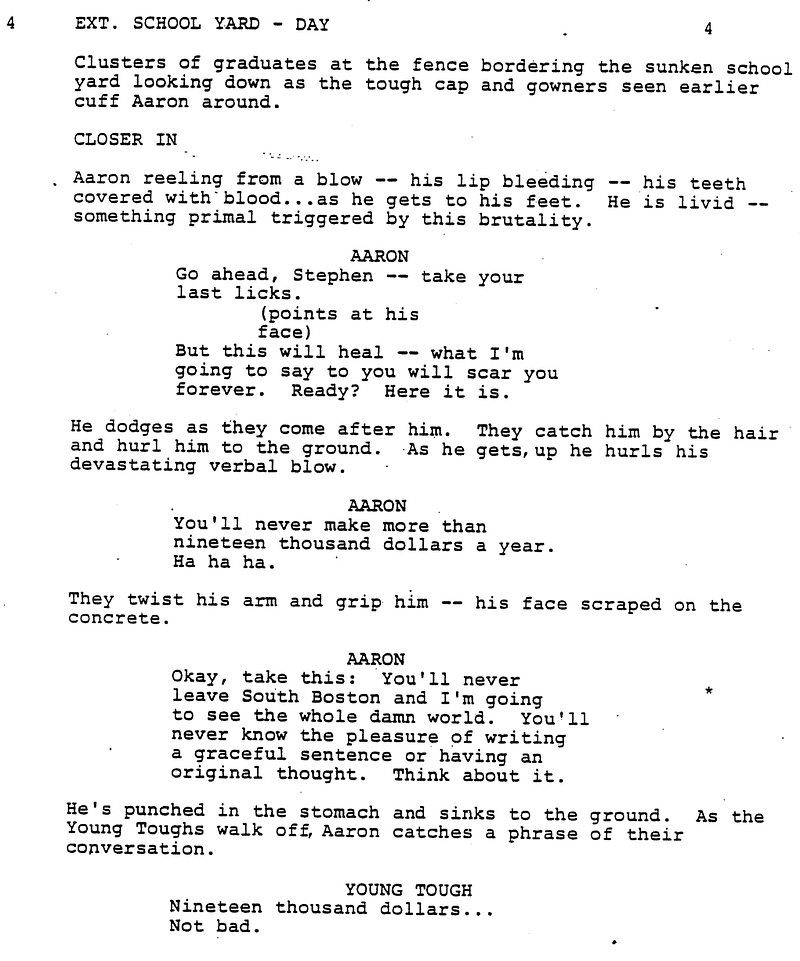
Beginning: Aaron’s honest, yet abrasive speech to his so-called peers and teachers.
Middle: The toughs pounding Aaron.
Ending: Aaron’s verbal retort to the toughs.
Key note: Again each of the three parts of this scene has its own emotional center. The Beginning is the awkwardness of Aaron’s speech. The Middle is the pain Aaron suffers at the hands of his attackers. The End is the humiliation Aaron directs at the toughs, even if they’re not insightful enough to discern the truth of Aaron’s comments (“Nineteen thousand dollars… not bad”). So as with the previous scene, there is an emotional flow to the scene with an upbeat ending. Now for the introduction of the story’s Protagonist Jane:
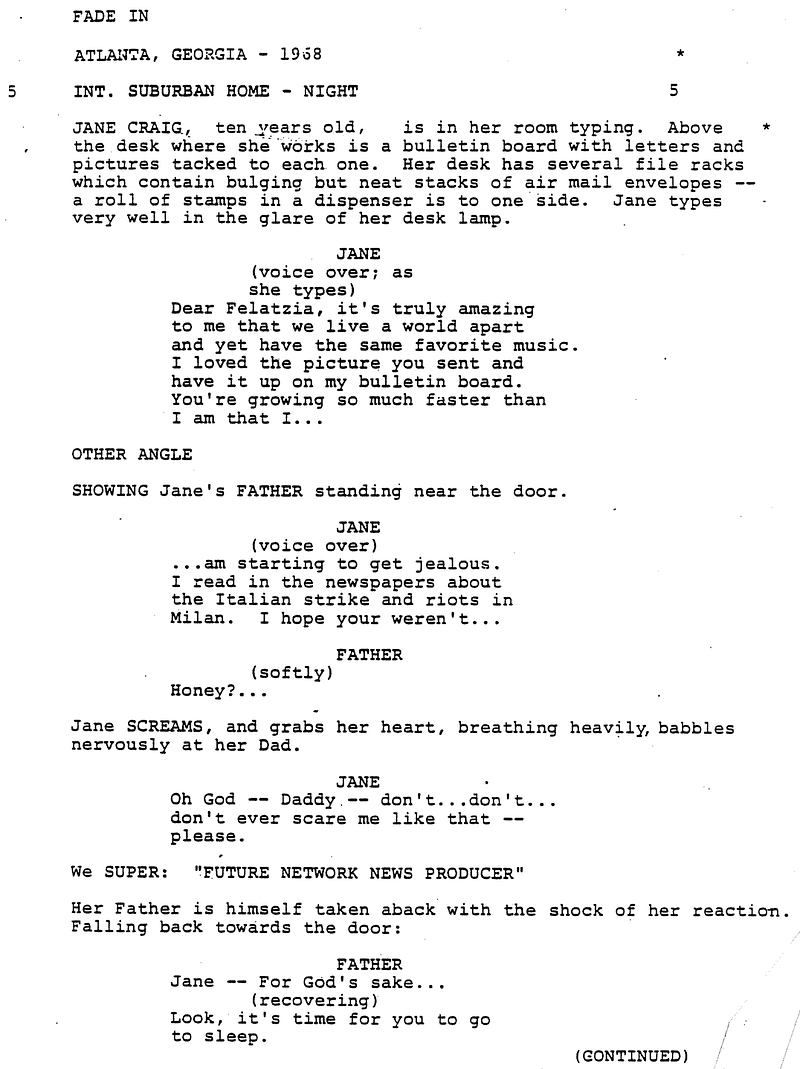
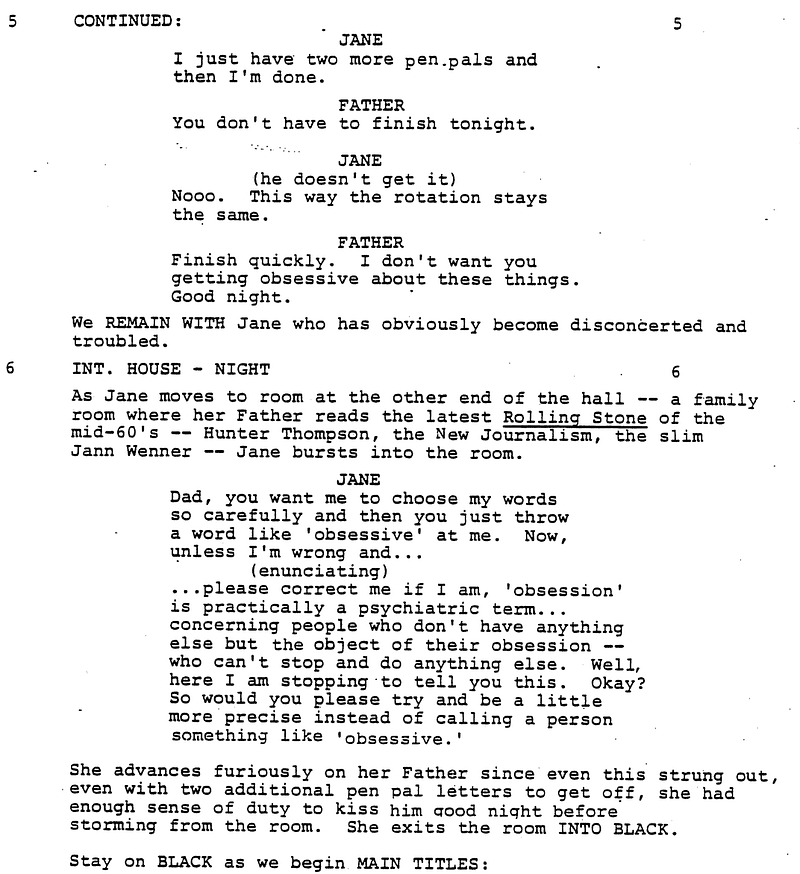
Beginning: Jane busily writing one of her pen pals.
Middle: Jane’s heightened reaction to her father’s interruption.
Ending: Jane correcting her father’s misuse of the word “obsessive.”
Key note: Yet again, each of the scene’s three parts has its own emotional center. The Beginning is the sheer happiness Jane feels as she reaches out to one of her pen pals. The Middle is the conflict between father and daughter over her behavior. The ending turns the tables as the child parents the parent, providing yet another little psychological journey, topped off with Jane kissing her father, an upbeat resolution to the scene.
Furthermore, this Script Opening sequence has its own Beginning, Middle, and End as constituted by Tom’s scene (Beginning), Aaron’s scene (Middle), and Jane’s scene (End).
So a back to basics reminder: When you approach writing any scene, ask yourself, “What is the scene’s Beginning, Middle, and End.”
This week, I’ll be posting something every day to remind us of a fundamental principle of screenwriting, just to make sure we’re not overlooking something obvious. Good to remember and especially for those writers who will be participating in the 2024 Zero Draft Thirty September Challenge.
30 Days. Fade In. Fade Out.
It begins September 1!
To join the Zero Draft Thirty Facebook private group, go here.