Screenwriting and Historical Accuracy
When writing a movie based on actual historical events, how accurate does a screenwriter have to be?
When writing a movie based on actual historical events, how accurate does a screenwriter have to be?
[I’m reprising this blog post from 2019 because it’s relevant once again with Oscar-nominated historical dramas such as Oppenheimer, Killers of the Flower Moon, and Maestro, among others. It’s an important subject for screenwriters: How closely do we need to hew to facts when writing an historically inspired script?]
It never fails. Every Award season, there are certain segments of the movie audience which complain about historical dramas which alter the facts. Indiewire featured a recent article titled “Historical Accuracy and the Awards Season: What’s at Stake?”
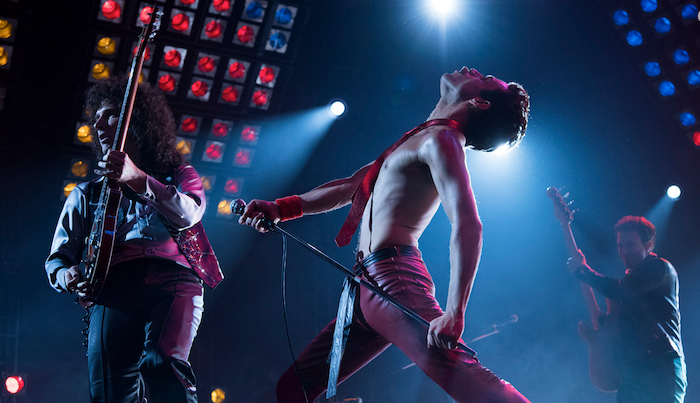
Historical accuracy hounds awards season contenders almost every year. This year, films like “BlacKkKlansman,” “Bohemian Rhapsody,” and “Green Book” came under fire for presenting distorted or incomplete depictions of real-life people and events, once again raising the question of whether historical fiction has a duty to be factually accurate.
At stake is the perceived freedom screenwriters may have in adapting factual material. Certainly, audiences don’t walk into theaters expecting history lessons, but if a film sells itself as a retelling of actual events, as opposed to being inspired by them, there’s an expectation that the film is presenting the story as it happened.
Cinema has tremendous power, arguably transmitting information in a more effective and permanent way than historical biographies. This makes artistic license more than an aesthetic choice. For many viewers, a work of historical fiction might be their entry, or even their only look, into a person’s life, event, or period, especially as reading among Americans continues to decline in the face of screens big and small.
Still: Is this the filmmakers’ responsibility? Any dramatization implies change. Time has to be compressed, sometimes resulting in the loss of characters and/or the creation of new ones, and events are combined. The goal is to create a dramatic, cohesive whole, and that is what the audience ultimately demands.
There’s an old saying in Hollywood about this precise subject: “Never let the facts get in the way of the story.” If our goal as writers is, indeed, to “create a dramatic, cohesive whole” because “that is what the audience ultimately demands,” then we simply must have the freedom to shape the facts to fit that whole. We are not creating a documentary. We’re writing a story. A story which can translate into a movie.
Besides there is something equally, if not more important than historical facts. There is emotional truth.
I remember reading an article on the movie A Beautiful Mind in which John Nash had emerged from the theater where he’d attended the premiere of the film based on his life. Reporters asked Nash about the numerous facts which had been changed in the making of the film. He shook his head, pointed back at the theater, and said, “That… was my life.”
Sure, the filmmakers had shaped events to construct a story which could work as a movie, but that didn’t matter to Nash. What he was responding to was the emotional veracity of what he experienced on the screen. The Protagonist in the movie rang true to Nash’s own life experience, no matter the variations from the historical ‘truth.’
My advice: Do your research. Find out as much as possible about the historical figures and events which come into play in your script. But always bear in mind your goal is to find the movie in the narrative content you discover. When you type “Inspired by true events” or “Based on true events,” that gives you the latitude you need to shape the material so it works as a cinematic story.
For the rest of the Indiewire article, go here.