Screenwriting Advice From The Past: The Pictorial Element
“Most tableaus, of course, have been done many times. It is up to you to think up new and unique ways of combining beauty with drama in one…
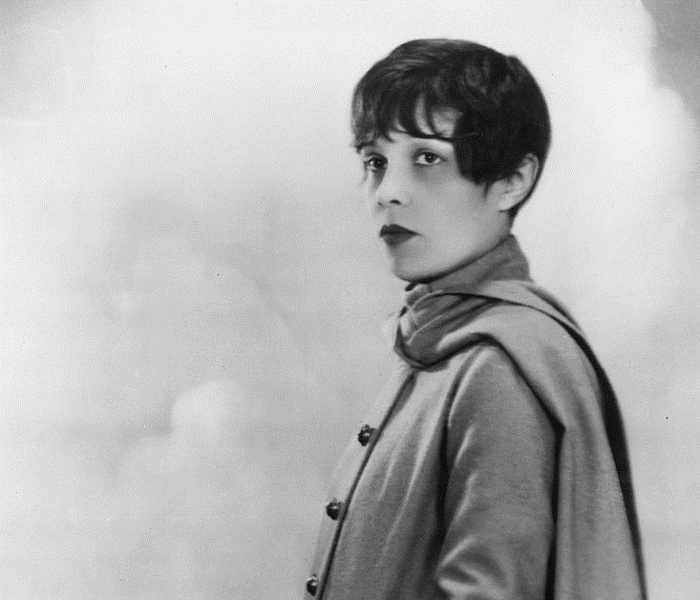
“Most tableaus, of course, have been done many times. It is up to you to think up new and unique ways of combining beauty with drama in one great moment which will lift the scene from the commonplace.”
If you are a screenwriter, you should know about Anita Loos. Loos was one of the most influential writers in the early stages of American cinema, associated with 136 film projects per IMDb.
Married to writer John Emerson, the pair wrote one of the first books on screenwriting in 1920: “How to Write Photoplays”. I have been running a series based on the book. You can access those posts here.
Today: The Pictorial Element [P. 88].
Most tableaus, of course, have been done many times. It is up to you to think up new and unique ways of combining beauty with drama in one great moment which will lift the scene from the commonplace.
When you come to a big crisis in your plot, think out a beautiful and dramatic scene. There should come a moment, or many moments, in which you can hold your action while the audience is subconsciously affected by the artistic value of the picture.
Have you watched many silent films? Teaching a course on the History of American Screenwriting has afforded me a great excuse to dip into the treasure trove of countless movies from that era. And if there is one takeaway above all others a writer can glean from those movies it’s this: Film is primarily a visual medium.
Here is an example: The New York Hat (1912), written by Anita Loos and Francis Marion, starring Mary Pickford.
Motion. Pictures. Both of those words speak to the visual nature of movies.
I am reminded of this every time I fly on an airplane and choose not to listen to the onboard movie, but see if I can track the story just with the visuals, in effect watching a silent movie. Films which rely on action and visuals work. Films which rely on talking heads and dialogue, not so much.
Back 90 years ago, Loos and Emerson were already saying, “Most tableaus… have been done many times.” How to come up with unusual and visual scenes after the tens of thousands of movies that have produced? That is a central part of our challenge as screenwriters. Imagination meets visual sensibilities.
Here is a video in which Martin Scorsese talks about the importance of visual literacy:
Bottom line, each of us should do whatever we can to up the visual power of our scripts.
Tomorrow: More screenwriting advice from the past.
You can read “How to Write Photoplays” via Google books online here.
For the rest of the series articles:
Introduction
Getting Ideas
Conflict and Crisis
Situation
Theme
Star Sympathy
Action: Part 1
Action: Part 2
Action: Part 3
Action: Part 4
Action: Part 5
Story Synopsis
Continuity: Part 1
Continuity: Part 2
The Title
Marketing the Script
Writing for the Camera
Scenery for Scenarios
The Actor’s Angle: Part 1
The Actor’s Angle: Part 2
Character On The Screen: Part 1
Character On The Screen: Part 2
Character On The Screen: Part 3
Character On The Screen: Part 4
The “Interest”: Part 1
The “Interest”: Part 2
The Kinds of Stories That Sell: Part 1
The Kinds of Stories That Sell: Part 2
The Kinds of Stories That Sell: Part 3
The Kinds of Stories That Sell: Part 4
The Kinds of Stories That Sell: Part 5
What to Write and Not to Write: Part 1
What to Write and Not to Write: Part 2
What to Write and Not to Write: Part 3
Cutting The Picture: Part 1
Cutting The Picture: Part 2
Cutting The Picture: Part 3
Writing for the Censors: Part 1
Writing for the Censors: Part 2
Writing for the Censors: Part 3
Note: I ran this series originally in 2012. Unfortunately, the individual articles got bungled up on the site in some sort of technical snafu. So, I am recovering them one by one in this reprise of the series.