Screenwriting Advice From The Past: The Final Close-Up [Part 3]
“Many amateurs are prone to cheat their audiences by ending the story without some bit of action which spectators have been led to expect…
![Screenwriting Advice From The Past: The Final Close-Up [Part 3]](https://cdn-images-1.medium.com/max/800/1*jN3pUyoBtQf07iV7tqfrbQ.jpeg)
“Many amateurs are prone to cheat their audiences by ending the story without some bit of action which spectators have been led to expect and are hoping to see.”
If you are a screenwriter, you should know about Anita Loos. Loos was one of the most influential writers in the early stages of American cinema, associated with 136 film projects per IMDB.
Married to writer John Emerson, the pair wrote one of the first books on screenwriting in 1920: “How to Write Photoplays”. I have been running a weekly series based on the book. You can access those posts here. Today: The Final Close-Up [P. 104]:
Many amateurs are prone to cheat their audiences by ending the story without some bit of action which spectators have been led to expect and are hoping to see. Let us suppose that after your hero has triumphantly rescued the heroine you end the story with a sub-title, “And So They Lived Happily Ever After.” This is too abrupt. You must add just a few scenes to satisfy the very understandable craving to see the hero reaping the rewards of heroism as the girl comes to his arms.
“But this is the same old ending,” you protest. True enough. But it is essential if your audience is to feel satisfied.
In the same way, if the villain is finally defeated you must gratify your audience’s desire to see him dragged off to jail. Don’t leave this sort of thing to imagination.
This may seem obvious, but perhaps so much so, a writer can overlook its importance. To wit:
If you set something up, pay it off.
Most writers will hit the major ones. But one sign of a professional writer versus an amateur is the care with which pros go about paying off all storylines, no matter how small the subplot.
Here is a good example: In the Pixar movie Up, the ending involves several payoffs:
- Carl gives Russell the “Ellie Badge” which rounds out the subplot with the grape soda pin.
- Carl, Russell and Dug count cars while eating ice cream cones in front of Fenton’s, paying off one of Russell’s fondest memories.
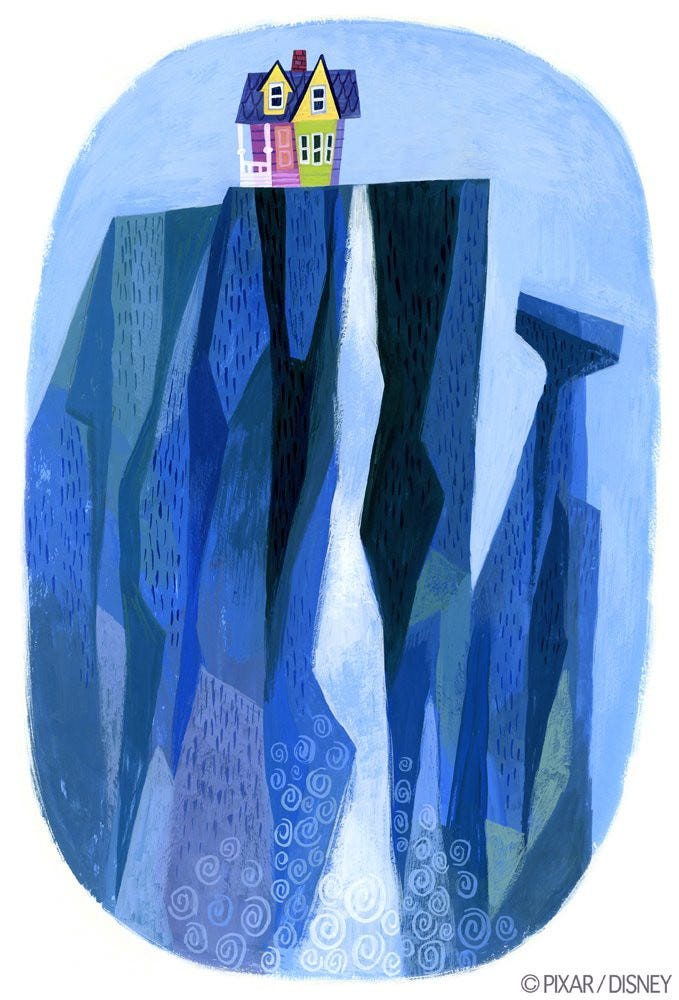
And that’s it, right? Nope. Here is the very last image of the movie:
EXT. PARADISE FALLS - AFTERNOONOn top of Paradise Falls sit Carl's house, just as Ellie
imagined it.THE END
During the big fight in Muntz’s dirigible, we have forgotten about the house which was last seen drifting away into the clouds. This final moment is a wonderful grace note, a resonant payoff and lovely moment.
You can read “How to Write Photoplays” via Google books online here.
To read my entire series of posts on highlighting takeaways from the book, go here.
Next week: More from Anita Loos and John Emerson’s book from 1920.