Screenwriting Advice From The Past: Star Sympathy
“Be sure your audience is stirred to real sympathy, throw that sympathy to the star part, and be sure that this star part which you have…
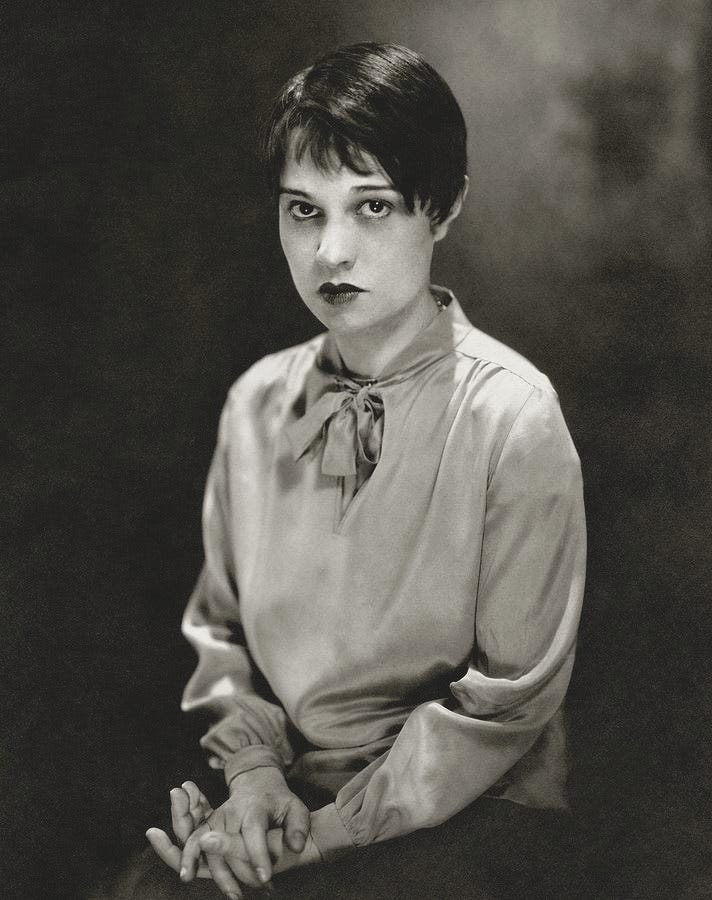
“Be sure your audience is stirred to real sympathy, throw that sympathy to the star part, and be sure that this star part which you have created actually suits some star or group of stars of the modern motion picture.”
If you are a screenwriter, you should know about Anita Loos. Loos was one of the most influential writers in the early stages of American cinema, associated with 136 film projects per IMDb.
Married to writer John Emerson, the pair wrote one of the first books on screenwriting in 1920: “How to Write Photoplays”.
Today: Star Sympathy
In Chapter VI, they write this [P. 24]:
Many a Milton of the scenario game will remain unwarbled because he has neglected to place in his story the correct proportion of star sympathy.
“Star sympathy,” you say. “Of course I sympathize with the stars especially if they have to act in the stories I see every — etc etc.”
Right or wrong, the system of featuring a star in each picture is still the custom based upon the fact that in ninety per cent of all fiction written, the interest centers in one person. Therefore follow these rules:
The leading part of your story must be a strong characterization.
Do not put the audience in an antagonistic frame of mind towards the star part. Make the motives of the star logical. If your star is a vampire, the audience should understand the forces that led her to her career; if your star is a crook, make clear the facts that made a crook of her.
Many interesting and relevant ideas here. To be sure, with the emergence of CGI [Computer Generated Imagery] and ginormous action, action-adventure, science fiction, fantasy and superhero movies, actors are less and less the ‘stars’ of the movie as compared to all the special effects.
However, there is still such a thing as star power. As long as the likes of Tom Cruise, Michael B. Jordan, or Jennifer Lawrence can still open a movie, a screenwriter is wise to take that into consideration when developing a story’s characters.
What is intriguing in the Loos and Emerson book is that 100 years ago, there were set in place ideas that exist today:
- Sympathetic Protagonist: This is the studio default mode. Any time you try to write a character who is unlikable, they will almost assuredly pressure you to make them more sympathetic.
- Single Protagonist: Whether the number is 90% or not, as suggested by Loos & Emerson, the fact is most movies do feature one lead character. Many reasons for this, not the least of which is it provides a clear, clean narrative perspective through which a script reader or movie viewer can experience the story.
- Credible World View: No matter what the function of the character — Protagonist, Nemesis, Mentor, Attractor, Trickster — they should have an internal logic to how they see the world and why they act the way they do.
But there’s one last big point that arises from Chapter VI’s summary paragraph:
Be sure your audience is stirred to real sympathy, throw that sympathy to the star part, and be sure that this star part which you have created actually suits some star or group of stars of the modern motion picture.
Over time movie stars develop a persona. That persona seeps into the consciousness of the star’s fans. Sometimes, even oftentimes, when a star attempts to break out of that persona, fans don’t like it. Do people really want to see Julia Roberts as an evil stepmother? Try to imagine Tom Hanks as an lecherous asshole. The line of least resistance is to write parts that play to their public persona. Studios are much more likely to green light star-driven movies if they believe the role the star plays will resonate with the type of thing the star’s fans want.
Tomorrow: More screenwriting advice from the past.
You can read “How to Write Photoplays” via Google books online here.
For the rest of the series articles:
Note: I ran this series originally in 2012. Unfortunately, the individual articles got bungled up on the site in some sort of technical snafu. So, I am recovering them one by one in this reprise of the series.