Screenwriting Advice From The Past: Scenery for Scenarios
“The matter of economy in settings is perhaps the very last thing that enters the mind of the amateur photodramatist — one big reason why…
“The matter of economy in settings is perhaps the very last thing that enters the mind of the amateur photodramatist — one big reason why many scripts are returned.”
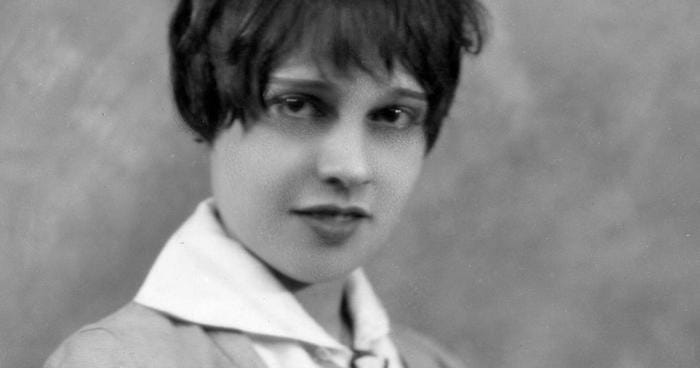
If you are a screenwriter, you should know about Anita Loos. Loos was one of the most influential writers in the early stages of American cinema, associated with 136 film projects per IMDb.
Married to writer John Emerson, the pair wrote one of the first books on screenwriting in 1920: “How to Write Photoplays”.
Today: Scenery for Scenarios [P. 57].
If the elaborate settings called for in the scenario of the average amateur were produced, the motion picture industry, in order to avoid bankruptcy, might be compelled to raise admission prices for photoplays on a par with those charged for grand opera.
Hence such scenes are used very sparingly and as economically as possible. The matter of economy in settings is perhaps the very last thing that enters the mind of the amateur photodramatist — one big reason why many scripts are returned.
Two things:
- First, isn’t it interesting that even 90 years ago, these early screenwriters knew enough about the business to wear their ‘producer’s hat’ when making decisions about what they did or did not include in their scripts. As they write later on in this chapter [P. 58]: “It comes down to the old question, ‘Is it worth the money?’” This is a mindset modern screenwriters need to have as well.
- That said, Hollywood in 1920 didn’t have computer generated imaging. Ancient Babylon or another planet, nowadays with digital technologies, anything is possible. A modern screenwriter would be better served when thinking like a producer to ask: Is this story big enough to be a movie? Elaborate set pieces can help to do just that.
Tomorrow: More screenwriting advice from the past.
You can read “How to Write Photoplays” via Google books online here.
For the rest of the series articles:
Introduction
Getting Ideas
Conflict and Crisis
Situation
Theme
Star Sympathy
Action: Part 1
Action: Part 2
Action: Part 3
Action: Part 4
Action: Part 5
Story Synopsis
Continuity: Part 1
Continuity: Part 2
The Title
Marketing the Script
Writing for the Camera
Note: I ran this series originally in 2012. Unfortunately, the individual articles got bungled up on the site in some sort of technical snafu. So, I am recovering them one by one in this reprise of the series.