Scene Description Spotlight: “Saving Private Ryan”
I doubt anyone who has seen Saving Private Ryan — written by Robert Rodat, directed by Steven Spielberg — will ever forget the film’s…
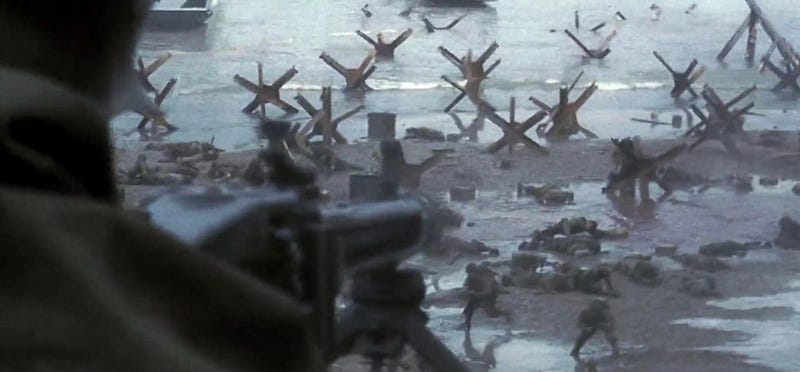
I doubt anyone who has seen Saving Private Ryan — written by Robert Rodat, directed by Steven Spielberg — will ever forget the film’s opening twenty minutes. So incredibly graphic, I can still remember the special ABC’s Ted Koppel did with some of the Normandy invasion survivors, screening the movie with them, many of them moved to tears at how well the film conveyed the chaos and horror of that initial amphibious assault on June 6, 1944.
Here we look at the opening few pages of the film’s screenplay to see how Rodat manages to orchestrate the action while conjuring up a vivid sense of what it felt like to hit the Normandy beaches on that fateful day:

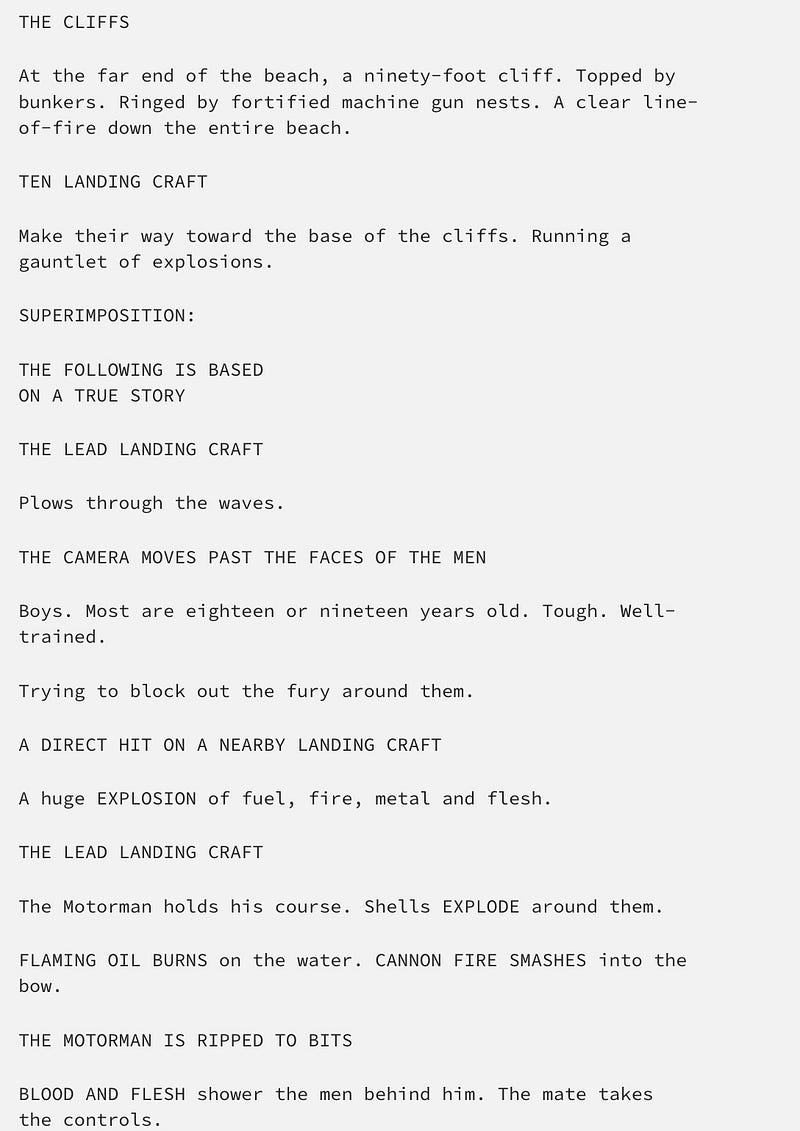
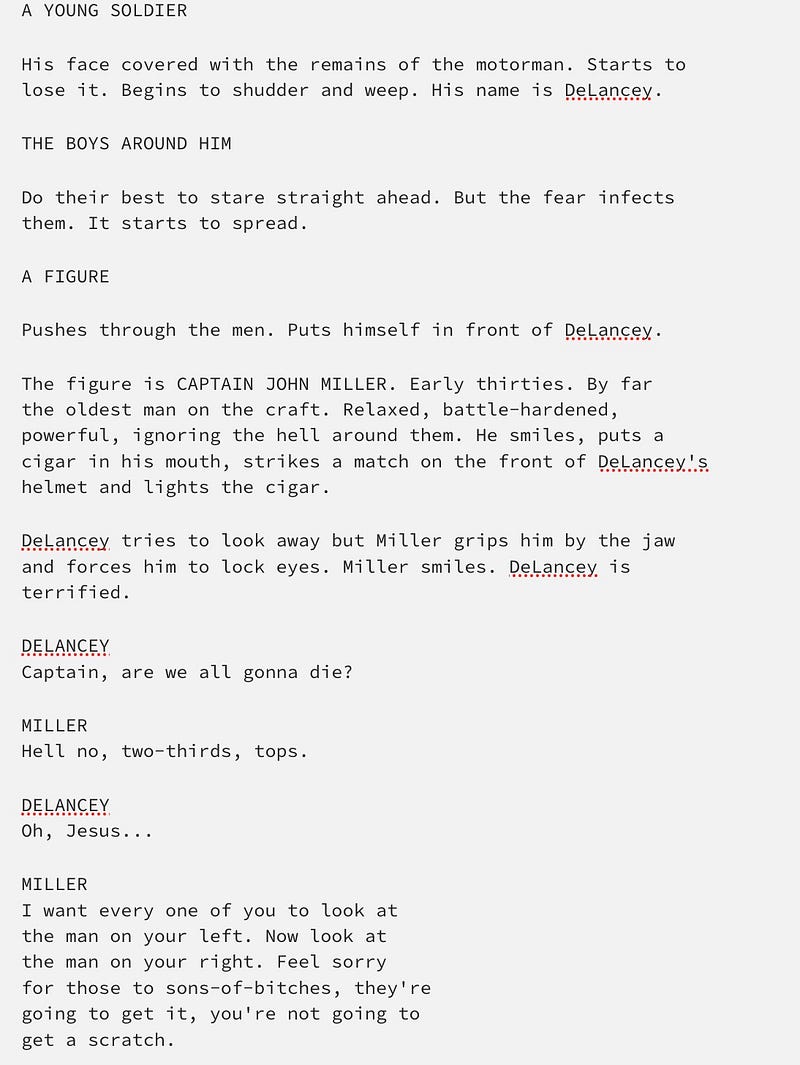
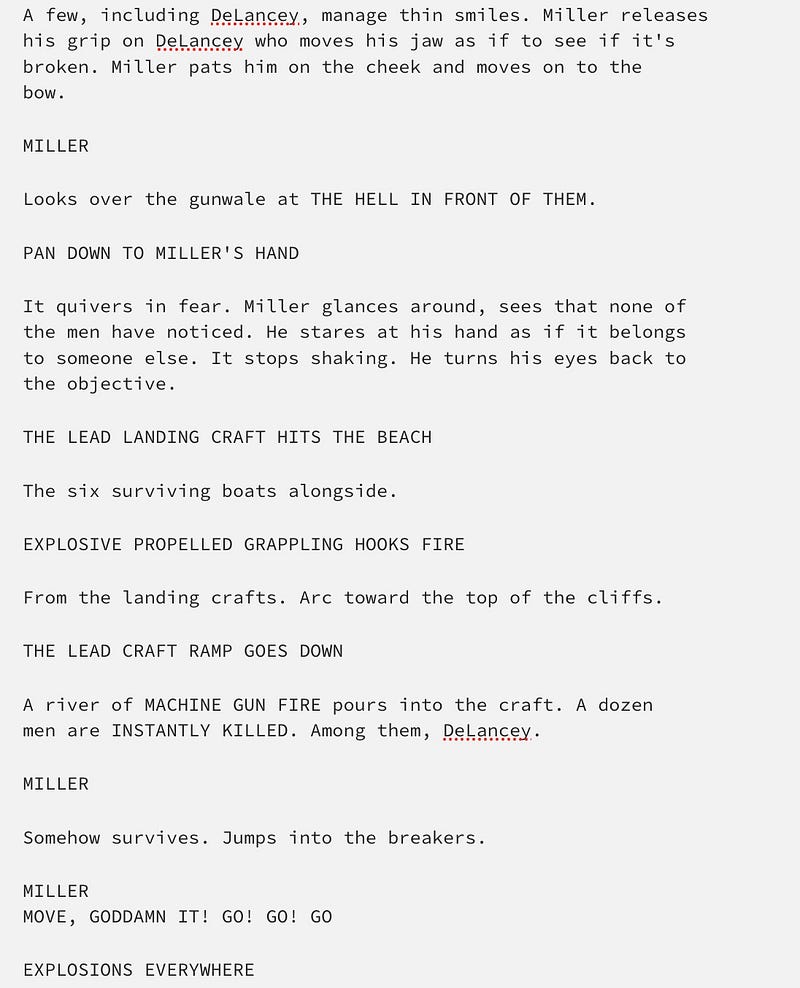
Note how Rodat uses Secondary Slugs to ‘direct’ the action. Here they are in a list, stripped of any other scene description:

Some observations:
- Rodat uses some of the secondary slugs simply to identify a location (e.g., OFFSHORE, THE CLIFFS) or a character (e.g., A FIGURE, MILLER), but other times he conveys action within the slug itself: A DIRECT HIT ON A NEARBY LANDING CRAFT, THE MOTORMAN IS RIPPED TO BITS, THE LEAD LANDING CRAFT HITS THE BEACH. He could have chosen to do this:
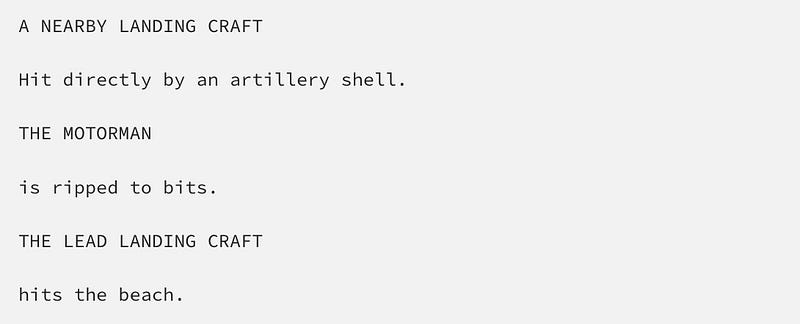
But he didn’t. Why? I think the reason he put the action in the slugs is because by capping the description, he makes the action BIGGER, befitting how big this sequence is. In other words, he makes the action impossible to ignore.
- Each secondary slug suggests a different camera shot, so in effect Rodat is able to ‘direct’ the action without using directing lingo — except of course when he does, which is twice:

But aren’t we told not to use directing language? Yes, and that still holds — for spec scripts. That’s the draft we write to sell the story. A shooting script exists for purposes of producing the movie. In this case, Rodat already knew the script was sold: When Steven Spielberg and Tom Hanks say they want to make a war movie, you’ve pretty much already got a green light. So this draft is, while not quite a shooting script, also not quite a selling script either.
I’m sure Rodat had been working very closely with Spielberg as he wrote this draft and those two shots are probably something that Spielberg insisted go in the script, specific shots reflecting how Spielberg planned to shoot the scene.
And really, both shots are classic Spielberg, small human moments amidst the larger chaos, something viewers could dial into and experience to enhance the emotional connection to these characters as they transitioned into a living hell…
… a row of frightened young men, an incredible range of fevered emotions etched in their faces as the bombs rain down all around them…
… and a close up of Miller’s hand shaking to belie his own fear as well as set up a significant recurring image — Miller’s shaking hand is called back several times in the movie — shaking that ends only when Miller’s life ends, his hand finally still.
Secondary Sluglines (Shots) are one of the most valuable tools a screenwriter has to write action scenes, not only to direct the action by suggesting camera shots, but also, as Rodat demonstrates, by putting action in the slugs, we can convey to the reader just how big the action is.
Now put on your screenwriting hat and watch this scene from the opening of Saving Private Ryan. Imagine how you would write it using secondary slugs:
For more Scene Description Spotlight articles, go here.