Scene Description Spotlight: “Lethal Weapon”
There have been many forces of nature impacting screenplay style over the years, but there are only a very few actual screenwriters to whom…
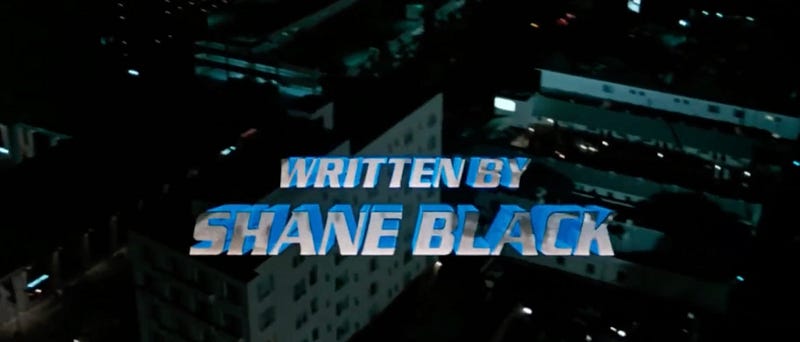
There have been many forces of nature impacting screenplay style over the years, but there are only a very few actual screenwriters to whom we can point as having a singular influence on the narrative form. Shane Black is one of them. Back in the late 80s and early 90s when Black was selling spec scripts like Lethal Weapon and The Last Boy Scout for hundreds of thousands, even millions of dollars, he spawned copious copycats. None as good as him of course, but no matter. Hollywood was flooded with scene description that attempted to ape Black’s distinctive narrative voice.
Here is an example of Black’s approach to scene description, the opening scene from the script Lethal Weapon:
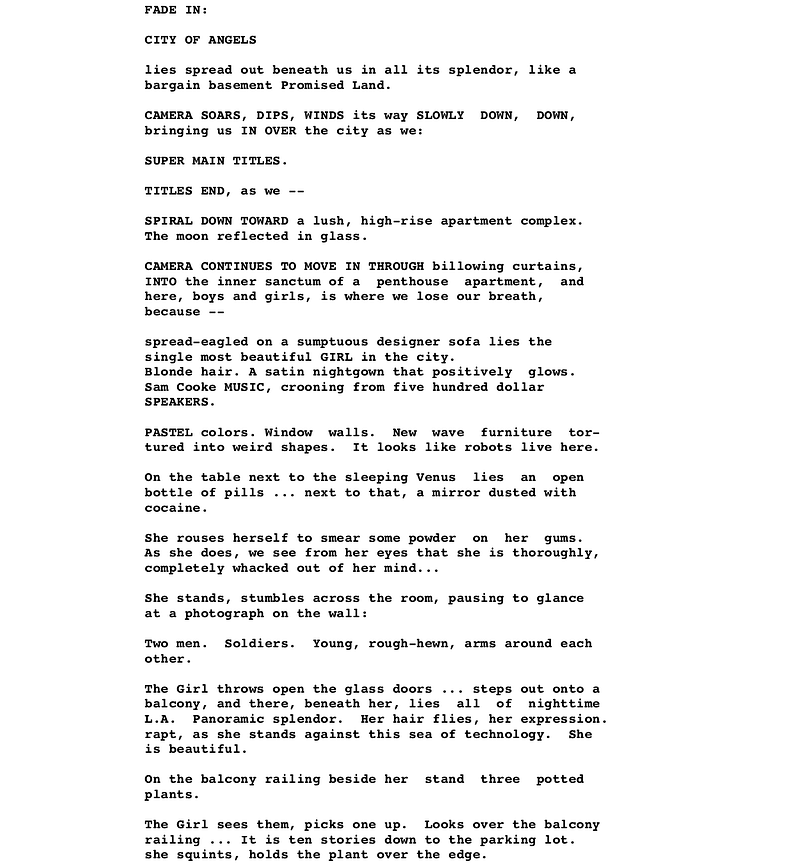
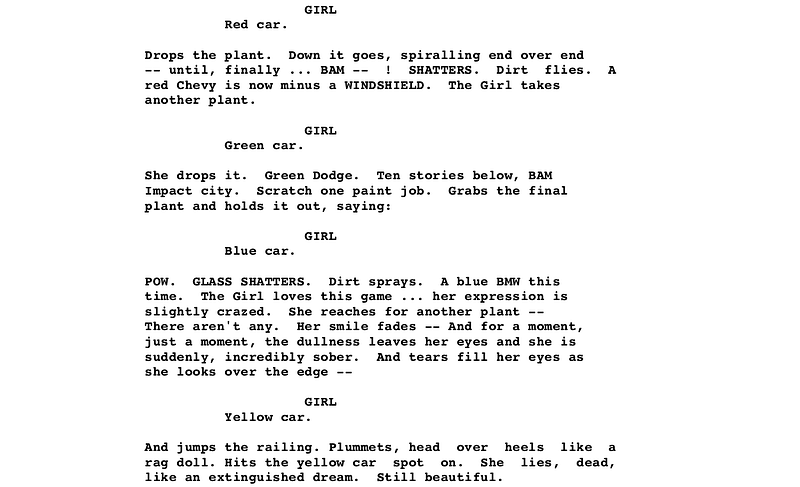
There are many components of the narrative voice at work in this scene and throughout Black’s scripts, a combination of editorializing on the moment [e.g., “completely whacked out of her mind… The Girl loves this game] to similes [e.g., like a bargain basement Promised Land… like a rag doll… like an extinguished dream] to staccato imagery [e.g., “PASTEL colors. Window walls. New wave furniture tortured into weird shapes”]. And yes, breaking the 4th wall: “…and here, boys and girls, is where we lose our breath.”
Bottom line, Shane Black has a distinctive narrative voice. And if there’s one aspect that is perhaps its greatest value, it’s that his scripts feel like a good yarn being told by an entertaining insider, at times a world-weary, even cynical soul, but one engrossed by the goings-on and always a healthy dose of humor.
Here is the movie version of the opening scene:
Nowadays when I read a current action script that has sold as a spec, almost invariably there is an echo of Shane Black and the Pad O’ Guys in them, a similar approach to scene description and narrative voice.
Every script has a narrative voice, either a good one, where the writer is aware that style must match up with genre, or a ineffectual one, where the writer either is unaware of this invisible character in their story or they do a poor job articulating it.
You don’t have to sound like Shane Black, in fact I’m sure even he would encourage you not to emulate his distinctive voice. But whenever you read a script by a professional screenwriter, study their scene description with an eye toward that story’s narrative voice. Then when you write your own scripts, bring a heightened awareness to the attitude you take in telling the story and the style with which you do it.
For more Scene Description Spotlight articles, go here.