Scene Description Spotlight: “Jerry Maguire”
“A beat of silence, then noise returns to its normal commercial roar. A couple of fleas have been swatted off the carcass of an immense…
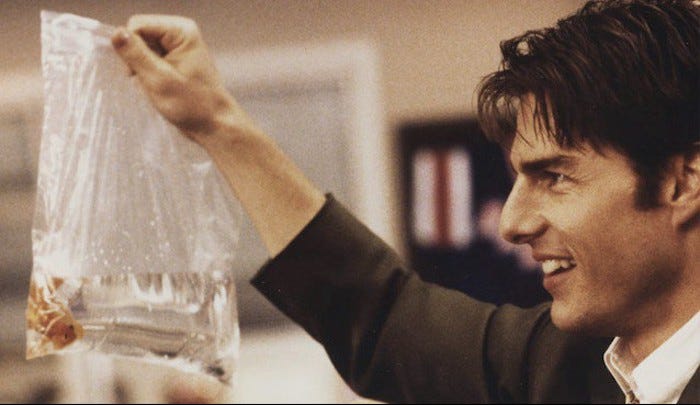
“A beat of silence, then noise returns to its normal commercial roar. A couple of fleas have been swatted off the carcass of an immense beast.”
Writer-director Cameron Crowe, whose movies include Fast Times at Ridgemont High (1982), Say Anything… (1989), Singles (1992), Almost Famous (2000), and Elizabethtown (2005), is known to write great dialogue. But if you study his scripts, you’ll quickly see how strong his scene description is — particularly in capturing the emotions of the moment. A great example of this occurs in arguably his best movie Jerry Maguire (1996): The scene where Jerry (Tom Cruise), who has been fired, leaves his job. Watching his meltdown is Dorothy (Renee Zellweger):
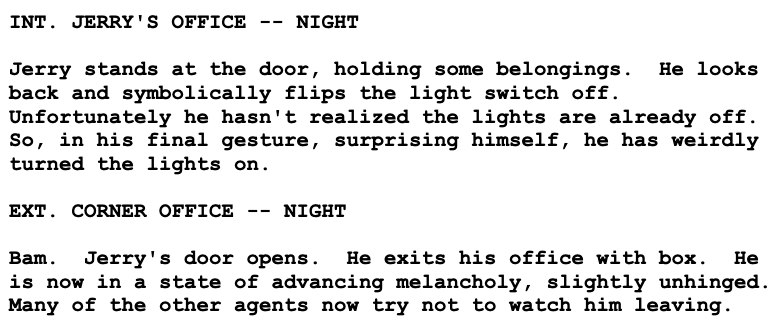
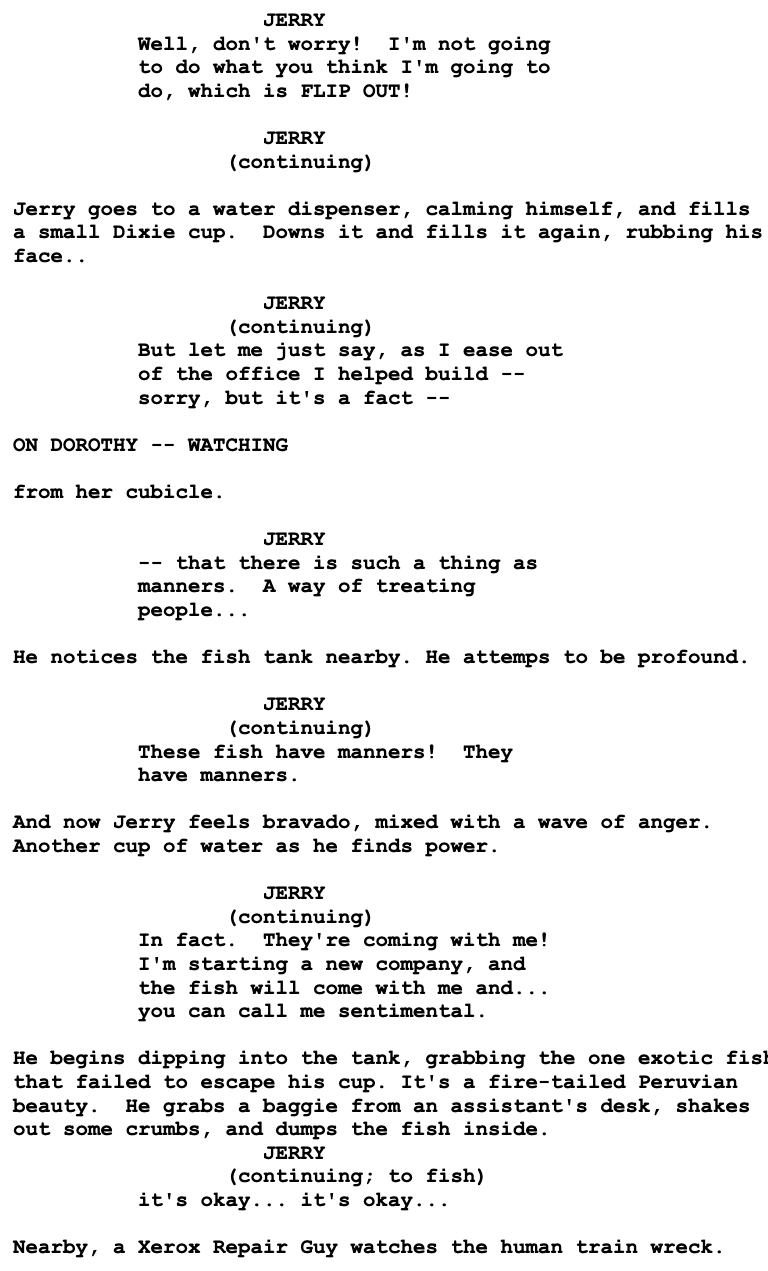
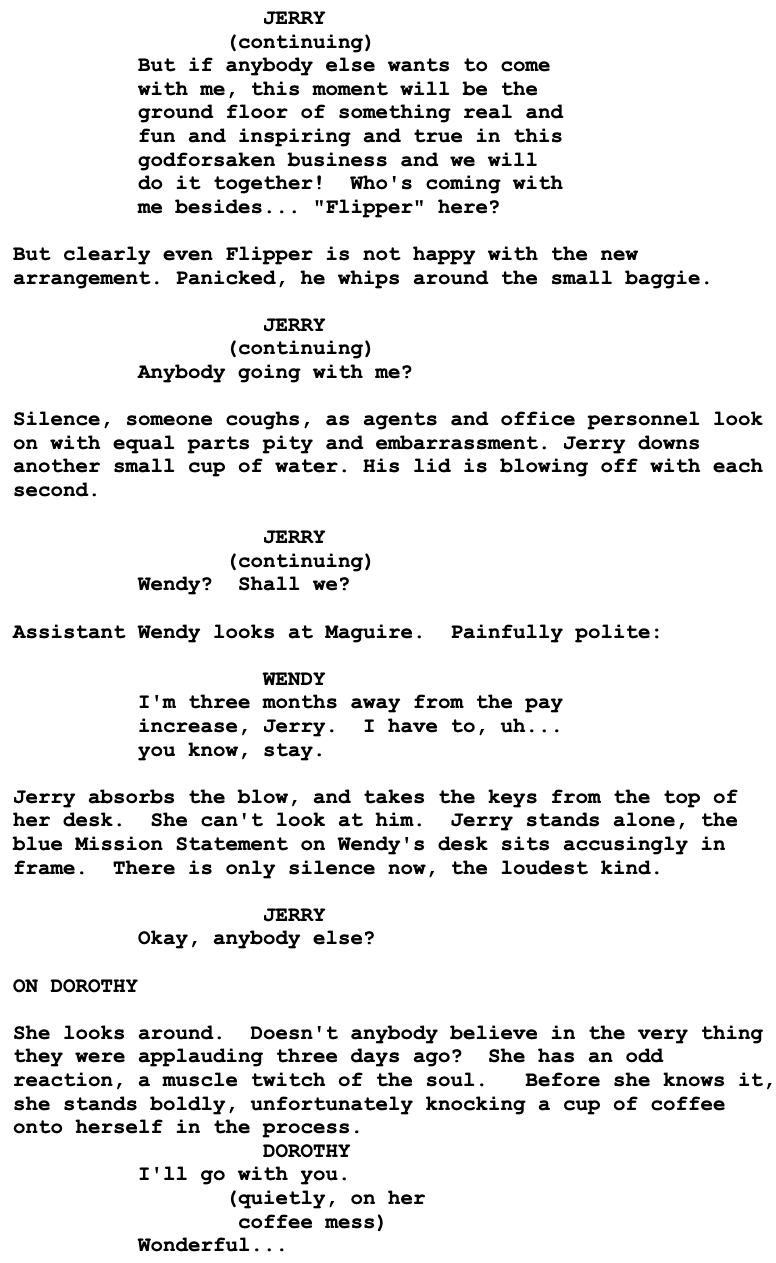
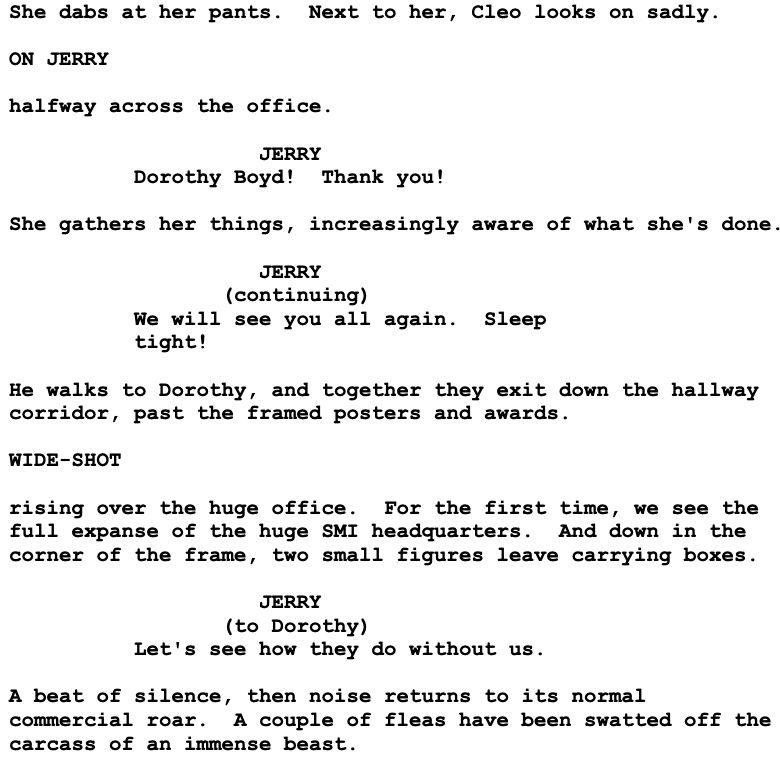
There’s nothing like a really awkward moment to suck a reader deeper into the emotional life of the story. And this scene revels in the feelings swirling about the room. Check out these lines:
He is now in a state of advancing melancholy, slightly unhinged.
He attempts to be profound.
And now Jerry feels bravado, mixed with a wave of anger. Another
cup of water as he finds power.
Nearby, a Xerox Repair Guy watches the human train wreck.
But clearly even Flipper is not happy with the new arrangements.
Silence, someone coughs, as agents and office personnel look on
with equal parts pity and embarrassment.
His lid is blowing off with each second.
Doesn’t anybody believe in the very thing they were applauding
three days ago?
She has an odd reaction, a muscle twitch of the soul.
She gathers her things, increasingly aware of what she’s done.
Crowe not only describes what Jerry and Dorothy are going through — respectively — but the office personnel, the Xerox Repair guy… hell, even what the fish is feeling. And how about that description: “She has an odd reaction, a muscle twitch of the soul.” That conveys what happens at the precise instant Dorothy suddenly and unexpectedly blurts out, “I’ll go with you.”
If you’ve read books or taken courses about screenwriting, you’ve probably heard the axiom, “Only write scene description that a the audience can see or hear,” but that’s just not true. Much of Crowe’s description in this scene and throughout Jerry Maguire conveys the emotion of the moment — what I call psychological writing — and you will see that in almost any professional screenplay.
Remember, when you are writing a selling script — not a shooting script — you have one unalterable rule: To tell the story in the best, most entertaining fashion possible. Dipping into a script’s emotional current in order to sprinkle key description here and there can be an excellent way to pull the reader more deeply into your story — by helping them to feel what your characters are feeling.
Here’s the scene in the movie:
Strong scene description. Excellent psychological writing.
For more Scene Description Spotlight articles, go here.