Scene Description Spotlight: “Fargo”
When is a kidnapping scene funny? When it’s written and directed by the Coen brothers, like in the 1996 Academy Award-winning movie Fargo…
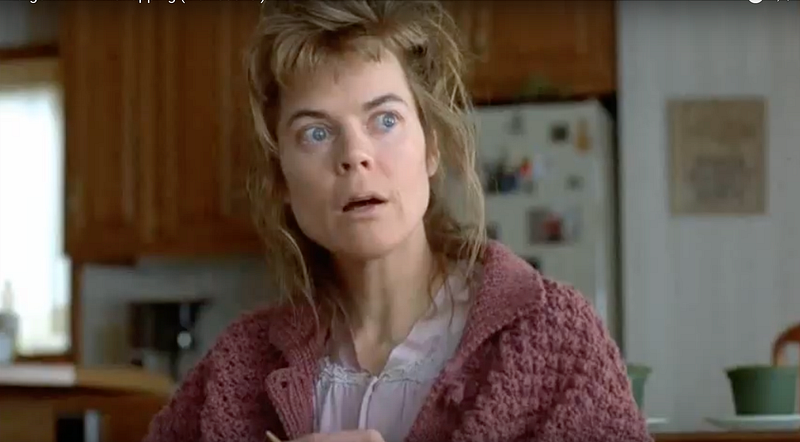
When is a kidnapping scene funny? When it’s written and directed by the Coen brothers, like in the 1996 Academy Award-winning movie Fargo. The film’s plot per IMDb:
Jerry works in his father-in-law’s car dealership and has gotten himself in financial problems. He tries various schemes to come up with money needed for a reason that is never really explained. It has to be assumed that his huge embezzlement of money from the dealership is about to be discovered by father-in-law. When all else falls through, plans he set in motion earlier for two men to kidnap his wife for ransom to be paid by her wealthy father (who doesn’t seem to have the time of day for son-in-law). From the moment of the kidnapping, things go wrong and what was supposed to be a non-violent affair turns bloody with more blood added by the minute. Jerry is upset at the bloodshed, which turns loose a pregnant sheriff from Brainerd, MN who is tenacious in attempting to solve the three murders in her jurisdiction.
Here is the kidnapping scene as written in the script:
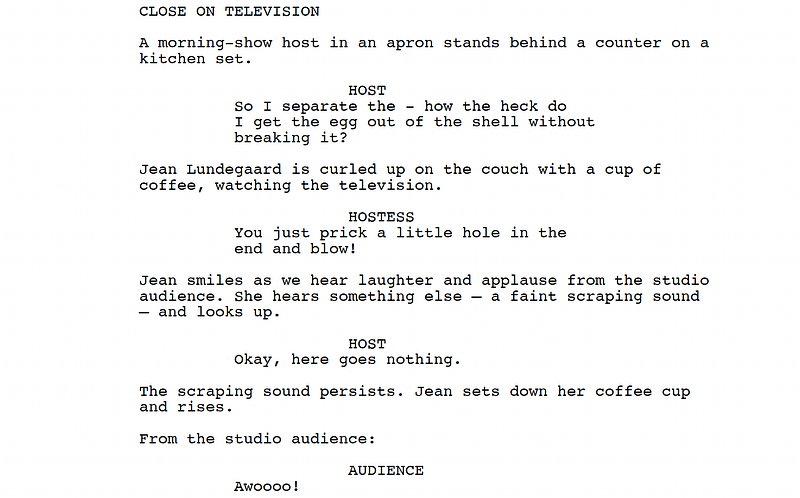
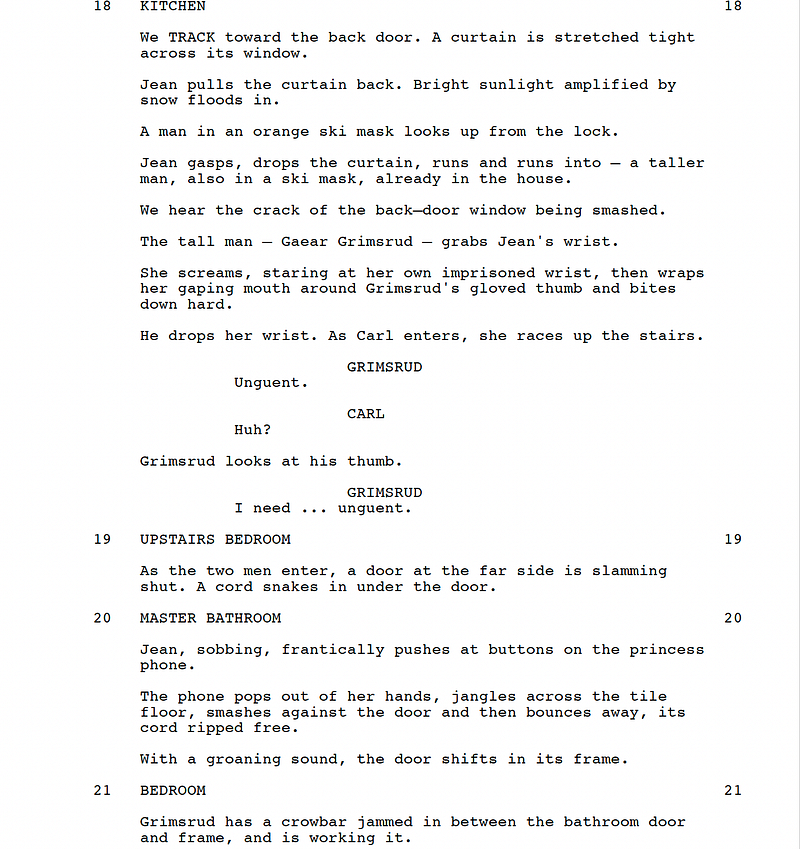
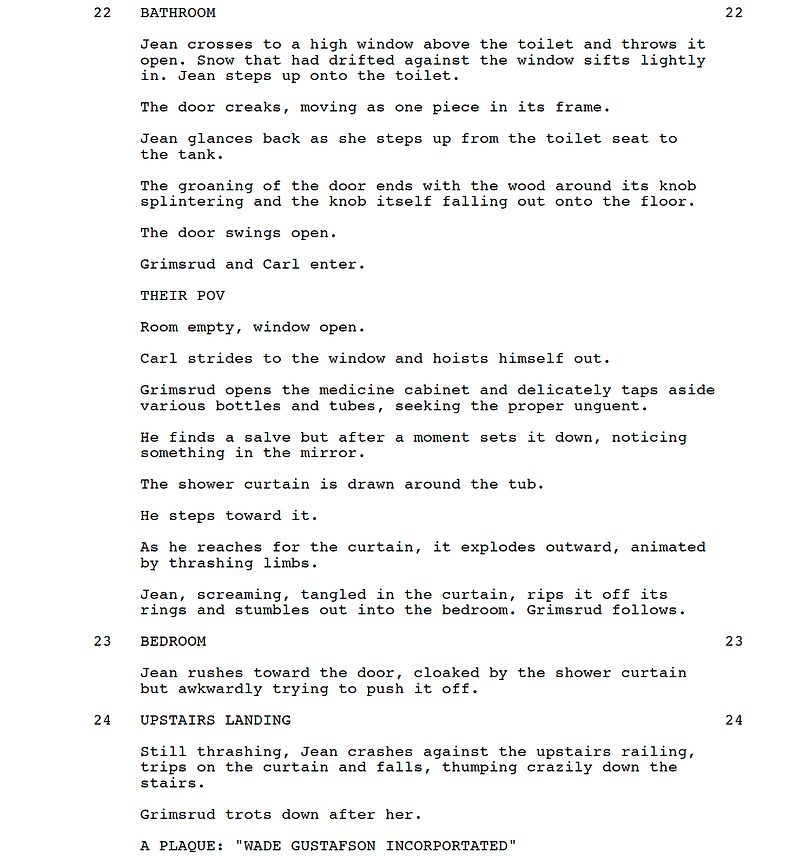
This is a classic example of how the Coen brothers write, where the humor in the scene arises not from a comic tone in the scene description, but rather through the actions of the characters themselves. The scene description is written with a “just the facts, ma’am” approach:
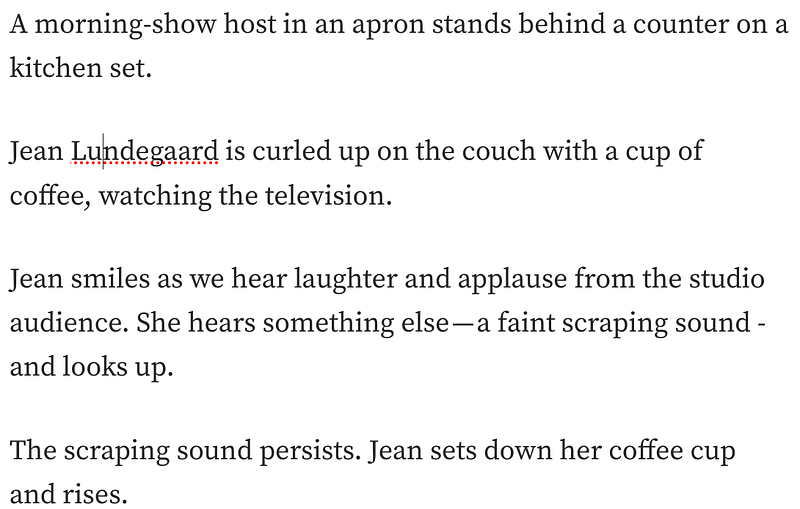
Straight from the top of the scene, a clean dry tone established in the description. But track the actions of the characters:
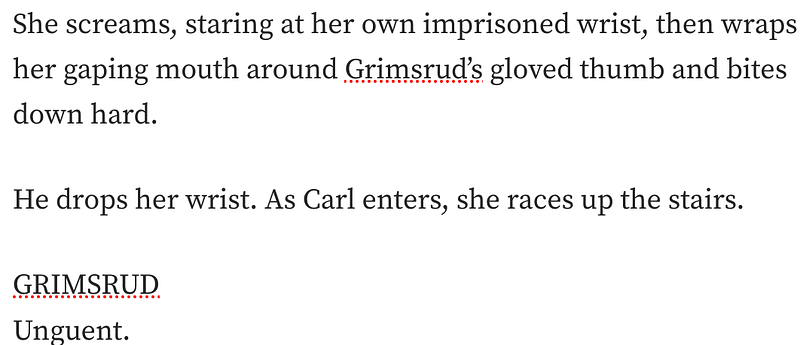
Jean’s reaction is to bite “hard” the thumb of her kidnapper. Grimsrud’s reaction is immediately to seek some topical treatment for the wound.
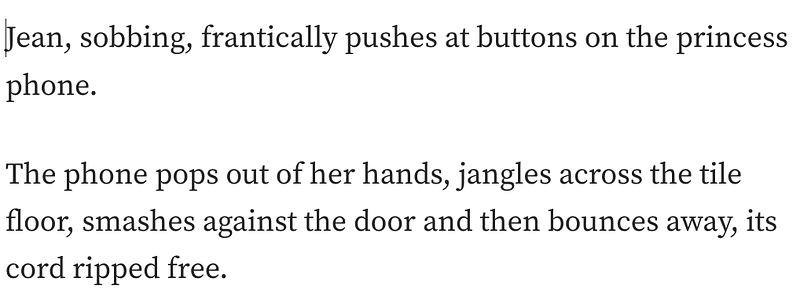
Note the comedic contrast of Jean sobbing and trying to make a phone call on her “princess phone” to the unseen kidnappers making their presence felt by yanking the phone from her hands, smashing “against the door.”
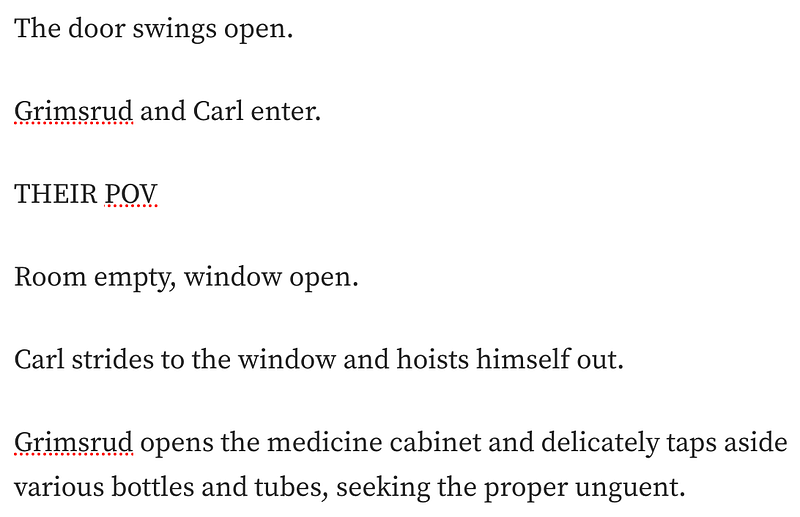
Carl bites on the ruse that Jean went out the window. Meanwhile Grimsrud could care less about the job he’s been hired to do, rather he’s obsessed with finding an “unguent” for his injured thumb. But:
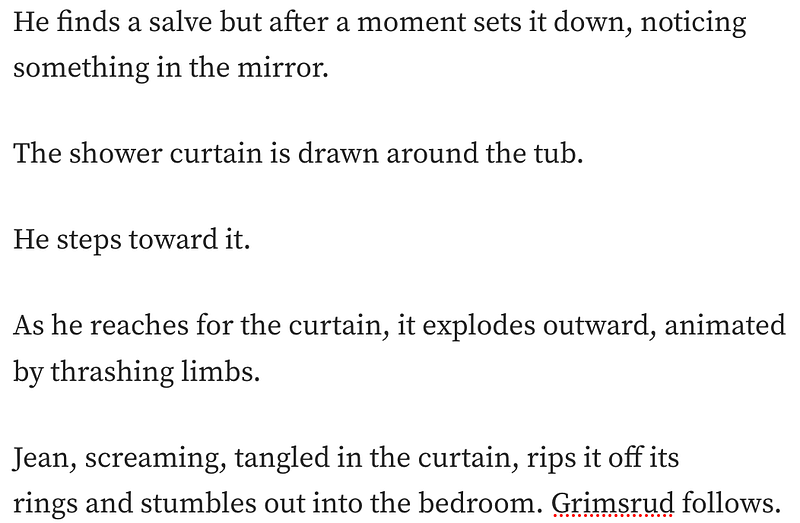
It’s only because Grimsrud is messing around in the medicine cabinet that he notices “something in the mirror.” And it’s only because Grimsrud “steps toward” the shower that Jean “explodes outward, animated by thrashing limbs” and gets tangled up in the shower curtain. Which leads to:
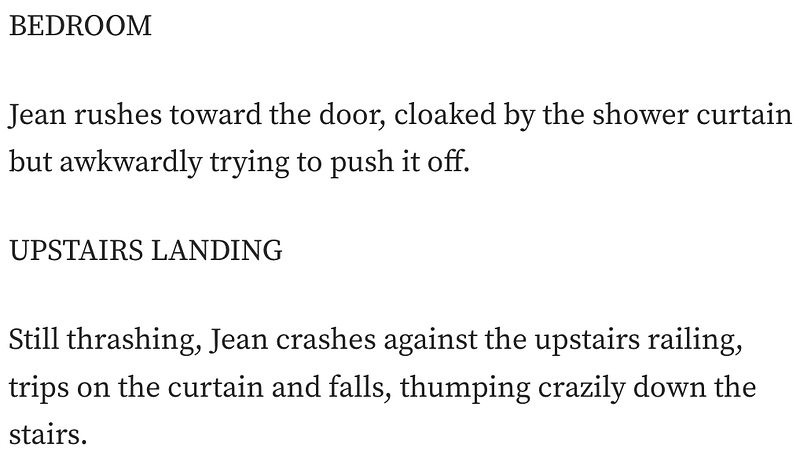
In effect, the kidnappers screw up the job, but Jean’s hysterical response to the events actually helps the crooks prevail. And all the goofiness and irony in the scene is conveyed in a dry, objective description, allowing the characters’ actions to provide the humor.
Takeaway: In a pure comedy, you would want to find the appropriate Narrative Voice that provides a comedic tone to your scene description. But in a drama-comedy or a Coen-type movie, you can let the comedy be conveyed primarily through the actions of your characters.
Here’s the movie version of the scene:
Fargo has to be one of the best Coen brothers movies of all time.
For more Scene Description Spotlight posts, go here.