Scene Description Spotlight: “Cast Away”
The screenplay for the 2000 movie Cast Away was written by William Broyles Jr. Once the story transitioned to the island, a challenge he…
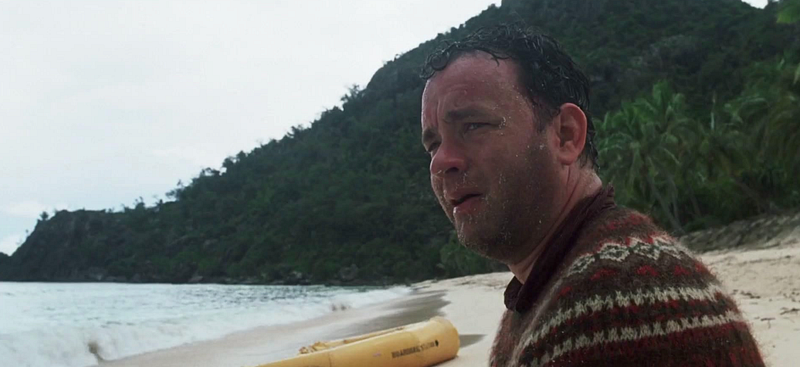
The screenplay for the 2000 movie Cast Away was written by William Broyles Jr. Once the story transitioned to the island, a challenge he faced was creating a specific sense of place, not only the actual topography, but its atmosphere … and the Protagonist Chuck’s experience of this foreign environment.
Here are some scenes just after Chuck has crash landed as he takes stock of the island.
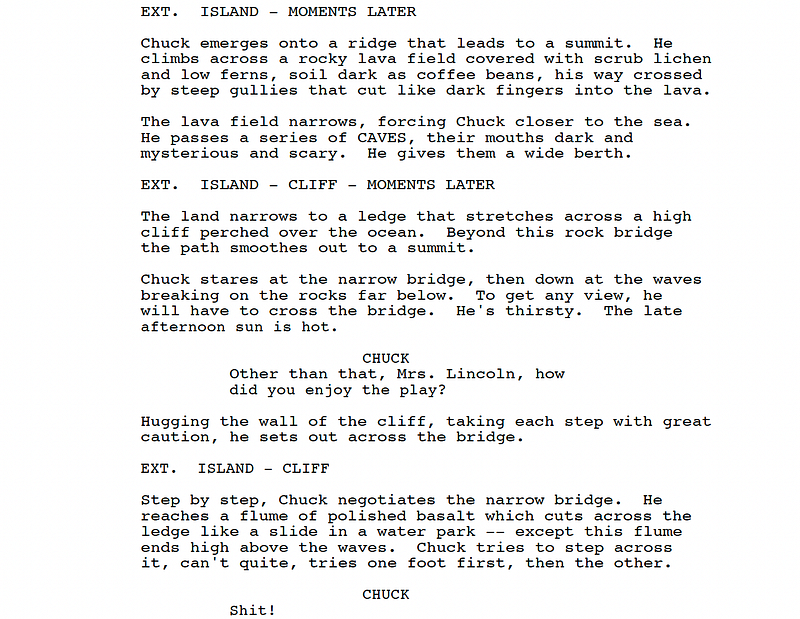
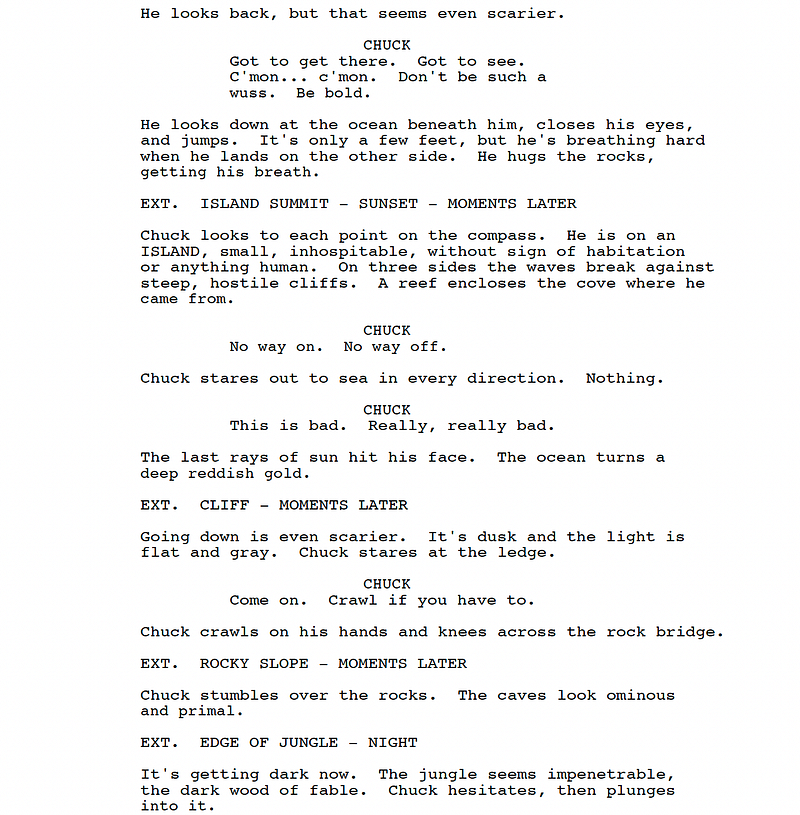

Notice the language:
- his way crossed by steep gullies that cut like dark fingers into the lava
- The lava field narrows, forcing Chuck closer to the sea
- CAVES, their mouths dark and mysterious and scary
- Chuck negotiates the narrow bridge
- polished basalt which cuts across the ledge
- an ISLAND, small, inhospitable, without sign of habitation or anything human
- waves break against steep, hostile cliffs
- The caves look ominous and primal
- The jungle seems impenetrable, the dark wood of fable
All wrapped up by this paragraph:
The moon has just begun to rise, casting eerie light into the
jungle. The shadows reach out to grab Chuck, then real
branches and vines tug at him. He heads into thick
blackness.
The use of visceral descriptors create a foreboding sense of danger. It’s what I call psychological writing in this case projecting Chuck’s feelings onto the physical surroundings. It’s scene description creating atmosphere and mood.
Takeaway: Use psychological writing in your scene description convey the inner emotional experience of a character and the feel of the environment in which they find themselves.
For more Scene Description Spotlight articles, go here.