Saturday Hot Links
Time for the 336th installment of Saturday Hot Links, your week’s essential reading about movies, TV, streaming, Hollywood, and other…

Time for the 336th installment of Saturday Hot Links, your week’s essential reading about movies, TV, streaming, Hollywood, and other things of writerly interest.
Franklin Leonard’s The Black List Makes Deal To Produce/Finance Meridian Entertainment-Backed Indie Films.
Diversity is dominating the 2018 box office.
China Box Office Overtakes North America in First Quarter of 2018.
The coming Chinese crackdown on Hollywood.
Netflix Might Completely Withdraw Films From The Upcoming Cannes Film Festival.
CBS Makes First Viacom Merger Proposal.
Jeff Robinov’s Studio 8 Seeks to Raise $200M.
Blumhouse, NBCUniversal Reinvest in Horror Startup Crypt TV.
Mark Cuban’s Landmark Theatres Teams With MoviePass.
Mark Cuban’s Landmark Theatres Chain Is on the Block.
MPAA Leads Partner-Vetting Initiative to Cut Risk of Movie, TV Show Leaks and Hacks.
Talent agencies are reshaping their roles in Hollywood. Not everyone is happy about that.
Writers Guilds to Renegotiate Talent Agency Agreement.
Warner Bros., Sony, Turner Reveal Big Gender Gap in Pay and Bonuses in the U.K..
Anonymous ‘Solo’ Actor Dishes On Production, Calls Alden Ehrenrich ‘Not Good Enough,’ Says Reshoot Used Same Script.
Paramount Decided To Sell ‘The Cloverfield Paradox’ To Netflix Because The Film Lacked ‘Commercial Playability’.
‘Avengers’ Screenwriter Originally Tried to Reduce Thor’s Role.
Steven Spielberg Invented the Modern Blockbuster, but ‘Ready Player One’ Suggests He Might Regret It.
‘Citizen Kane’: Steven Spielberg Reveals New Plans for Orson Welles’ Cherished Sled Rosebud.
John Krasinski and Emily Blunt on teaming up for their thriller ‘A Quiet Place’.
Simon Pegg: J.J. Abrams Ideas For Rey’s Parents Were “Slightly Undone” By ‘Last Jedi’.
Cameron Crowe Is Producing a David Crosby Documentary.
Roger Corman Sued By Sons Over the Sale of His Film Library.
James Corden, Oprah Winfrey and RuPaul Among 2018 Webby Award Nominees.
WGA Members Urge Board To Divest From Companies That Support NRA.
Director Fights Back at Hollywood Ageism: ‘Why Is Time on Earth a Liability?’
Molly Ringwald Reflects On Her John Hughes Movies In #MeToo Moment: ‘Racist, Misogynistic…Homophobic’.
12 Movies That Were Shot on an iPhone.
How 2001: A Space Odyssey Has Influenced Pop Culture, 50 Years Later.
A Brief History of George Lucas’ ‘Star Wars’ Sequel Trilogy.
5 Women To Thank If You Like Hollywood Movies.
Modern Television Wouldn’t Exist Without Steven Bochco.
‘Crazy Ex-Girlfriend’ to end after next season.
Can a New President and Streaming Service Help ESPN Win Again?
BAFTA TV Awards: ‘The Crown,’ ‘Black Mirror’ Among Nominees.
Turner Sports Unveils ‘Bleacher Report Live’ Pay-Streaming Service.
Nat Geo is Developing a ‘Hidden Figures’ TV Series.
MLB, HBO Renew Partnership to Bring ‘Game of Thrones’ to Ballparks.
Report: Amazon May Pay $1 Billion to Adapt the Hugo-Winning Chinese Novel The Three-Body Problem.
Listen: Scriptnotes (Episode 344).
Screenwriting Master Class tip of the week
I’m reprising my one-week Scene-Writing Workshop which starts Monday.
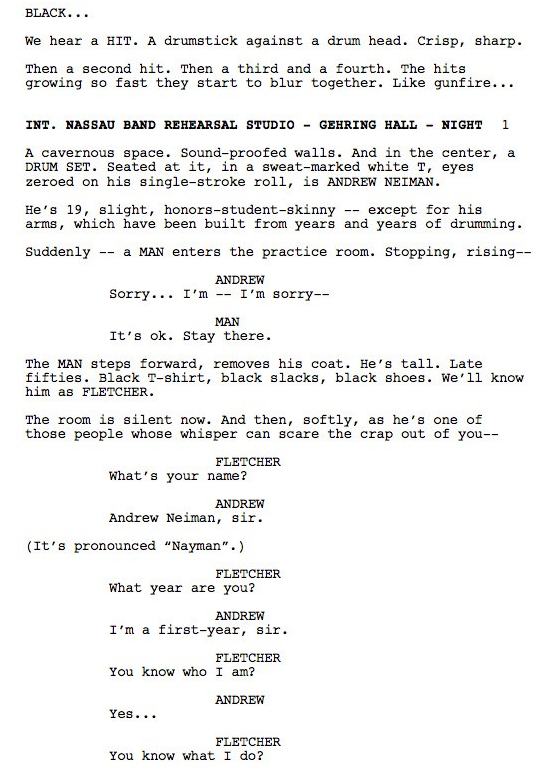
If you figure the average scene is one-and-a half to two pages long and a feature length screenplay ranges from 90–120 pages, that means when you sit down to write a script, you are confronted with the prospect of handling anywhere from sixty to ninety scenes. Looked at this way, it’s fair to say the most basic act of screenwriting is scene-writing.
So we start by asking this question: “What is a scene?” Here are two definitions:
“A division of a play or of an act of a play, usually representing what passes between certain of the actors in one place.”
“A unit of action or a segment of a story in a play, motion picture, or television show.”
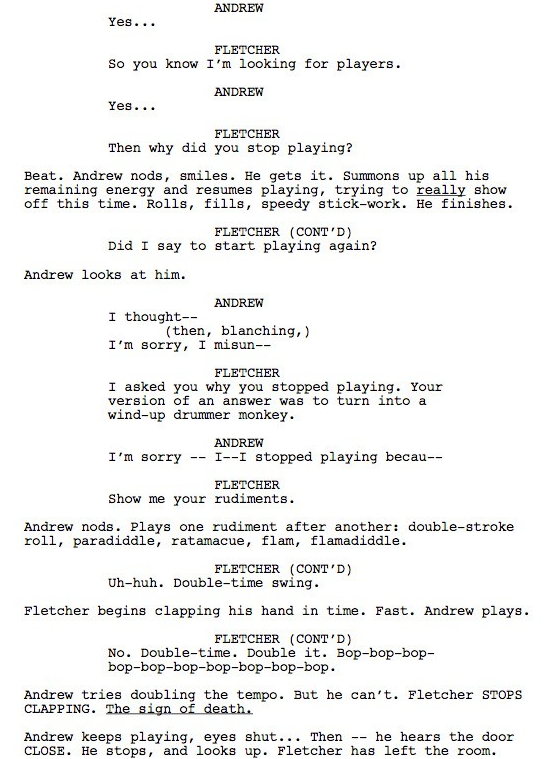
Each of these offers elements we can use to construct some sense of how a screenwriter should think about the essence and function of scenes:
- A division of a play / a unit of action / a segment of a story: A scene is a piece of a larger story. In relation to screenplays, which are so much about structure [William Goldman, arguably the dean of contemporary screenwriters, wrote, “Screenplays are structure”], one way to look at a scene is as a building block. Each one stands alone as an individual entity, but the aggregation of these building blocks must be put together into a coherent form in order to constitute a complete story.
- Representing what passes between certain of the actors: Two things here. First, there are actors — characters — involved in a scene. Second, let’s translate “what passes between” to mean this: something happens. For a scene to be a scene, some event or action must transpire, and typically this event or action is tied to what the characters do within the scene.
- In one place: In most cases, a scene occurs in a single location. Certainly there can be concurrent events happening in different locations, but for them to be part of a scene, what transpires in those other spots must be tied to the events and/or meaning of the primary scene location itself. If the action of a scene culminates and the location shifts to a different one, that almost certainly signifies the beginning of a new scene.
Therefore some key elements of a scene:
- They are a piece of a larger story
- They involve characters
- Something happens
- Most often a scene takes place in one location
This is the starting point of my new Screenwriting Master Class course: Scene-Writing Workshop. In it:
- You will learn key scene-writing principles, techniques, and tips
- You will also have the opportunity to put them into practice by workshopping some of your own scenes

COURSE DETAILS
- Analyze great scenes from notable movies
- Download seven lectures written by Scott Myers
- Put theory into practice by writing and workshopping your own scenes
- 24/7 online forum Q&As moderated by instructor
- Pro insider writing tips
- A 90-minute live teleconference with instructor and class members
WHO SHOULD TAKE THIS COURSE
Screenwriters, TV writers, novelists, playwrights, and anyone interested in upgrading their ability at writing scenes.
The ability to write scenes — not just any scenes, but good scenes — is a critical skill-set for anyone wishing to work as a writer in the film or TV business.
This brand new course will help you learn how to elevate your scene-writing abilities.
This one-week online class begins Monday, April 16.
Enroll now!
Class: Scene-Writing Workshop
Instructor: Scott Myers
Date: April 16
I look forward to the opportunity to work with you!
To learn more about the learning opportunities at Screenwriting Master Class, go here.