Saturday Hot Links
Time for the 385th installment of Saturday Hot Links, your week’s essential reading about movies, TV, streaming, Hollywood, and other…

Time for the 385th installment of Saturday Hot Links, your week’s essential reading about movies, TV, streaming, Hollywood, and other things of writerly interest.
How Do Hollywood Writers Feel About Leaving Their Agents? 8 Weigh In.
Are TV Packaging Fees Illegal? An Attorney Argues Yes
Television Packaging Deals: All the Confusing Questions Answered
In the Battle Between Writers and Agents, TV Packaging Hurts Women and People of Color
WGA Outplays Talent Agencies as Precursor to Next Year’s Tough Studio Talks
Women Directors Make Strides, but Studios Are Still Lagging on Gender Parity
Saudi Arabia Says It Will Invest $35 Billion in Movie Theaters by 2020
Musical Mania, Netflix Anxiety and Disney’s New World: What Mattered at CinemaCon This Year
Disney Premieres First 17 Minutes of ‘Toy Story 4’ to Rave First Reactions at CinemaCon
MPAA Chief: ‘We’ve Heard About the Demise of Theaters for Over a Century’
NATO Chief Says Streaming Services Benefit From Theatrical Releases
At CinemaCon, Exhibitors Side With Spielberg Over Netflix — No Matter What
‘Avengers: Endgame’ Advance Ticket Sales Clog Websites
‘Captain Marvel’ Smashes $1 Billion Milestone at Global Box Office
Netflix Snaps Back At Twitter Troll Trying To Drag Brie Larson Over Her Directorial Debut
How Jordan Peele’s Us redefines the zombie genre for a new audience
How ‘Joker’ Trailer Stacks Up to the Comics
How Paul Scheer is gambling on his own creativity (and winning)
Tobey Maguire on Producing “Outside the System,” Absence From Big Screen: “Have I Retired?”
Francis Ford Coppola Ready To Make ‘Megalopolis’ And Is Eyeing Cast
Nora Ephron’s producers on why her films deserve to be called ‘classic’
12 of the Best Romantic Movies to Watch in 2019
Lionsgate Inks Content Deal With Seth Rogen’s Point Grey Pictures
Orchard Film Rebrands as 1091, Sets ‘Meeting Gorbachev’ as First Release
Top Production Execs Talk About How Netflix Fuels Race for Studio Space
Netflix Madrid Production Hub Inaugurated by Reed Hastings
Former Netflix Executive Alleges She Was Fired for Being Pregnant
Brunei Hotel Boycott Gathers Steam as Anti-Gay Law Goes Into Effect
Is it just me, or should cinemas bring back ushers?
AMC Marvel Movie Marathon Will Show All 22 MCU Films, Will Run 59 Hours
MGM Launches Global Unscripted TV Division
One in Five Consumers Uses Voice to Interact With Their TVs
YouTube Executives Ignored Warnings, Letting Toxic Videos Run Rampant
GameStop Stock Plummets in Face of Dire 2019 Physical Video Game Sales Predictions
Screenwriting Master Class tip of the week: Scene-Writing Workshop
I’m reprising my one-week Scene-Writing Workshop which starts next Monday, April 15th.
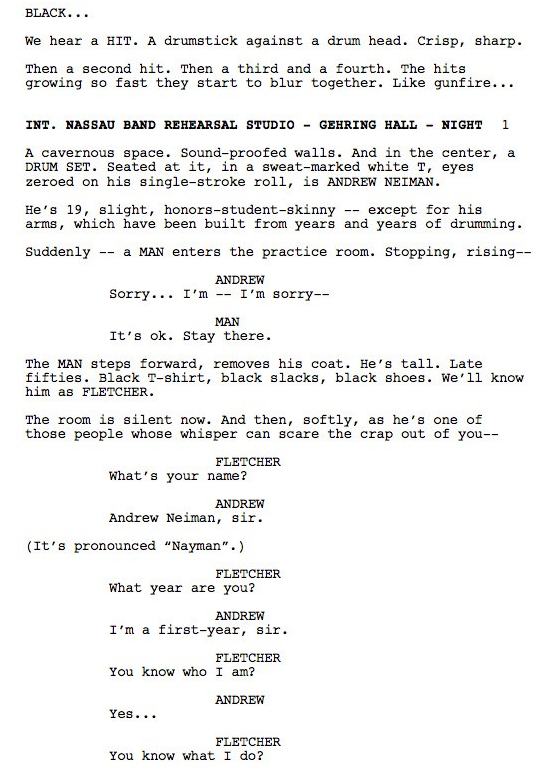
If you figure the average scene is one-and-a half to two pages long and a feature length screenplay ranges from 90–120 pages, that means when you sit down to write a script, you are confronted with the prospect of handling anywhere from sixty to ninety scenes. Looked at this way, it’s fair to say the most basic act of screenwriting is scene-writing.
So we start by asking this question: “What is a scene?” Here are two definitions:
“A division of a play or of an act of a play, usually representing what passes between certain of the actors in one place.”
“A unit of action or a segment of a story in a play, motion picture, or television show.”
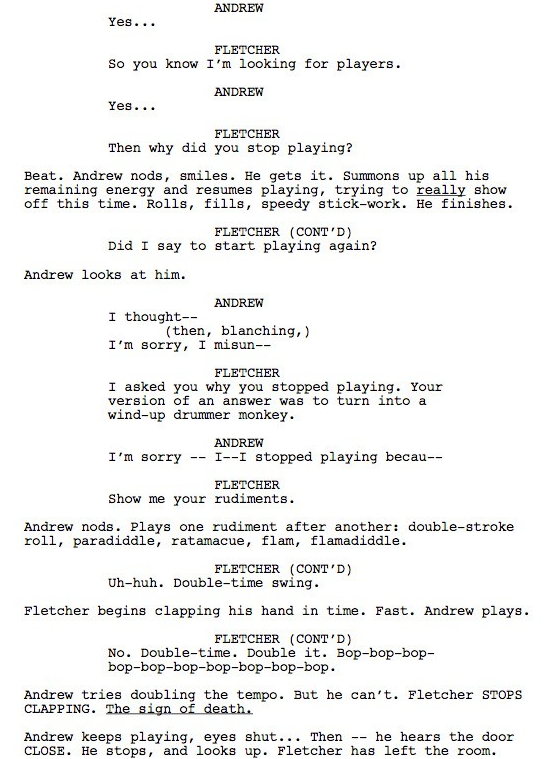
Each of these offers elements we can use to construct some sense of how a screenwriter should think about the essence and function of scenes:
- A division of a play / a unit of action / a segment of a story: A scene is a piece of a larger story. In relation to screenplays, which are so much about structure [William Goldman, arguably the dean of contemporary screenwriters, wrote, “Screenplays are structure”], one way to look at a scene is as a building block. Each one stands alone as an individual entity, but the aggregation of these building blocks must be put together into a coherent form in order to constitute a complete story.
- Representing what passes between certain of the actors: Two things here. First, there are actors — characters — involved in a scene. Second, let’s translate “what passes between” to mean this: something happens. For a scene to be a scene, some event or action must transpire, and typically this event or action is tied to what the characters do within the scene.
- In one place: In most cases, a scene occurs in a single location. Certainly there can be concurrent events happening in different locations, but for them to be part of a scene, what transpires in those other spots must be tied to the events and/or meaning of the primary scene location itself. If the action of a scene culminates and the location shifts to a different one, that almost certainly signifies the beginning of a new scene.
Therefore some key elements of a scene:
- They are a piece of a larger story
- They involve characters
- Something happens
- Most often a scene takes place in one location
This is the starting point of my new Screenwriting Master Class course: Scene-Writing Workshop. In it:
- You will learn key scene-writing principles, techniques, and tips
- You will also have the opportunity to put them into practice by workshopping some of your own scenes

COURSE DETAILS
- Analyze great scenes from notable movies
- Download seven lectures written by Scott Myers
- Put theory into practice by writing and workshopping your own scenes
- 24/7 online forum Q&As moderated by instructor
- Pro insider writing tips
- A 90-minute live teleconference with instructor and class members
WHO SHOULD TAKE THIS COURSE
Screenwriters, TV writers, novelists, playwrights, and anyone interested in upgrading their ability at writing scenes.
The ability to write scenes — not just any scenes, but good scenes — is a critical skill-set for anyone wishing to work as a writer in the film or TV business.
This brand new course will help you learn how to elevate your scene-writing abilities.
This one-week online class begins Monday, April 15.
Enroll now!
Class: Scene-Writing Workshop
Instructor: Scott Myers
Date: April 15
I look forward to the opportunity to work with you!
To learn more about the learning opportunities at Screenwriting Master Class, go here.