Reflections on “It’s a Wonderful Life”
This is the best piece I’ve ever read on Frank Capra’s classic movie.
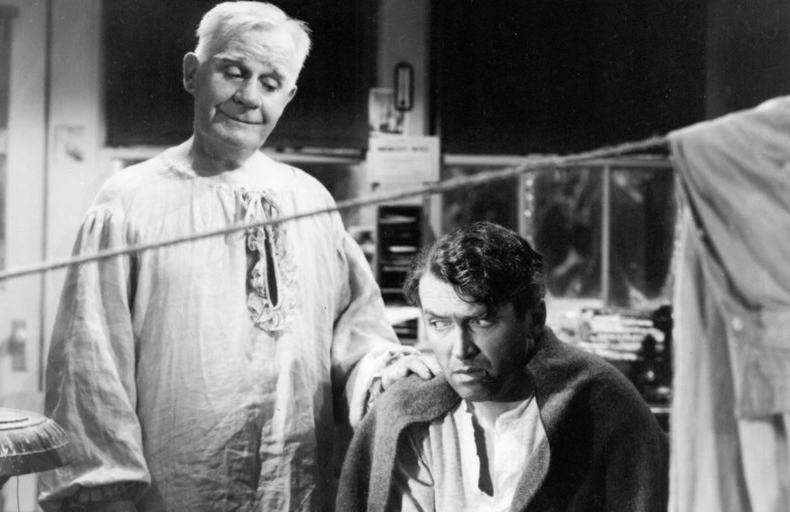
This is the best piece I’ve ever read on Frank Capra’s classic movie.
For years, the Beverly Cinema in Los Angeles has been one of the best revival movie theaters around and this week they screened the 1946 film It’s a Wonderful Life. With a screenplay written by Frances Goodrich & Albert Hackett and Frank Capra, based on a story by Philip Van Doren Stern, with additional scenes from Jo Swerling and uncredited writing contributions from Michael Wilson, the movie is one of my all-time favorites.
I can still remember the very first time I saw it. I was in college, home for the holidays, and as was our family tradition, we attended the candlelight Christmas Eve service at our church. Getting home after midnight, I turned on the TV to catch the beginning of a movie I’d never even heard of before. It was a scratchy print and interrupted by late night commercials, but by the story’s end, I had tears streaming down my face.
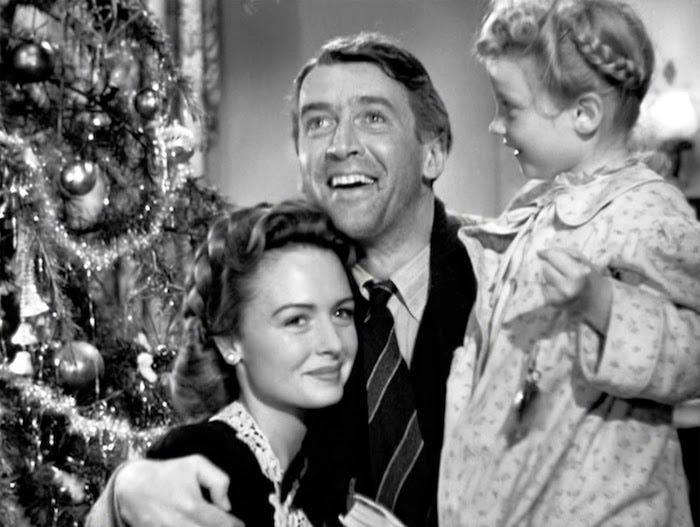
George Bailey, who had sacrificed his personal hopes and dreams, saved from scandal and imprisonment by the very “riff raff” he had served day after day, year after year. A film about the fundamental goodness of humanity.
Or is it?
Writer and film critic Kim Morgan (Sight & Sound, Criterion, LA Weekly, Huffington Post, Entertainment Weekly, GQ) pens program notes for the Beverly Cinema theater and her piece which ran last year accompanying the screening of It’s a Wonderful Life is the single best thing I’ve ever read on the movie. She really nails the human desperation which lies at the core of the story which makes the humanistic response of the Bedford Falls community that much more impactful. Some excerpts from Morgan’s article:
It’s a wonderful nightmare — and the nightmare starts rolling downhill and snowballing, not only by James Stewart’s suffering George Bailey, but by Thomas Mitchell’s sweet, absent minded, animal-loving Uncle Billy. Think of his scene — when he can’t find the money. Jesus, imagine being Uncle Billy? On that fateful Christmas Eve in Frank Capra’s It’s a Wonderful Life, it’s Uncle Billy who louses everything up by his innocent mistake — losing the deposit money to Lionel Barrymore’s rotten Mr. Potter, who then steals it. Cheerfully filling out the 8,000-dollar deposit slip in the bank, he notices Mr. Potter wheeled in by one of his henchman, and bids him a somewhat disingenuous hello. He’s not happy to see him. No one is happy to see that greedy, no-feeling blight on this community. Nevertheless, Uncle Billy, greets him, and grabs Potter’s newspaper — bragging about George’s brother winning the Congressional Medal of Honor, “written right there in print. “You just can’t keep those Bailey Boys down,” he says with pride and gloating glee. Mr. Potter doesn’t give a rat’s ass (or secretly, he does) and snarls about that “slacker” George Bailey (I always think of the Senior Lebowski in this moment, even if George Bailey is nothing like the Dude — “The bums lost!”). Uncle Billy folds the deposit money into the newspaper and hands it back to Potter: He continues to exult for the Baileys with a smirk, messing with Mr. Potter. He’s having a good time shoving this in Mr. Potter’s face! He’s being cocky, even. But… don’t go too far Uncle Billy, for, let me repeat myself — he hands over the money to Mr. Potter — something one fears so much that one might go crazy thinking such fear actually formed itself and happened.
So evidently Uncle Billy isn’t allowed to just slightly gloat in this Wonderful Life universe — he can’t even walk away from a party without crashing into something and falling down — he’s a lovably disorganized, slightly kooky guy until he’s not so lovable — at least not to George Bailey anymore. So, every time I see Uncle Billy smile and fold that newspaper with the money inside and just hand it over to Mr. Potter I nearly scream. I scream thinking of myself, too. That moment of recognition in yourself — the nightmarish thought of committing some kind of easy blunder that results in consequences so dire, that you wish you’d never left the house that morning. Or that week, for that matter. The “what if?” spiral that leads to catastrophizing — a “what if?” that will become a grim alternate reality for George Bailey, when one wishes that, one not only never stepped out of the house, but never stepped outside for a week. In Bailey’s case, he wished he had never stepped into life.
I realize there would be no movie if Uncle Billy didn’t hand that 8,000 dollars over to evil Mr. Potter and I’ve seen it enough to anticipate the moment, but it’s still horrifying to watch — knowing that Christmas Eve-happy Uncle Billy will soon turn to sinking-dread Uncle Billy. And then, that panic, that anger, that suicidal ideation infecting George Bailey, who has been storing up dread and regret and running away fantasies for years. Bailey will lose it, turn on his family, get punched in a bar, crash a car, run through the snow to jump off a bridge only to be saved by Henry Travers’ lovable second-class guardian angel, Clarence. He’s shown what Bedford Falls would have really been like had George had never been born. It would be Pottersville — a seedy, mean (admittedly, more interesting) rough town, controlled by Mr. Potter; and a place where no one knows George. No one knows him? He yells at friendly faces desperately in this “Twilight Zone” journey — and George goes crazier. Clarence is sending him over the edge faster than jumping off that bridge — and he’s waking George up as if the cold water below jolted him alive. It’s like George fell asleep after crashing that car, and fell into this nightmare — this Dickensian Christmas ghost story about a man who was never there.
Morgan begins her take on the movie with Uncle Billy, an interesting choice as he’s a secondary character to the Protagonist George Bailey, however, as Morgan notes, there wouldn’t be the major plot conceit — “I wish I’d never been born” — had it not been for Billy absentmindedly forking over $8,000 to Mr. Potter. That mental lapse sets every subsequent beat into motion.

But more than that, as Morgan takes time to reflect on the story viewed through Uncle Billy’s eyes, I felt that gnawing ache in the pit of my stomach I always get when I watch It’s a Wonderful Life (I’ve seen it at least 10 times), that horrible scene where all that cash from the Bailey Building and Loan (virtually every last dollar) erroneously ends up in Potter’s hands, all the while Billy prattling on about Harry Bailey winning a medal and so forth.
It is a moment of true horror, the worst kind of dramatic irony for us movie viewers because of this simple fact: We can’t do anything to stop it from happening!
Morgan’s analysis digs deep not only into Uncle Billy’s experience, but that of the story’s central character George Bailey and in a way which really gets at the character’s existential crisis. We are reminded of his blind rage, fueled by the reality that he never wanted to be stuck in Bedford Falls in the first place, his dream to see the world and build big, meaningful things.

We remember how cruel and heartless the story’s Nemesis — Henry Potter — is and the portrayal of Bedford Falls a k a Pottersville looks more like a prophesy of how our American society is headed.

If you think It’s a Wonderful Life is a lighthearted holiday story… think again. The movie speaks to the depravity of capitalism run amok… the illogicality of concerning one’s self with the needs of others… and the surprising, yet genuine capacity of human beings to do the God damn right thing.
Kim Morgan’s reflections on It’s a Wonderful Life is a great piece of analysis, well worth the read.
Twitter: @SunsetGunShot.