Reflections on Carl Jung (Part 3): Make the Darkness Conscious
Carl Jung’s theory of individuation is directly applicable to the Protagonist’s journey in a screenplay.
Carl Jung’s theory of individuation is directly applicable to the Protagonist’s journey in a screenplay.
The more I study Carl Jung, the more I discover his ideas about psychology have a direct relevance to screenwriting (specifically) and stories (generally). This week, a 5 part series focusing on Jung’s notion of individuation, the achievement of one’s self-actualization through a process of integrating the conscious and the unconscious. This movement toward a state of what Jung called ‘wholeness’ is an enlightening way to think about what many in the screenwriting trade refer to as the Protagonist Transformation Arc.
In Part 1, we explored Jung’s theory of individuation which he described as the “psychological process that makes of a human being an ‘individual’… a ‘whole’ man.”
In Part 2, we considered the idea that the unconscious, the stuff of an individual’s Authentic Self, naturally seeks to emerge into the light of consciousness, and how we, as writers, can think of a Protagonist’s transformation as a reflection of this dynamic.
Today we look at a particular aspect of an individual’s Self:
One does not become enlightened by imagining figures of light, but by making the darkness conscious.
— “Alchemical Studies, Vol 13”
A key part of this transformation process is for an individual to confront their shadow, a term originated by Jung in relation to analytical psychology:
Unfortunately there can be no doubt that man is, on the whole, less good than he imagines himself or wants to be. Everyone carries a shadow, and the less it is embodied in the individual’s conscious life, the blacker and denser it is. If an inferiority is conscious, one always has a chance to correct it. Furthermore, it is constantly in contact with other interests, so that it is continually subjected to modifications. But if it is repressed and isolated from consciousness, it never gets corrected.
— “Psychology and Religion”
Going back to Joseph Campbell’s observation about the starting point of the Hero’s Journey — “They need to change” — their Old Way of Being does not only represent an inauthentic existence, it’s also a system which actively represses the character’s shadow. The Protagonist cannot move toward Unity and Wholeness without confronting their Shadow. But that can be a dangerous proposition:
It is a frightening thought that man also has a shadow side to him, consisting not just of little weaknesses and foibles, but of a positively demonic dynamism. The individual seldom knows anything of this; to him, as an individual, it is incredible that he should ever in any circumstances go beyond himself. But let these harmless creatures form a mass, and there emerges a raging monster; and each individual is only one tiny cell in the monster’s body, so that for better or worse he must accompany it on its bloody rampages and even assist it to the utmost.
— “On the Psychology of the Unconscious”
Positively demonic dynamism… emerges a raging monster… bloody rampages. This inner tension is rife with psychological danger. But as writers, we can up the conflict: What if we project these attributes into External World as a character: The Nemesis? Now we create a specific psychological connection between the Protagonist and antagonist figure, taking that internal struggle and visualizing it in the physical world.
Since movies are primarily a visual medium, this is a powerful way we can take this inner dynamic suggested by Jung — “Make the darkness conscious” — and turn it into cinematic drama.
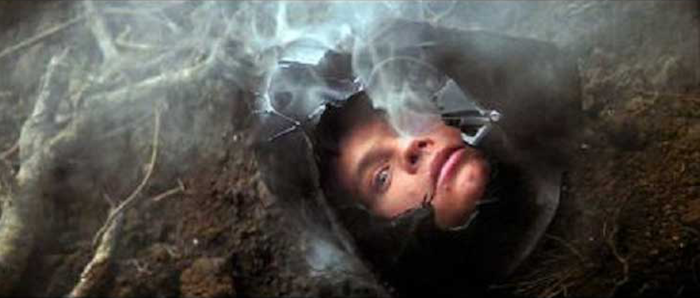
Luke Skywalker in Star Wars: Luke confronts his own pull toward the Dark Side of the Force in the form of Darth Vader.
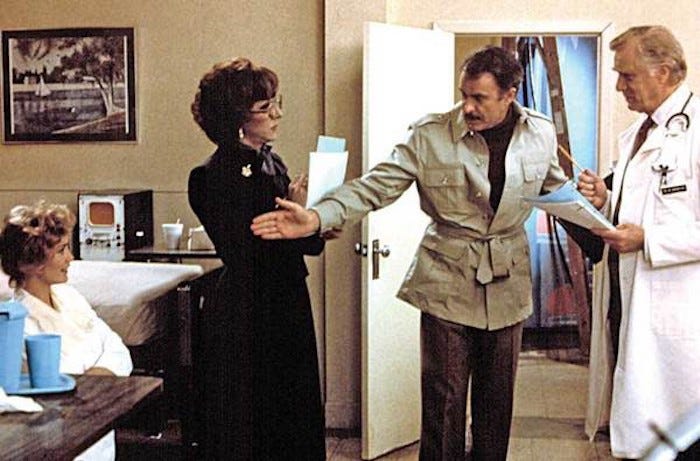
Michael Dorsey in Tootsie: As Dorothy Michaels, Michael is exposed to the sexist attitudes and antics of Ron, the despicable director of the soap opera Michael finds himself acting in.
Ripley in Aliens: As Ripley’s connection with Newt allows her to get in touch with her lost sense of motherhood, she is drawn into a violent struggle with another mother: The Alien Queen.

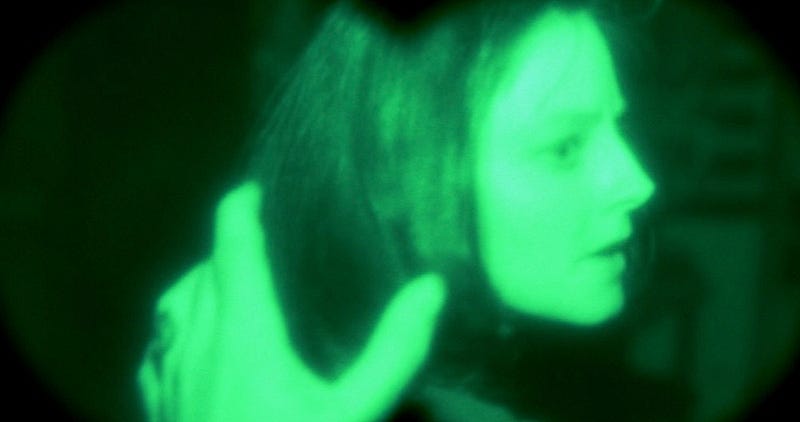
Clarice Starling in The Silence of the Lambs: Straddled with an infantile sense of guilt over her father’s senseless murder, Clarice confronts Buffalo Bill, a symbolic version of the men who killed her father.
How interesting when we work with a Protagonist to think about their initial state of Disunity, that underneath whatever veneer they are presenting to the world, there is this roiling set of psychological dynamics, bursting at the seams to move from the darkness into the light. And a major part of the psychological struggle for the character is dealing with the fear of confronting their own Shadow.
To my way of thinking, this Disunity state is such a richer way to think of the Protagonist’s beginning state of being than the frequent advice: “Give your Protagonist a “flaw.”
This construction offers even more in terms of the Protagonist arc as the very roots of Disunity imply — for most movies — a change toward eventual Unity.
Tomorrow: Psychological Rule as Fate.