Reader Question: Does a story absolutely need an antagonist?
Is it possible to just create obstacles to what a character wants and not have them emanate from an antagonist?
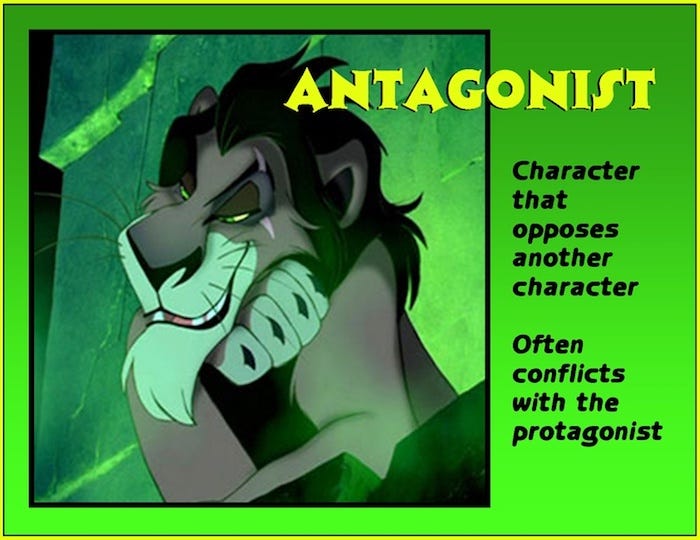
Is it possible to just create obstacles to what a character wants and not have them emanate from an antagonist?
Reader question from Manwhit:
hey scott,
does a script absolutely need an antagonist character? is it possible to just create obstacles to what a character wants and not have them emanate from antagonists? for example, can there just be obstacles created by the circumstances of the outside world or even by the protagonist themselves. i.e. can they be their own worst enemy and cause the conflict by making poor decisions which stem from their flaws? can you think of any movies that use this scenario?
hope that makes sense. thanks!
The official answer I’d offer is NO: A movie does not absolutely need a specific, physicalized antagonist character (what I prefer to call a Nemesis). However, a movie does require an ANTAGONIST FUNCTION, some sort of oppositional dynamic or dynamics to confront and challenge the Protagonist.
An example of a movie that doesn’t have a Nemesis character per se is Cast Away (2000), where the Protagonist Chuck Nolan (Tom Hanks) is stranded for four years alone on a remote island. In this story, geography (the ocean) generates the primary conflict in the life of the Protagonist by creating his isolation and standing in the way of his escape. It’s a successful story, however you know the filmmakers were up against it when they created a character in Wilson, a volleyball Nolan doctored up so he could have ‘someone’ to talk to.

That said, Hollywood much prefers strong, compelling, and dynamic Nemesis characters. Why? Part of the reason is that stories generally benefit from having a Protagonist vs. Nemesis dynamic, as it usually provides a much more visceral and personal conflict. Also, a good Nemesis such as Buffalo Bill / James Gumb in The Silence of the Lambs, Warden Norton in The Shawshank Redemption, Jeff Sheldrake in The Apartment, Darth Vader in Star Wars: A New Hope, and Hans Gruber in Die Hard can be a fascinating character, driving up the tension in the story — how will the Protagonist overcome this worthy opponent — and therefore, the entertainment experience for the viewer.
Now specific to this question — “can they be their own worst enemy and cause the conflict by making poor decisions which stem from their flaws?” — my take would be YES, a character can work at odds against their best interests. A good example is Melvin in the movie As Good As It Gets. The combination of his OCD (Obsessive Compulsive Disorder) and obnoxious public behavior make him his own worst enemy. And yet throughout the story, other characters don the Antagonist / Nemesis ‘mask’ from scene to scene to provide opposition to Melvin, e.g., Carol, Simon, Frank, even the dog Verdell (read more of my analysis of the movie here).

However, let’s draw a distinction between a character who has some sort of psychological condition acting as a kind of antagonist function and the more typical conflict a Protagonist faces at the beginning of a story: What they Want and what they Need, what I call Disunity.
For example, in The Wizard of Oz, Dorothy wants to leave and get away from her home, as expressed in the song she sings in Act One, “Somewhere Over the Rainbow.” Indeed, she runs away from home, albeit in order to save Toto from being recaptured and taken away by Elmira Gulch (Margaret Hamilton). But what she needs is precisely the opposite: to feel like her home in Kansas is actually her home. Remember, she is an orphan, she is the only child on the farm, she has no job like everyone else, so in sum she doesn’t feel like she fits in — her home doesn’t feel like a home. In a way, her entire journey to Oz is to give her experiences, primarily in bonding with Scarecrow, Tin Man, and the Cowardly Lion — who are projections of three workers on the farm (Hunk, Zeke, and Hickory) — and in feeling what it’s like to be separated from (especially) her Auntie Em, to change her world view: So that when she returns to consciousness in the farmhouse, she does feel like she belongs, leading to the final words in the movie, “There’s no place like home.”
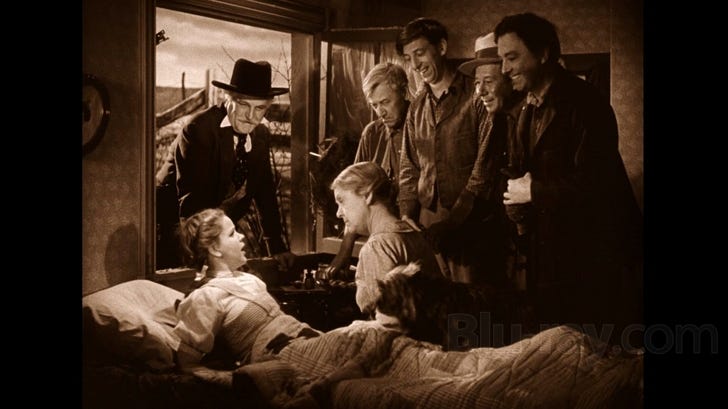
In desiring to leave the farm and actually run away, Dorothy acts in opposition to what she needs, and that does create a certain measure of conflict. But it is her struggle with an actual Nemesis character — Elmira Gulch / the Wicked Witch of the West — which creates the most significant set of challenges for Dorothy. And like so many Nemesis characters, Gulch / Wicked Witch represents a projection of Dorothy’s shadow self — someone who is a loner, who doesn’t feel understood, who doesn’t like her life. Indeed, one of my students in the last university class I taught had an interesting thought: Might Elmira Gulch be a sort of projection of what Dorothy could become as she grew old if she did NOT go through her Oz experience?
To circle back to your original question: No, a movie does not need an actual Nemesis character, but it does require an antagonist function to create opposition to the Protagonist. However, most movies fill that function primarily through the presence of a specific Nemesis. And while a Protagonist may act against their best interests, thereby creating self-generated opposition, more often, I think, this is a reflection of the Protagonist’s original Disunity state, something that gets worked out in their transformation-journey, ending up (typically) in a Unity state.