Reader Question: Do all Protagonists need a character arc?
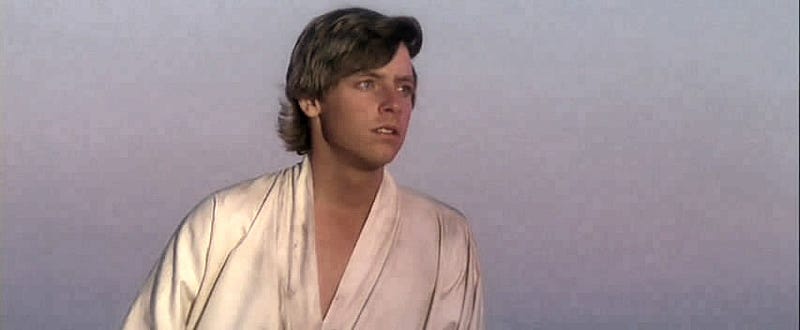
A character’s ‘arc’ is a big buzzword in Hollywood development circles.
A character’s ‘arc’ is a big buzzword in Hollywood development circles.
From Gregaria:
I am wondering if protagonist character arcs (in which they learn something and grow in a positive way) apply to protagonists of comedy. I can see where the personal growth of the character would be important in drama, but what about in comedy or horror? If the comedy is a farce, for example, it seems like all the characters stay the same or even regress in the course of the story. Do some of these rules change depending on genre? (Fyi, the protagonist of my comedy does grow and learn things about herself, but I wondered if this has to be the case all of the time.)
This is a hugely important question, Gregaria, one I could parse into various areas of focus for several posts. For now, let’s look at three points.
First, in most movies, the Protagonist does go through some sort of metamorphosis. You see it over and over and over again. In mainstream commercial movies. Even in indie films. The P starts out in one psychological state at the beginning. They end up in another psychological state. Three examples:
- Dorothy in The Wizard of Oz feels disconnected from her life-circumstance in Kansas, wishing she could go somewhere over the rainbow, only to return claiming, “There’s no place like home.
- C.C. Baxter in The Apartment starts out as a nebbish who allows himself to be abused by his co-workers in order to land a promotion, then at the end rejects the job and those work values — in other becomes a mensc
- Michael Dorsey in Tootsie begins as a self-absorbed, insensitive male, then through his experiences as Dorothy Michaels discovers he was a better man as a woman than he was as a man.
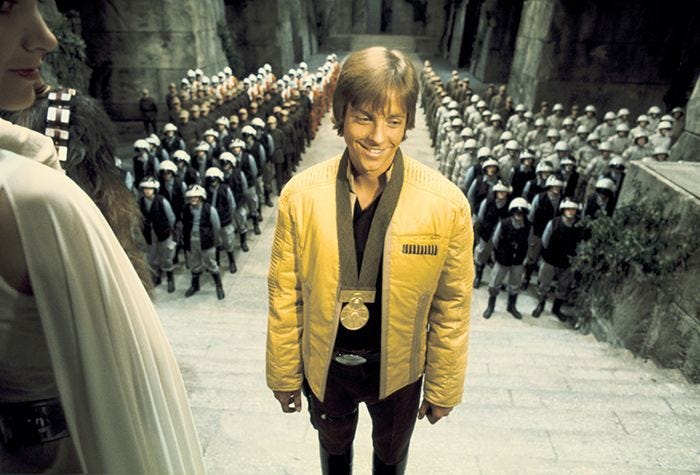
If you sat down and wrote out a list of your 10 favorite movies, I’ll bet almost all of them feature a Protagonist metamorphosis dynamic.
Joseph Campbell asserted that transformation is at the heart of The Hero’s Journey: The Hero leaves their Ordinary World and goes on a journey into a New World. Through the challenges they face and experiences they have, combined with wisdom they learn along the way, both intellectual and emotional, the Hero returns home a changed individual.
Carl Jung asserted the process of individuation is the greatest calling of the human adventure and that process is fundamentally about metamorphosis — becoming who we are meant to be, indeed, in a way, become who we already are (as represented in the various aspects of our psyche).
Why is metamorphosis perhaps the single most universal narrative archetype? Again we could talk about this for days, but if I had to name one reason it’s this: People want to believe they can change. Stories that feature characters who do change reinforce that belief.
So I think it’s safe to say that in most movies, the Protagonist does go through some sort of metamorphosis.
Second point: There are stories where the Protagonist does not go through any significant metamorphosis. Forrest Gump, Being There, pre-Daniel Craig James Bond movies are a few examples. Forrest Gump and Chance are change agents, that is they don’t change, they change others. In the case of James Bond, that’s more of a reflection how in some action movies the Protagonist’s story is not so concerned with their psychological journey, but rather the impact they have on others, most notably Nemesis characters. Of course, there are lots of action movies where the Protagonist does change — Lethal Weapon and Die Hard spring to mind — but only if the filmmakers are interested in exploring that character’s inner life.
Which leads to the third point, one you raised: “Do some of these rules change depending on genre?” Two things.
- First, in my view, there are no ‘rules.’ There are only principles and conventional wisdom. As writers, we have to be free to follow our story wherever it leads. Rules bind us. Principles, however, exist to guide us, but we can choose to bend them, shape them, ignore them, even abuse them. Same thing with conventional wisdom. Sometimes a story is best served playing by what is conventional. Other times, a story will force us to be unconventional. Again we’re not breaking a rule, rather we’re flying in the face of convention. I know it’s a matter of semantics, but I prefer that language to “rules.”
- Second, while most stories share fundamental narrative principles, they can vary by genre. For example as noted above, you can write a great action movie where the Protagonist does not go through any significant metamorphosis. On the other hand, that’s likely not the case if you’re writing a drama where viewers expect to enter into the inner life of characters.
Even within a genre, there can be differences. You mention farce, a specific type of comedy. There the humor derives largely from a tangled web of comedic situations. Does the Protagonist have to change in a farce? Maybe. Maybe not. If, however, you are writing a more conventional comedy like Tootsie or even some of the adult-males-as-teenager comedies like Knocked Up, you’re more likely to need to explore your Protagonist’s character arc.
So after that long-winded response, my short answer to your questions is this: No, a Protagonist does not have to go through a metamorphosis. But as a result of a combination of lessons learned from a 100+ year history of filmmaking, human instinct, and common sense, most movies will have a Protagonist who does have a character arc — starting in one psychological start, ending in quite another.
By the way, metamorphosis has been a major point of emphasis in what I’ve been teaching since 2002 as the Protagonist’s evolution not only provides meaning to the plot, it can also create the spine of the main plot itself. In other words: Plot emerging from character. Finally a way to marry the two!
For dozens more articles in the Reader Question series, go here.
My book The Protagonist’s Journey: An Introduction to Character-Driven Screenwriting and Storytelling is an Amazon #1 Best Seller in Film and Television. Endorsed by over thirty professional screenwriters, novelists, and academics, you may purchase it here.