Reader Question: Can characters “flip” archetype functions in a story?
Any character can don any archetype ‘mask’ in any scene.
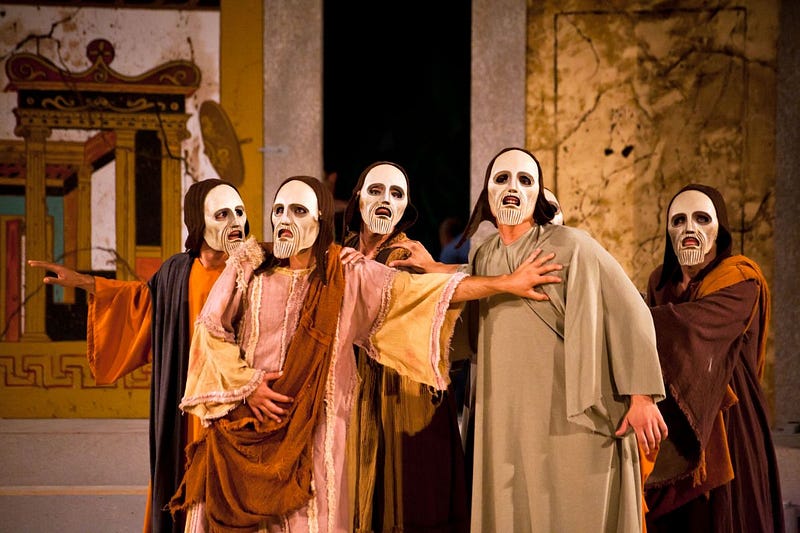
Any character can don any archetype ‘mask’ in any scene.
Reader question via @FinalAct4 from my recent #scriptchat session:
Characters can “flip” to a new archetype as well at various moments in the story?
Yes, indeed! I like to think of this subjects as masks as in ancient Greek theater:
Of course the famous masks of Tragedy and Comedy:
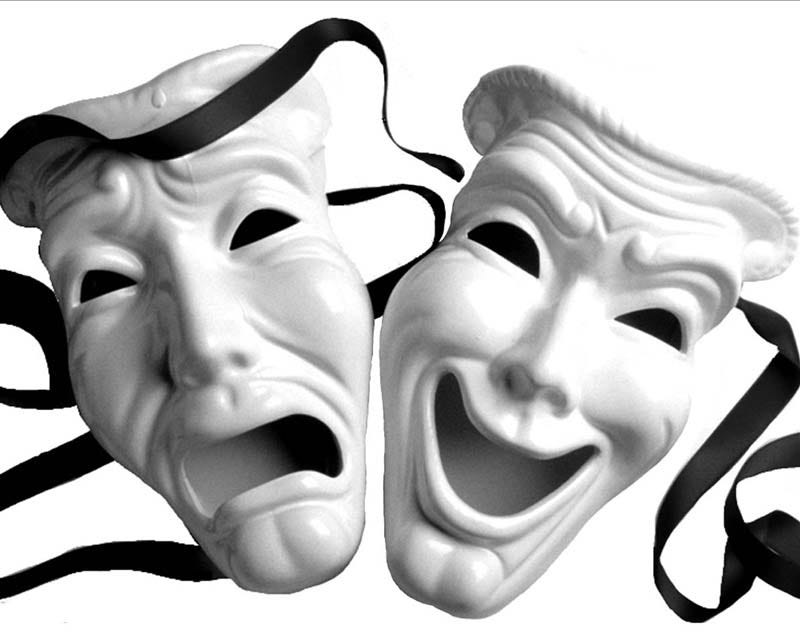
The actors would change masks to indicate they were playing this or that character. With regard to character archetypes, a similar dynamic exists in contemporary stories.
Let’s go back to a movie I reference quite a bit because it so perfectly represents the dynamism of the five primary character archetypes: Protagonist, Nemesis, Attractor, Mentor, Trickster.
Protagonist — Clarice Starling
Nemesis — Buffalo Bill
Attractor — Catherine Martin
Mentor — Hannibal Lecter
Trickster — Jack Crawford
For purposes of analysis, let’s say these are the primary archetypes associated with each of these characters. At any given moment, from scene to scene, relationship to relationship, they may don the ‘mask’ of a different archetype.
Let’s look at the relationship between Hannibal and Clarice:
- When they first meet, Lecter recognizes straight away she is a ploy played by Crawford, so Lecter dons the mask of Nemesis both in his opposition to Clarice and her goal (to get him to fill out a questionnaire) and in his mean-spirited rundown of her personality and background (“You know what you look like to me, with your good bag and your cheap shoes? You look like a rube. A well scrubbed, hustling rube with a little taste.”)
- Later when Lecter makes his “quid pro quo” offer, he dons the Trickster mask because while he is going to help her make the necessary journey into her own psyche (Ally), he will use whatever means he can provided by her to facilitate his eventual escape (Enemy).
- At several points in their interactions, Lecter probes into Clarice’s sexual matters, and even suggests, “I think it would be quite something to know you in private life.” Here he dons the Attractor mask.
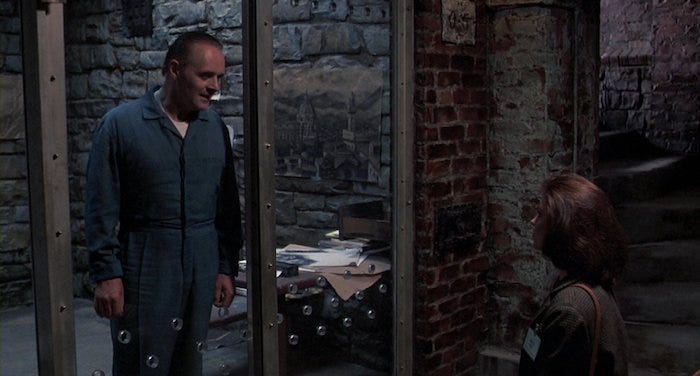
Lecter switches masks to suit his needs and that is a key to understanding one of the fundamental potentials of this narrative feature: Characters may use masks to help them achieve goals.
If you think about it, this is really nothing more than a reflection of general human behavior. We present one aspect of ourselves to a policeman who stops us for a ticket compared to who we are with our spouse or who we come across as at work.
Every individual has multiple aspects to his/her psyche. We can consider these to be represented as our own masks. Same thing with characters. Even though their primary character archetype may not change, they can use masks to switch narrative functions from moment to moment.
One tremendous value of this is we can use masks to create multilayered characters who present different aspects of their persona in a story, which offers us, as writers, a much wider range of dramatic possibilities.
So yes, by all means, feel free to explore your story’s characters… and see how they don a variety of masks over the course of the narrative.
How about you GITS reader? What do you think of this idea of masks? Love to hear your thoughts in comments.
For more articles in the Go Into The Story Reader Question series, go here.