Q&A: Sean Hartofilis
The writer-director of the indie feature Covadonga shares his thoughts on the challenges and benefits of micro-budget filmmaking.
The writer-director of the indie feature Covadonga shares his thoughts on the challenges and benefits of micro-budget filmmaking.
In 2014, I featured an interview with indie filmmaker Sean Hartofilis on the movie he was releasing at the time Beach Pillows. Sean is back with his latest feature project and with it, he explores the world of micro-budget filmmaking. I asked Sean to share his observations about that experience and the cutting edge approach he is taking to the movie’s distribution.
What is your latest film about?
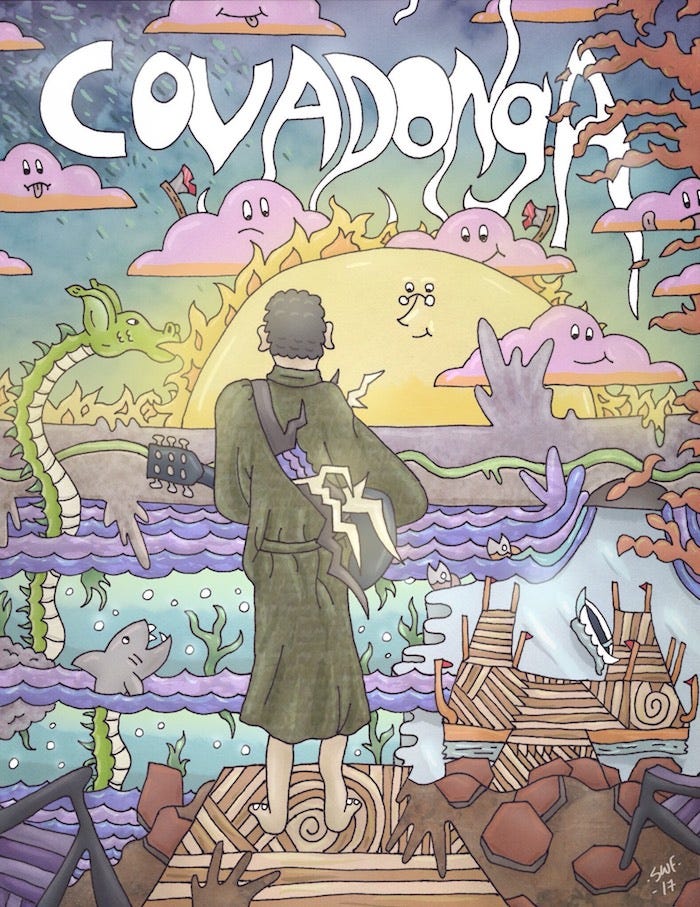
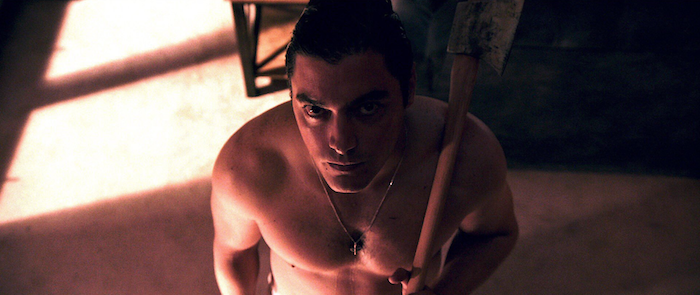
Covadonga is a Gothic Irish folk horror freakout about a widowed songwriter named Martin Ravin mourning his wife and their stolen life at a wooded lake house. One night, a tipsy young couple trespasses on his property and takes his canoe for a moonlit ride. When only the boy returns to shore, Martin’s dark past comes calling, and we’re left to wonder if he’s exacting justice or transmitting his tragic history. It’s a humdinger and willfully different.
Why did you make this particular project?
After the 10 year journey of making my first feature, Beach Pillows, I wanted to write something I could make quickly and without relying on too many other pieces. I wanted to focus on one location, a limited cast, and keep the budget down by virtue of these other limitations and by making it quickly. It may even be something I mentioned during our conversation for Beach Pillows, but Orson Welles said the enemy of art is the absence of limitations. With Covadonga, I was very purposeful in limiting my resources and using all my creativity, talent, and intuition to forge a way out that was emotionally truthful and powerful to me and entertaining for audiences. You could call it a French New Wave approach. I was inspired by those filmmakers and films and how creative and groundbreaking they could be with limited means and limitless imagination.
Then, as far as the content, what seems to always call me back is the ineluctable darkness and sadness of life, our response to it, and how that dictates the world we live in. We make our world. And we largely make it by our reactions to things we can’t control. The cycle of life always includes death. Living organisms, institutions, societies, and civilizations on the planet always have cancerous elements. I would argue that the patriarchy, the gender imbalance among these organizations, institutions, and cultures, and within each of us — our resistance to feminine divinity — fosters much of this cancer. And the choices are to forgive and love in the face of it, or combat cancer with more cancer and consume ourselves into oblivion. And I guess the healthy reminder is that sadness is only possible because of love, because of family, because of how heavenly the world can be. This makes me think about my older son Francis Finn, who’s 3. Almost inevitably, anything that makes him happy, toys, reading, ice cream, TV, playing with cousins…anything joyful, when he’s done with it, or when we need to make him stop it in order to do whatever other things are essential to life, for example sleep, he revolts. He retaliates. So, in effect, all the things that make him happiest are what end up making him the saddest. And that’s a little bit what these movies are about. Maybe there are elements of vice, addiction, and self-control I’m also exploring within myself. I’m not sure.
How did you make such a micro-budget movie?
I made it with 40 thousand dollars and a cast and crew of anywhere from 10–12 people in two weeks (10-day shooting schedule) at a lake house on Lake Wallenpaupack in Lakeville, PA, about two and a half hours from New York City. With that tight of a schedule and that amount of money, you need to know what you want to shoot, but not only that, how you want to cut it. So when you have those assets, that visualization going in, and you combine that with the fact that location moves are limited, almost null, you get at least a few extra hours per day to not be in trucks or conceiving and blocking scenes and instead be shooting and creating in front of the camera. Then, as the lead performer and director, I didn’t need to do a whole lot in terms of crafting my performance on the fly or directing it towards something. I wrote the character. I rehearsed in preparation. And I tried to limit my takes. Generally, I would do whatever I could to put myself in the emotional space of the character, do the takes, and then kind of look around at my crew and say, “I think that’s all I’d do here. That feels right. Was that okay?” And if you have a crew you trust and that trusts you, you should be fine. So that saves a lot of time. Especially because this role required a lot of physicality, swimming, dancing, singing and playing music, chasing someone through a forest, chopping wood. This stuff might sound minor, but even doing things barefoot can be a big hassle for actors. You’ll often have to work very hard with a collaborating performer in order to 1) make them understand what you’d like them to do; 2) convince them of its creative merit; 3) ensure them of its safety; and 4) make sure they physically can or are willing to do it. None of those things are forgone conclusions, understandably. But when you’re just doing it yourself, and you’re aware of what you’re capable, you can push things a little further towards your talents or limits, and certainly move much faster, so that helps. I’d also like to mention my fellow performers, my father George Hartofilis, Matt Montemaro, Phoenix Gonzalez, and Lindsey Dumont, who were all putting themselves out on a limb with me and I think ultimately soared.
Then, behind the camera, I just had a wonderful team of kind and talented artists and technicians. My Cinematographer Alexander Crowe is very talented, and especially adept with light. And when we’d punch out for the day, we were living where we shot, so we’d go food shopping, our sound mixer Patrick Burgess would cook us dinner. We’d relax and play and reflect on the day, watch movies and listen to records. It’s kind of exactly what you’re looking for, or when you’re reading about your heroes and how they’ve been able to cultivate their production environments, what you’re hoping to emulate. It’s a special time, those weeks together.
Why are you foregoing the traditional theatrical release model with the movie’s distribution?
I’ve had the good fortune to screen Covadonga in Ireland, England, Spain, the Gene Siskel Film Center in Chicago, some of my favorite New York theaters including The Museum of the Moving Image and Anthology Film Archives, among other places. So as far as watching it alongside an audience on a big screen, and servicing that form of artistic exaltation and experience, I’ve done it. I’ve loved it. And we have every ability to do it in the future. But as far as a business model, I could raise money and choose to pay for a theatrical run. Pretty much anyone who can make a movie can do this, irrespective of quality. However, in all honesty, it’s just not sound business for an independent filmmaker. Given the way films are consumed and marketed in today’s landscape, it’s a vanity play and near guaranteed loss. And, worse, I fear this theatrical requirement divorces the form from its truest missionaries, swallows independence and burgeons corporate commerce that doesn’t need it. As much as I worship theatrical cinema and cherish having my films experienced communally, to ask independents to serve the old gods smothers the best work and artists and stifles progress. I have been as inspired by films I’ve seen at home or within assorted monastic sheds of cinema as those in the theater. I have cried puddles on a plane. It’s the picture, not the museum.
So, anyway, I’m bringing Covadonga to the whole world on October 31 through Covadonga.film. Through a partnership with Vimeo, a great tool for filmmakers and consistently the best streaming/download experience I’ve had on any platform, you can watch the film in every territory, on any device, including television (Apple TV, Roku, Amazon Fire, Android TV, Chromecast, Airplay, Samsung SMART TV, etc.), on the same day, for the same price, which I determine. I’m offering the music, and all the music videos from the film, alongside it at https://covadonga.film. And you can buy the songs separately for a buck a piece, or you can buy the film for $7 and get the seven songs for free by emailing your purchase receipt to music@covadonga.film. In addition to a number of other cool supplements, I’m also hosting all press, performance videos, interviews, and reviews on the site, so you can consume these alongside the film, which is how I generally like to do it with films. I believe criticism can round out the piece with a host of singular perspectives that service the goal and soul of art. An answer in the dark. Harmony.
Many of my favorite artists established their signature and impact not just via the unique and personal way they made their work, but how they delivered it to audiences. I’m protective of that bond with the viewer and grateful to maintain the independent spirit throughout the process, whereas previously I’d kind of done everything along the way and then, at the goal line, handed it off to a distributor who frankly may not understand it the same way I do, who certainly doesn’t feel about it the way I do, and is likely playing a volume game where they’re releasing a thousand things and not marketing anything but still, of course, taking a cut, and via their license inhibiting my ability to do other things with it. Well, what did they do? Make it available? I can do that. So I’d rather control it throughout and go down swinging, and learning.
Finally, what takeaways do you have from the experience making Covadonga?
I’ve learned this is the way to do it. This is the way that I want to do it. I’m an artist. As much as I’d love to support my family doing this, that’s not been our reality yet, and it’s never been my reason to do it. Because I could make money in other ways. But you can’t serve two masters. I do it because I believe it’s important and that God made me a storyteller to exalt love and understanding in our world with the timeless tools of truth and beauty. Outside of my family, that is my purpose. And I can’t have my purpose clouded or derailed by people and mechanisms that don’t share it. Filmmakers and artists have more power than ever. It’s a crowded landscape, yes, but that should only make the work better. And I’ve never been deterred in anything by competition. Anyone who believes in themselves wants to be their best among the best, and frankly, to just be allowed to be themselves at the end of the day. And that’s what I’m most grateful for of all. The opportunity. The chance to be myself, and to present myself to the world uncompromised, unvarnished, warts and all. Because I think that’s how we all can learn.
Crew:
Writer, Director, Editor, Producer: Sean Hartofilis
Cinematographer: Alexander Crowe
Gaffer: Garrett Doermann
Sound Mixer: Patrick Burgess
Set Designer: Joanna McPherson
First AC: Davide Sorasio
Second AC: David Faynberg
Key Grip: Andrea Boglioli
Grip: Vicente Roxas
Cast:
Martin Ravin: Sean Hartofilis
Maggie Ravin: Lindsey Dumont
The Boy: Matt Montemaro
The Girl: Phoenix Gonzalez
Detective Elias: George Hartofilis
Here is the official trailer for Covadonga:
For more information about the movie, go to its official website.
Declare Your Independents! Support indie cinema and its filmmakers. Check out Covadonga.