Q&A: Joshua Caldwell
The writer-director talks about newest movie Infamous.
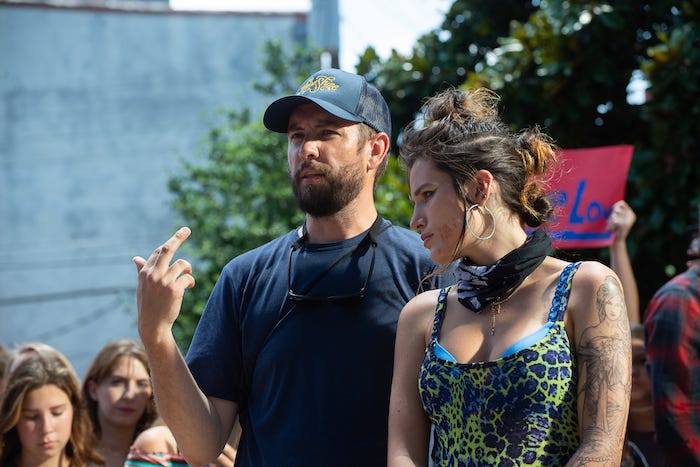
The writer-director talks about newest movie Infamous.
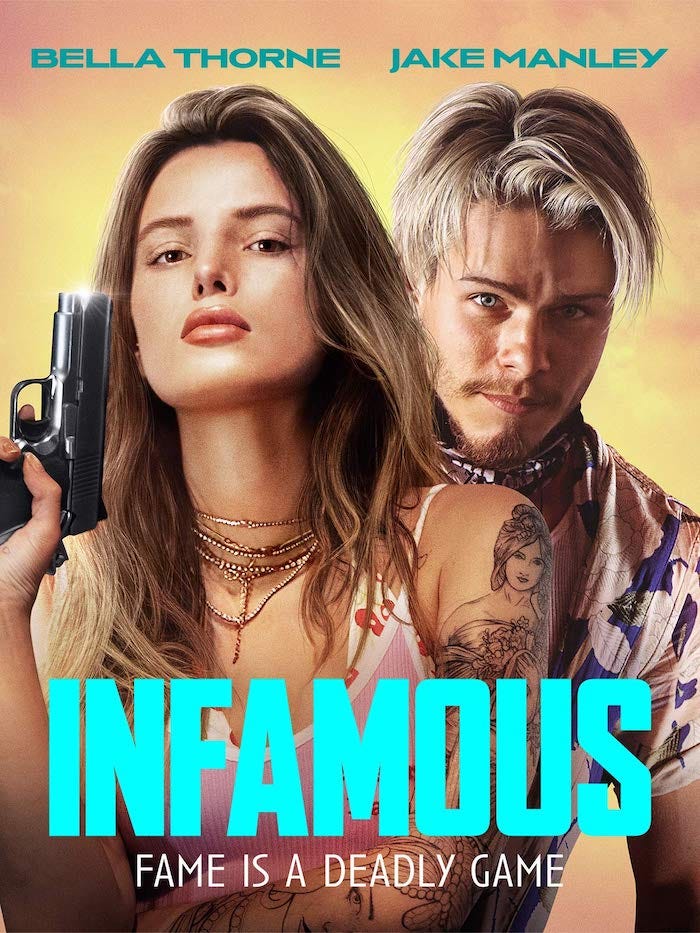
I’ve known Joshua Caldwell since 2011 when he wrote a Dispatches from the Front Lines first-person reflection on how he was going about establishing a filmmaking career. Since then, we’ve stayed in touch through the years.
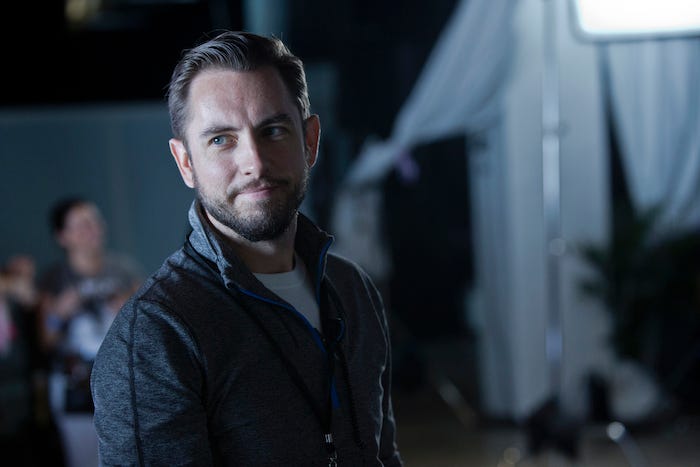
Joshua Caldwell is a director, writer, producer, and MTV Movie Award Winner. His debut feature film LAYOVER was made for $6000 and had its World Premiere to sold out crowds at the 2014 Seattle International Film Festival where it was nominated for the prestigious FIPRESCI New American Cinema Award. Since then, he’s directed multiple features and digital series including BE SOMEBODY for Paramount Pictures, NEGATIVE for MarVista Entertainment and the entire first season of SOUTH BEACH for Hulu. His latest film, INFAMOUS, featured on the Tracking Board’s 2018 Young & Hungry List, was released by Vertical Entertainment in 2020 and stars Bella Thorne, Jake Manley, and Amber Riley.
His latest indie film is the action thriller Infamous which is currently available on multiple digital platforms including iTunes, Amazon, YouTube and Google. Here is a Q&A I conducted with Joshua via email.
Infamous plot summary: Two young lovers rob their way across the southland, posting their exploits to social media, and gaining fame and followers as a result.
Scott: Infamous reminded me of movies like Bonnie & Clyde, Natural Born Killers, and even the 1950 cult classic Gun Crazy. Which movies inspired you and what aspect of each movie was an inspiration?
Joshua: People may not believe me, but I actually try to stay away from looking at movies for inspiration — at the very least from a story perspective. I know that versions of this story have been told before and I wanted to avoid being influenced by them. To try and carve out something original while working off a familiar paradigm.
The initial spark of inspiration came in the form of a photograph I saw on Facebook in 2012 by Mo Gelber. It was of an attractive, young couple being led away in handcuffs by police. The couple was dubbed “Bonnie & Clyde” by the media even though they were arrested for graffiti. But it just stuck with me, I thought we hadn’t seen a version of that in a while but at the time I didn’t have a unique way in.
Then in 2016, I was interested in writing a heist film and while researching naturally came upon the story of Bonnie & Clyde. At this time, you were seeing the real growth of “influencers” in the social media world and I had just directed a film (BE SOMEBODY) that starred an influencer named Matthew Espinosa. So, this was all swirling around in my head and as I read up on B&C I realized how much of the myth and legend was created by the media to sell newspapers. They were these two kids from the slums in Dallas and they became celebrity outlaws, all because they would rob and kill. And then Mo’s photo popped back up into my head and I just felt like… I became very interested in the intersection of social media celebrity (and the currency of likes and follows) with violence and crime. America is fascinated by crime and always has been. The local news is full of it, it’s what sells and so that felt like a natural, if not inevitable, fit with the pursuit of fame at all costs.
The framework of committing crime in an effort to get likes and follows and build celebrity was both ridiculous and not that far-fetched. It used to be that we had gatekeepers who determined who would get attention and who wouldn’t. But that’s all gone now. With nothing more than a phone anyone and everyone has the ability to create and reach an audience into the 10s of millions, if not more. And they never have to step out from behind the device. I was fascinated by that collision of celebrity and crime and I wanted to explore the most extreme version of it in order to ask how far would we as a culture be willing to go?
Scott: How did you go about building the story and writing the script?
Joshua: I started where I always start with a script: character and structure. I began journaling about Arielle and the story, just freewriting ideas and thoughts. I also started trying to lay out the structure of the film, building it out with a beat sheet. I spent a month or two, on and off, working through this until I felt like I had a solid structure and enough character background to start scripting.
I generally don’t like writing a treatment or an outline. I find it difficult to write out the film in prose form — it’s just…it feels like a whole other language to me and I don’t really like it. The most I’ll do now is a scriptment where I have slug lines and description in a script format but I didn’t do that for INFAMOUS.
Here’s what I did for this script. Once I determined I was ready to write the first draft, I made it my goal to get it done as quickly as possible. I try and blast through the first draft to get it down and then worry about editing and all that in later drafts. I only had a loose structure (I knew the beats for every 10 pages or so) some scene ideas and the character write ups. To start my day, I’d get to the coffeeshop where I wrote, pull out my journal and pen and I would journal about the pages I was going to write. I wasn’t outlining so much as “talking” my way through the scenes.
For example, here’s some of the entry from Day 01:
“Where I’ve been struggling at the moment is the opening, the first say, 10 pages. It feels much too disconnected…just feels like too many options. Why this, not that. Why start here, not there. Which doesn’t really matter because I can always change it later Its just about how am I reintroducing this character, Arielle, to the audience? Does that matter. Since we’ve already seen her (in the opening scene)?
“Right now, I have pg. 10 as the moment when Arielle and Dean fall in love, or become a thing. Maybe it’s a sex scene, in the back of his car? Steamy windows? Like, okay, so she’s met him already, wandering around town, at his dad’s garage. She’s at a party and he’s there, with a friend or whatever. And they’re seeing each other and they end up smoking out back by a fire or something. Okay, that’s good.”
So, I write like this, using a lot of “maybe this happens” or “maybe that happens” until I feel like I’ve flesh out the boom-boom-boom of those ten pages. I bullet point the scenes in the journal and then I open up Fade In and start scripting. And this is all really to get through the first draft. After that, you go back and see what works, what didn’t, where you need more of something, etc. But I did that for 10 days, writing 10 pages a day, until I had the first draft. And then I revised and rewrote all the way up to and during production three years later.
Scott: The two leads are Arielle Summers and Dean Taylor. How would you describe each character?
Joshua: Arielle is strong, fierce, determined, angry, and unapologetic in her actions. She is, to most people I’m sure, completely unsympathetic and that’s exactly how Bella and I intended her to be. She has a goal in mind, however shallow that goal is, and she’s determined to figure out how to get there. I think we often expect women or female characters to feel remorse, to be sympathetic — but I wasn’t interested in that. I think Bella said it best in an interview she did with CinemaBlend.com:
“We wanted to make [Arielle] completely and utterly sure of every decision she makes. She is a strong woman in that sense, she knows what she wants and she’s going to get it. Whether that’s right or wrong, we don’t see it enough on screen for women to be powerful in their decision to be completely like ‘No, this is what I want.’ So much of the time we have it left up for debate, or they have to be so likable and so relatable, and we have to say ‘Oh no, don’t do it’. And they do it and then they learn from it, and they say ‘No, I shouldn’t have done it’. We were just like, ‘No, we want to be strong on Arielle. She is a woman of her choice. Whether her choice is right or wrong, you cannot leave that up for debate. She wanted what she wanted.”
Meanwhile, Dean is the one with a conscience and he’s the actual criminal! When I was writing, you try and figure out your characters through-lines. For Arielle, it’s to become famous. But for Dean, it’s to not go back to jail. So, they’re constantly at odds because their through-lines are totally in conflict with one another. Dean is also a little weak. He’s taken in by Arielle, probably feels like he loves her or at least wants to protect her, maybe he even believes he can change her, but no matter what, he’s subservient to her. I was interested in flipping that dynamic from what you typically see. When we were trying to cast Dean, I was looking for someone who could fulfill two things: 1) he needed to look like he could have spent time in prison and 2) he needed to be able to play heart and be more emotional. We looked at a lot of people that fit one of those two but Jake Manley was the one who I saw fit both of those.
Scott: There’s a scene in which Dean shows Arielle how to shoot a gun and when she does, the experience seems to unlock something in her. What’s going on in that scene and what does a gun represent to Arielle?
Joshua: I love that scene and I’m so glad you picked up on that. That idea of the gun unlocking something in her was in there from the beginning.
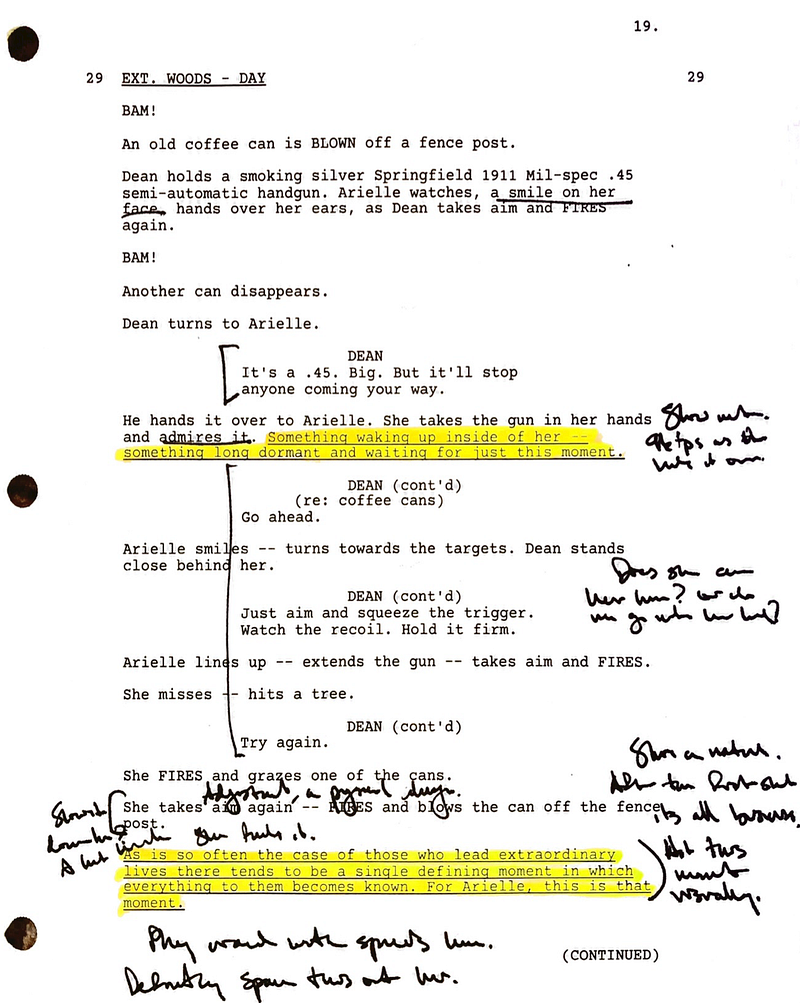
Here’s the scene from my production draft of the script (complete with my notes). The two yellow sections effectively highlight what you’re referring to. The first one we didn’t end up playing in the final edit, the moment of her taking the gun, because the interaction between her and Dean worked better. But the second highlight is the point of the scene.
“As is so often the case of those who lead extraordinary lives there tends to be a single defining moment in which everything to them becomes known. For Arielle, this is that moment.”
The film is a totally subjective experience, told from Arielle’s point of view. Having seen her talk about fate and the universe and all that in the fireside scene, you can see how this passage might be an internal dialogue for her.
I just loved the idea that there were these big proclamations like this in a story about a girl robbing banks and killing people. And frankly, it’s stuff like this…I don’t totally buy into the idea that you should only write what can be filmed. This is a perfect example of that. You can’t make a whole script out of moments like this, but punctuating them here and there can both help the reader and help the actor. An actor CAN play this description.
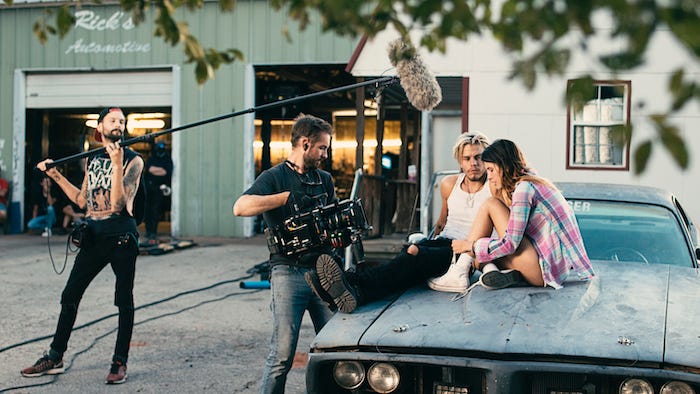
That said, I did try and find a way to film it, to make this moment in the film seem unique within the scene. For those extreme close up moments before she hits the target, we used a P+S Technik Skater Scope (I’ve included a pic for you to post). It reduces the minimum focal length of a lens so you can get it really, really close to your subject and it also just gives it a slightly different feel, an almost macro feel to the image. You feel like you’re super close to Arielle, almost in her head. And then we also shot in slow motion to heighten the moment.
Scott: The tagline of the movie: Viral Fame is a Dangerous Game. How central to your story development process was the aspect that Arielle is desperate to become famous? Was that something you knew up front would be central to the story or an element which emerged later in the process?
Joshua: As I mentioned above, it was there at the conception. I was interested in writing a crime thriller but what would make it different? The social media element is what got me excited and felt like something more unique than just another heist film. You’ve seen such a rise in the desire for young people to achieve some kind of fame, even if it’s fame without talent.
Orville Gilbert Brim wrote a book called Look At Me! The Fame Motive from Childhood to Death and in it he describes several surveys that showed there are at least 4 million people in the United States who make becoming famous their chief goal in life, and those were from 2009, before you had this massive proliferation of social media fame. “And what has happened is the fame motive has come out of the basic human need for acceptance and approval and when this is not fulfilled because of rejection by parents, or adolescent peer groups, or others, a basic insecurity develops and emerges as the fame motive,” writes Brim. Sound like someone you know?
Arielle isn’t making plans to be violent to get followers. But that initial spark comes after the fight with the girl, when her follower count grows after the video gets posted. That clicks “Oh, I beat the shit out of this girl and people are following me for it.” And then, she gets the little inspired idea to film their first robbery and put it online and now she has 3000 followers. That feedback connects with her natural violent tendencies and boom you’ve got a movie.
Scott: The movie seems to pose a question to audience members: How far would you go to become famous? Because Arielle is willing to go really far to achieve fame, is it fair to look at Infamous as a kind of morality tale?
Joshua: Maybe. If that’s how you, as the viewer, want to see it. What’s surprised me about the reaction to the film is how much of a range there is between those who feel like I was too on-the-nose and those who felt like I didn’t do enough with it. But neither of those were ever my intention. I never intended to pass judgement on Arielle or her actions. I mean, at the end of the film [spoiler] I have her winning, in a matter of speaking. She gets exactly what she wanted and she never atones for her sins, never has doubts, never feels bad about what she did to achieve her fame. I was worried people would say I was celebrating and encouraging social media fame through crime! But at the end of the day, I was interested in the subjectivity of the film and firmly rooting the audience in the journey of Arielle.
I love to include a quote at the beginning of the script, something that speaks to what the film is about. This is the one I had at the beginning of INFAMOUS:
“We must believe that we are gifted for something, and that this thing, at whatever cost, must be attained.” ~Marie Curie
This is Arielle’s story. In prep, I told my production heads that we should think of the film as Arielle’s social media feed. We are seeing events the way she wants us to see them. I’m not suggesting the film is fantasy but it does have a heightened element to it and I wanted to lean into it. To me, INFAMOUS is the story of a woman who believes she is destined for fame and does whatever she can to achieve it. It’s up to the viewer to decide whether she was right or wrong.
Scot: What was the process like going from script to funding to production?
Joshua: It was long. I had the initial idea in June 2016, I wrote the first draft in September 2016, we went into production in July 2019 and the film was released in June 2020. Four years. I was working on other things before it went into production (including writing a series for Indian television about the 26/11 terrorist attacks) but that’s still a long time. And it mostly took so much time because we got a lot of “no’s”.
I heard a great anecdote, I forget where, about a real estate agent who was having trouble selling a house. Her boss asked her how many no’s she would get before she usually sold a property. She said around 30. How many had she gotten on this one? About ten. “Well,” said her boss, “you gotta get out there and get 19 more no’s.”
I’ve really tried to carry that with me, whether it’s trying to sell a script, getting financing, apply to film festivals, casting a movie, and more. It’s about getting through all the no’s to get to your yes. Because you can get unlimited no’s but you only need one yes. As a result, I don’t get discouraged or spend time lamenting on the rejections. It’s like, “Great, who’s next?”
It took a while, but eventually a producer named Scott Levenson came on board. He passed the script to Thor Bradwell, Bella Thorne’s manager, who read it, gave it to Bella and she loved it as well. She and I had a call and like that she was attached to the film. This was in 2018 and my agents at CAA had taken the script out in 2017. Like I said, it took a while.
Once Bella was attached, it took a couple of months until we had financiers on board, which happened in the fall of 2018. We started going out to people for Dean and that took several months. We were originally going to shoot in May but we had to push because we couldn’t find someone for Dean. The financing was based off the foreign sales model, so we needed someone who could justify the budget on top of Bella’s value. When we pushed to July, we were able to go back to Jake Manley, who loved the script but had a conflict with another project. He came on, we got the green light in May and started prep in Oklahoma in June 2019.
I just kept holding on to the belief (like Arielle) that the film would get made. I was also up against a timeline, because I felt like there was a window in which we could make this movie and that it probably wouldn’t make sense in five years. So, I was really feeling the pressure to get this thing going.
Scott: You shot the movie in Oklahoma. How many days were you in production? Any notable production anecdotes?
Joshua: We shot for 21 days total. 19 days in Oklahoma and 2 days in Florida with a skeleton crew. One of the biggest challenges was the heat. We shot in July of 2019 and I’d say the majority of the days there had heat indexes of over 100 degrees. We’re a location-based film, which meant we were outside a lot. Even at night, it would only drop to 90. But the crew was fantastic and the producers were able to keep everyone hydrated and safe.
We had a lot of fun doing the various oners in the film. Those were quite an accomplishment on our budget level and schedule and the crew really knocked it out of the park. It was incredibly challenging shoot. We probably needed 25 days total. Since we didn’t, it just felt like every day had at least 1 or 2 big things going on. Whether it was a big stunt, a long dialogue scene, a oner, 2–3 company moves, or just the amount of material we had to shoot in one day (and sometimes all of those together), there were no easy days on this. I never could have pulled this film off it was my first film. It would have been a disaster. The levels of stunts and gunplay on the film was hugely important to me, but it is obvious why people don’t attempt this kind of stuff on a low-budget film. But thanks to my producers and crew we made it happen.
Making this film has been the most rewarding of my career because it’s the first one where I had both creative control AND a budget to support it. I got to make my movie the way I wanted to make it and exercise the type of control that filmmakers dream of.
Scott: A previous movie Layover, which you wrote and directed, is a drama-romance in which almost all of the dialogue is French. Infamous is a crime movie with a lot of action and gun play. You’ve also been involved in science fiction projects. Where a lot of writers embrace a single genre as their brand, you pursue a variety of story types. Is this an actual strategy on your part or are the projects you’ve worked on more a result of following your personal creative interests at any given moment?
Joshua: I think it’s largely driven by my creative interests. One of the elements tying them together is that they’re female driven. I love telling stories that expand the way in which women are portrayed on screen. I’m also looking for stories that fit into my visual aesthetic. I have a particular way of shooting things and approaching material from a visual point of view and some stories just don’t fit with that. It’s not so much a genre or time period, it’s just the feel of them film overall. It’s also driven by the types of movies I like to watch. I’m constantly seeking out films that are different, that tried something new, that don’t look and feel like every other film out there. Even if it was a failure, I just love that it was different.
Scott: Finally, as the director of Infamous, is there a screenwriting lesson you learned from that process, some piece of writing wisdom gleaned from the production and post process?
Joshua: I know this sounds like an obvious statement but I think writers greatly benefit from seeing their scripts produced. I know that’s the dream of every writer but I’m talking about it being produced in any way: a short film, a super low-budget feature, a student film, or even just getting friends together and shooting something on an iPhone.
It’s easy to write “man falls out of a window” but the process of actually bringing that to screen is enormously complicated and I think it can be helpful to know what’s required to bring to life something you wrote. When you step on a film set there are all kinds of rules and restrictions that you have to navigate. Even just a simple dialogue scene in a car becomes a time-consuming process.
You also benefit from the collaboration with other people, like directors, actors, cinematographers, and editors who all have their own interpretation of the script. Experiencing all this makes you a better writer and so I encourage people to seek out those opportunities, however small, whenever possible.
Here is a trailer for Infamous:
You may watch Infamous on one of these digital platforms.
Twitter: @Joshua_Caldwell
IG: @JoshuaCaldwellDirector
FB: https://www.facebook.com/JoshuaCaldwellDirector/
For 100s more exclusive Go Into The Story interviews with screenwriters, filmmakers, and industry insiders, go here.