Q&A: Bob DeRosa
The screenwriter talks about his writing career and his latest projects: writing scripts for fictional podcasts.

The screenwriter talks about his writing career and his latest projects: writing scripts for fictional podcasts.
I’ve known Bob DeRosa for many years via social media, but in August, we met face to face at this year’s Willamette Writers Conference.
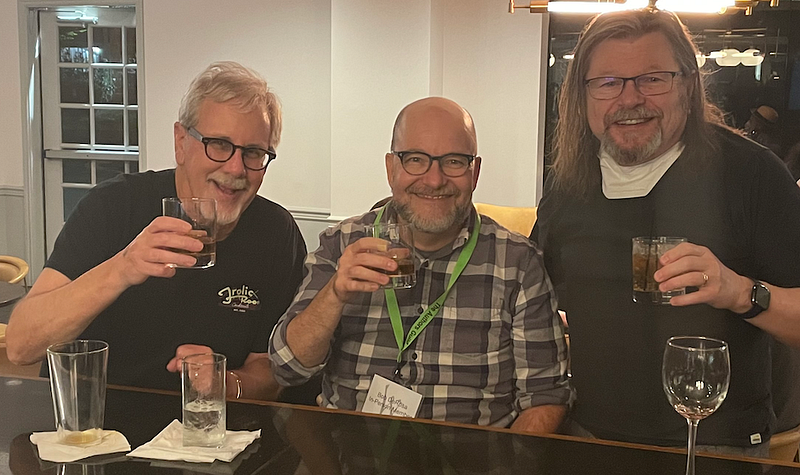
When we got together, Bob told me about his newest project: a scripted fiction podcast called Catchers. Hearing that, I thought of two things. One, I know nothing about scripted fiction podcasts. Two, if it’s something a writer can make money doing, then Go Into The Story readers would likely be interested to learn more.
So, I asked Bob if he’d be willing to do a Q&A and he kindly agreed.
Scott: How did you become a screenwriter?
Bob: At first, I came into it more as a filmmaker. I was at the University of Florida during the initial straight-to-video boom when movies like the original Evil Dead and Sex, Lies, and Videotape were sending the message that you could make incredible stuff for almost no money. Even though my school didn’t have a film program, my buddies and I would shoot movies on video and edit them and I just fell in love with the process. I was writing low-budget horror scripts in totally the wrong format and eventually I started reading screenwriting books and figured out how to do it right. After school, I moved back home to Orlando which had Nickelodeon Studios and some big movies coming through town so it was billing itself as “Hollywood East.” That didn’t happen but Orlando had this vibrant artistic scene in the 90’s. I was writing and directing short films, doing theater, performing and touring with my popular improv troupe, plus working as an assistant casting director and programming for the Florida Film Festival. I also carved out some time to write scripts and after plenty of mediocre ones, I wrote one that got some name actors attached. It never got made, but my writing was starting to get some notice so I moved out to LA in 2001 and never looked back. One of the key choices I made when I moved out here was to NOT be involved in every possible thing, like I did in Orlando, and instead just focus on my screenwriting and do improv as a hobby. That’s what I did, and a little over a year later, I sold a pitch to Revolution Studios and screenwriting became my full time job.
Scott: Could you describe your work in film and TV including the movies The Air I Breathe and Killers?
Bob: I met director Jieho Lee at the Florida Film Festival and right after I moved to LA, he came out to see an evening of my one-act plays. He connected with my work and asked me to co-write his debut feature The Air I Breathe. We spent two years writing the script and another two years putting the movie together before Jieho directed it in Mexico City on a $10 million budget with an incredible cast that includes Brendan Fraser, Sarah Michelle Gellar, Kevin Bacon, Forest Whitaker, and Andy Garcia. It was a dream experience for me, being on set every day, seeing the struggle and elation of getting a movie made.
I came home to LA, expecting to get a lot of work, but I was told I couldn’t use Air as a sample because Jieho and I co-wrote it. So I sat down in my little Burbank apartment and poured everything I love about movies into a script. Killers was a high-concept (for a price) character-driven action movie with humor and heart. Lionsgate picked it up in a preemptive situation, and my reps negotiated a very lucrative deal. Development was difficult (it usually is), and I did multiple drafts for two directors before I was eventually replaced. Over time, my little action movie with a rom com subplot was rewritten into a big-budget rom com with an action movie subplot. Ashton Kutcher and Katherine Heigl starred in the biggest Lionsgate movie ever (at the time). I was never on set and read about the shoot online along with everyone else. It came out and made nearly $100 million worldwide, not a bomb, but not a hit.
After that, I wrote several scripts but nothing sold. It was a tough time after the economic crisis and the 2008 WGA strike and not a lot was selling. I ended up writing a pilot on spec that got me dozens of meetings in the TV world. That led to me working as a Story Editor on the 4th season of the hit USA show White Collar. It was an incredible experience getting to work with an amazing team of writers. I learned so much on that job and co-wrote an episode. Afterwards, I pitched an original pilot all over town and even though people liked me and my idea, it didn’t sell. Staffing season came and went and I didn’t book another show, and this is when my career stalled, which seemed unbelievable at the time. All this momentum I’d built seemed to vanish and before I knew it, I was out of work, living off my Killers paycheck, with nothing promising in development and reps that were rather ambivalent about my career. I won’t lie: it was a very difficult couple of years.
Scott: At what point and how did you intersect with writing podcasts?
Bob: The thing that got me through the rough times in my career was making stuff with friends, particularly with Ben Rock, a fellow filmmaker from Orlando who was production designer on The Blair Witch Project. While my screenwriting career was taking off, Ben was writing and directing a lot of the supplemental Blair Witch spin-offs as well as directing a feature for Warner Brothers. While Ben and I had these parallel careers, we often collaborated on theater, mostly doing late night shows at Sacred Fools Theater in Hollywood. Eventually, Ben suggested we make a web-series, and we co-created 20 Seconds To Live, a horror/comedy anthology that ended up playing over twenty festivals and won a bunch of awards all over the world. We didn’t make a buck, but it was creatively fulfilling and got me through those low points in my career.
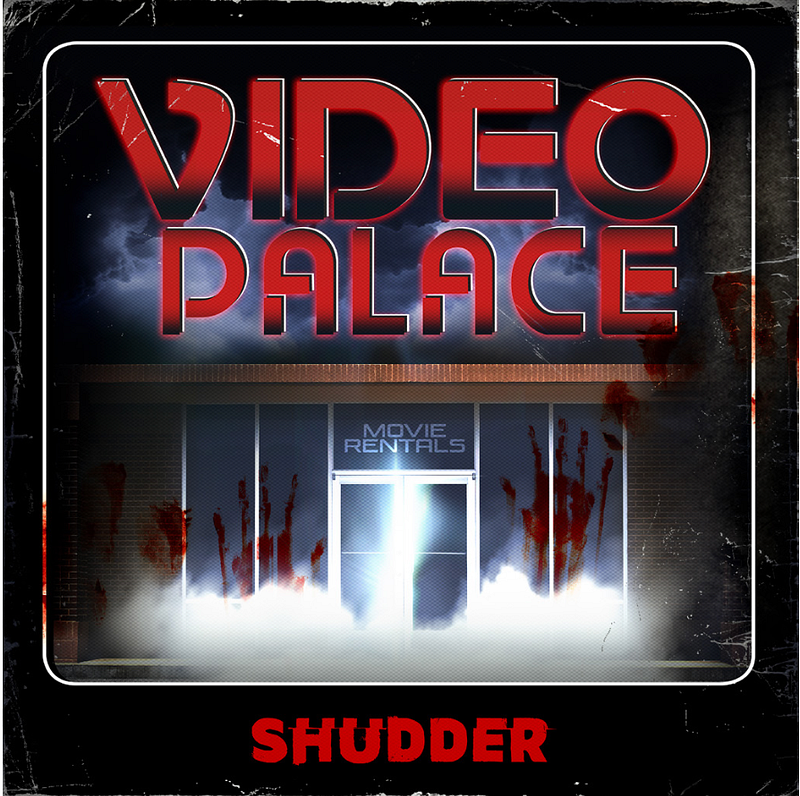
In 2018, Ben and I’s old friend Mike Monello (one of the Blair Witch producers) and his colleague Nick Braccia sold an idea for a podcast called Video Palace to SHUDDER. It was an investigative podcast with a supernatural twist, like Serial meets Blair Witch. They brought on Ben to write and direct it, and Ben asked me to co-write it with him. I had never even thought about writing a podcast before, but I’m a huge SHUDDER fan and working with Ben, Mike, and Nick sounded really fun. Ben and I had already developed a real short-hand in working together which came in handy because we had a very short amount of time to make the podcast. Mike and NIck had written a ten-page pitch document, and it was up to Ben and I to turn it into a ten-episode, 180-page script. My TV experience came in handy as Ben and I broke the story and wrote the entire show in like six weeks. We worked with producer Liam Finn to put together an incredible cast and production team. Films often take years to get made, but Video Palace took about five months from us getting hired to the release. It was an exhilarating experience, combining the “let’s put on a show” energy of theater with the pace of television. Ben and I had a blast and were definitely sold on making more stuff in the world of audio.
Scott: You followed up Video Palace with more work in the podcast arena. Could you tell us about how that has played out including your latest project Catchers?
Bob: Shortly after Video Palace launched, we were contacted by a producer from Audible asking us to pitch them some horror ideas. One of the things we pitched was an old movie idea of Ben’s called Catchers about two small-town dog catchers who find themselves up against a pack of monsters. Audible paid us to write up a short pitch-doc and a sample chapter. It was interesting developing this idea because it was much different than Video Palace (which was meant to sound like an actual investigative podcast). We envisioned Catchers as a “monster movie for the ears” with a full voice cast, score, and sound effects. We were clearly inspired by 80’s era creature-features like Tremors as well as the core relationship of Repo Man (a crusty veteran training a young newbie). Audible loved what we sent and hired us to write the show. It took six months to close our deal, and then Ben and I started breaking story in my office with notecards on the board. We wrapped that stage and were about to start writing when the Covid shut-down happened. This was March 2020 so Ben and I had to figure out how to co-write an 180-page script without being in the same room for 8 months.
We ended up using a combination of Zoom, Google Docs, Dropbox, and Fade In screenwriting software to write our show during those crazy months. We wrote half the episodes separately and then rewrote each other before finally doing a live polish over Zoom. Audible greenlit the show in early 2021 with Ben directing, and we put together an incredible cast including Billy Gardell (Bob Hearts Abishola), Herizen Guardiola (American Gods), Nicki Micheaux (In the Dark), Mary Lynn Rajskub (24), and David Patrick Kelly (The Warriors). Because of the pandemic, we never set foot in the studio with our actors. Ben directed over Zoom (with both of us exec-producing) out of my wife’s office because she has the fancier monitor. It was a crazy way to make a show but we couldn’t be happier with how it turned out.
In the final weeks of Catchers post, Ben and I were also hired to work on a new horror anthology podcast for Wondery called I Hear Fear. We consulted for a few weeks (giving notes on scripts and outlines) and co-wrote an episode. It was a fast, fun process with an incredible producing team, plus Oscar-nominated actress Carey Mulligan hosted and starred in our episode! It was a cool gig, but Catchers is truly our baby. Ben and I retained ownership of the IP so sometime in the future we’ll see if we can set it up as a movie or TV show and get back to our love of filmmaking.

Scott: What does a podcast script look like? What are the similarities / dissimilarities in comparison to a feature film or TV script?
Bob: The interesting thing is that unlike film and TV writing, there doesn’t seem to be an industry standard yet in podcast script formats. Each studio likes to do things their own way, which we definitely found to be true working for Wondery. But for Video Palace and Catchers, Ben and I were able to create our own script format that worked. We’ve both written in film & TV so it made sense to stick with basic screenwriting format and we just adjusted it for audio. The main thing is you can only write scene description that you can hear. What you don’t want is a producer reading an action scene and saying, “But how is this going to work in audio?” You have to do your homework and really create a plan for how something inherently visual (like a monster attack) is going to work when there’s no camera involved. For Ben and I’s scripts, we write lean description and capitalize all the verbs and nouns that indicate specific sounds. This would serve two purposes: giving the reader a sense of how the story would be told through audio while also giving our sound designers a road map to work from. For instance, in the opening scene of Catchers we wrote, “The deputy WALKS into the woods, feet CRUNCHING on sticks and dead leaves.” There are the specific sound effects of footsteps on sticks and leaves but it also gives the designer’s license to flesh out what these woods sound like and since this is a horror show, that meant they were encouraged to make stuff sound creepy and atmospheric.
Writing dialogue was very similar to how we’d do it in a film script, but for Video Palace we used a really interesting trick that Ben developed when he wrote and directed The Burkittsville 7, a Blair Witch spin-off that aired on Showtime. For that show, Ben wanted to record interviews that sounded very real and we wanted to do the same for Video Palace, which was meant to sound like a real investigative podcast. So anytime there was an interview, we’d write a basic back and forth for the two characters and put all that in italics. That was just to show the actors and producers what we were going for in the scene. But on the day of recording, Ben gave the actors written bios with all the info their characters would know. Then actor Chase Williamson (as our podcast “host” Mark Cambria) actually interviewed the other actors in real-time, allowing them to “improvise” their answers using the info they’d memorized. The goal in Video Palace specifically was to have a show where the listener can’t tell the difference, performance-wise, between what was scripted and what was improvised, and I think we succeeded. Performances are always important, no matter what medium you work in, but audio is so intimate, with people literally whispering in your ear, that it pays to get those performances as real as possible and that all starts with the writing on the page.
Scott: You mentioned that you retained the IP rights to Catchers with an eye toward setting it up on another platform (e.g., television). Is that a standard type of deal for podcast writers or did you have to work up a different type of agreement to retain those rights?
Bob: Well, there doesn’t seem to be any standard type of deal at the moment. For instance, SHUDDER owns the Video Palace IP so even though our audience really wants a second season, it’s up to SHUDDER to make that decision. Show-creators Mike and Nick did manage to put together a deal for a spin-off book with Simon & Schuster called Video Palace; In Search of the Eyeless Man. Both Ben and I got to contribute stories to that, which was a fun way to keep the IP alive. And Wondery owns all their shows, there was no question about that when we worked for them.
But Ben and I got lucky with our deal with Audible when we asked to retain our IP and they were cool with it. That may not be the case with someone selling them a show today, but again, every deal is different. Hollywood is so focused on IP right now that it’s worth fighting to keep as much control of your original work as you can. There are some examples of people who self-produced their own podcasts and were able to leverage them into film or TV deals. When it comes to working with a studio, it definitely pays to have a good attorney negotiate your deal. Even if you can’t outright retain your IP, you can either partner with a studio for the rights or negotiate to have first shot at adapting your work into film or TV.
Scott: What’s your advice to a writer who has a story they believe would work best as a podcast series?
Bob: From the craft side of things, it’s important to develop a story that takes full advantage of the audio medium. I’ve heard of writers taking old feature scripts or unmade pilots and trying to sell them as audio shows, but not every story is a good fit. Audio has its own unique set of benefits and challenges, and you need to familiarize yourself with what works and what doesn’t. Ben and I are big fans of using a framing device to ground the show and give the listener a way into our story. Video Palace has the conceit of a host who’s making a podcast so his narration was key to pulling the audience in. For Catchers, we begin every chapter with our newbie dog catcher Blair telling an investigator about the horrifying events of the night before. We’re big believers that you have to establish early on which sources of audio you’re using to tell your story. In Catchers we have those interview segments, flashbacks to the night before where we hear everything from Blair’s POV, and some found footage elements (such as 911 calls and police radio recordings) that the investigator plays for Blair. Establishing your storytelling rules early on and sticking to them helps build trust with your listener and pulls them deeper into the story.
When it comes to the business of podcasting, it’s basically the Wild West out there. There are plenty of creators who make and release their own show, build an audience, and sell advertising. It’s a lot of work, but you can make a decent living at it. There are also many studios making fiction podcasts, including Audible, Wondery, QCODE, Realm, Echoverse, and others, but that means you need access to those companies to pitch them your show. The upside is having a bigger budget to work with but the potential downside being less control over how the show’s going to turn out. Ben and I were very fortunate that Video Palace and Catchers turned out very close to what we wanted them to be.
If you’re relatively new to the business of storytelling, I always recommend finding a team of like-minded folks, make your own thing for as little money as possible, and put it out there. Maybe it’ll be a hit, but even if it’s not, you’ll learn a ton. And making a quality podcast can actually be cheaper than shooting a web-series or a short film. But you have to love the medium and not just see it as a shortcut into the film & TV business. In my experience, making audio shows hasn’t been as lucrative as screenwriting, but it’s creatively fulfilling and totally worth it.
Scott: Do you ever see yourself writing for audio full-time or is it possible to balance that with a career in film & TV?
Bob: I think what those low years in my career taught me is that it’s crucial to never stop making stuff. I’ve written movies, TV, theater, fiction, web content, and now audio. Sometimes writing pays really well, other times it doesn’t. Right now I’ve got three feature scripts with producers and directors attached, each of them inching their way toward production. Screenwriting will always be my first love, but audio is a fantastic new avenue to make cool stuff with my friends and that, more than anything, is what really matters.
For a screenwriter, it must be an interesting challenge to go from visual writing to auditory writing. But if the check clears, money is money. And it sounds like a creatively engaging way to approach storytelling.
Twitter: @thembob.
For 100s more exclusive Go Into The Story interviews, go here.