Pilot Script Analysis: “Sex Education”
Extensive page notes by a writer and fan of the hit Netflix series: Episode 101.
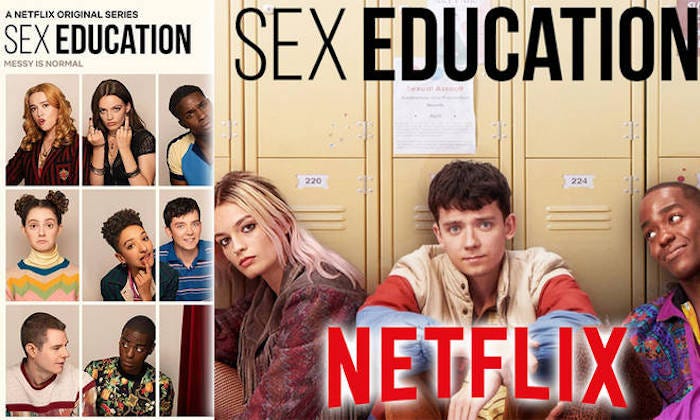
Page notes on Episode 101 by a writer and fan of the hit Netflix series.
My university students love this series and apparently lots of other people do as well as Netflix has renewed it for a third season. What’s all the fuss about? Here’s how the series is described on its official website:
Insecure Otis has all the answers when it comes to sex advice, thanks to his therapist mom. So rebel Maeve proposes a school sex-therapy clinic.
High concept and provocative! Here’s a trailer for Season 1:
In a fun bit of synchronicity which sometimes happens via social media, I was checking Twitter last night when I saw this tweet from Elizabeth Ditty:
What’s this about, I thought. So I clicked on @ScriptsByJames and landed on this thread:
I contacted James to suggest that if he did do an analysis of the Sex Education pilot script, I’d be happy to promote it here at Go Into The Story. After all, I am a big proponent of not only reading scripts, but analyzing them, witness the 80 movie scripts in the archives broken down by scenes, plot, characters, themes, dialogue, etc.
One thing led to another and James did, indeed, do an in-depth analysis of the Netflix series Episode 101, but before we get to that, let’s answer find out who this young man is. Here’s what he emailed me:
I’m an up and coming African-American TV writer trying to break in. Moving to LA next month, virus permitting. Recent college grad from Florida Atlantic University — Bachelor’s in Communications with a minor in English. I love writing dramedies centered around teens/young adults trying to find themselves and their voice in the world.
I’ve been studying screenwriting for a few years on my own and have written many scripts. My university did not have screenwriting programs. But the thing I’ve invested a ton of time into is building up a network. I have several senior level industry mentors, and a lot about what I know re: writing TV has come directly from them. I currently have 2–3 TV samples (with recs from said industry writers) that I send out and submit to things like fellowships.
I love his initiative! No screenwriting program at his university, no problem. James built his own network of “industry mentors.” So an energetic and dedicated writer. Great! But what about his analytical chops? Check this out:
That is an extensive set of page and story notes! In scrolling down the thread of responses — and there are a LOT of them — there’s even someone who teaches at a film school who has forwarded James’ script breakdown to his [the teacher’s] students.
NOTE: SCRIPT ANALYSIS IS FOR EDUCATIONAL PURPOSES ONLY!
Let’s make this an even bigger learning moment by considering some screenwriting takeaways from this interchange with James:
- Reading scripts is a crucial component for learning the craft.
- Analyzing scripts is even more important.
- If you have an instinct to do something creative or craft-related, chances are you should follow that impulse.
- If you think you don’t have the necessary screenwriting resources available to you — such as your university doesn’t have a writing program — realize this: There is a TON of content available online. Hell, Go Into The Story has 27,812 articles (I just checked) and that’s just one website.
- Write pages. James is a recent college graduate and he’s working on 2–3 TV sample scripts. The more you write, the more you learn.
- We all know that Twitter is a cesspool, however, there are scores of professional writers, many of them Hollywood screenwriters, who use that online platform. Suggestion: Look up the writers of your favorite movies and TV series, then Google their name + Twitter. Chances are they have an account. Follow them. Don’t be a stalker! Don’t be obnoxious! You can even just track their Twitter feed as you’d be surprised at how many writers like to provide insights into the craft online. That said, I know people who have developed mentor relationships with pro writers via social media. Again: DON’T BE A STALKER! Use some common sense in your interactions.
My final piece of advice: Download the PDF James provided a link for in the tweet above. Watch Sex Education which is a terrific series, but as you watch Episode 101, read the pilot script with James’ comments at the same time. Pause each scene and really reflect on what’s going on, try to reverse engineer what series creator Laurie Nunn was thinking in terms of crafting the story.
Here’s a brief interview with Laurie:
While you’re at it, give a shout out to James on Twitter. Use him as a source of inspiration for your own writing.
Now more than ever, the world needs great stories… and great storytellers.
Aspire to be one of those storytellers.