Page One: ‘The Devil Wears Prada’ (2006)
Screenplay Aline Brosh McKenna, novel by Lauren Weisberger
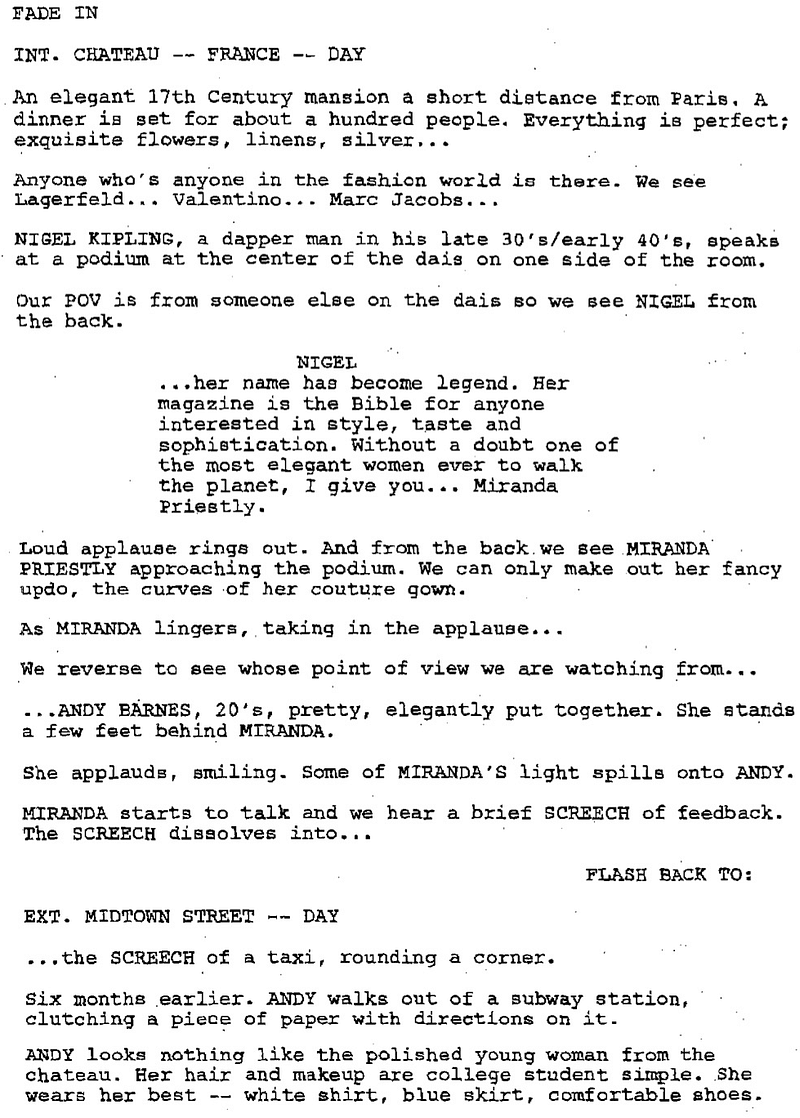
Screenplay Aline Brosh McKenna, novel by Lauren Weisberger
The movie version of the opening:
And so we ask: Why the shift from the flash-forward opening in the script which focuses on Miranda and ends with Andy, then cutting back in time, to the movie version which is entirely about Andy? Some thoughts:
The script version is a classic example of this story structure: Here is the Protagonist at some midpoint in the story. The impression we are left with is a question: How did they get here? We see this often in movies for several reasons, among them: (A) It can be an effective way to create an immediate mystery in the reader’s mind; (B) The mystery then plays out throughout the rest of the story until the plot “catches up” with itself syncing up with the opening scene.
Again: Why the shift away from that opening? This is especially intriguing because by starting in the present day with the focus on Andy’s character, it takes away focus from Miranda, who in this case is played by arguably the greatest actress of our time: Meryl Streep.
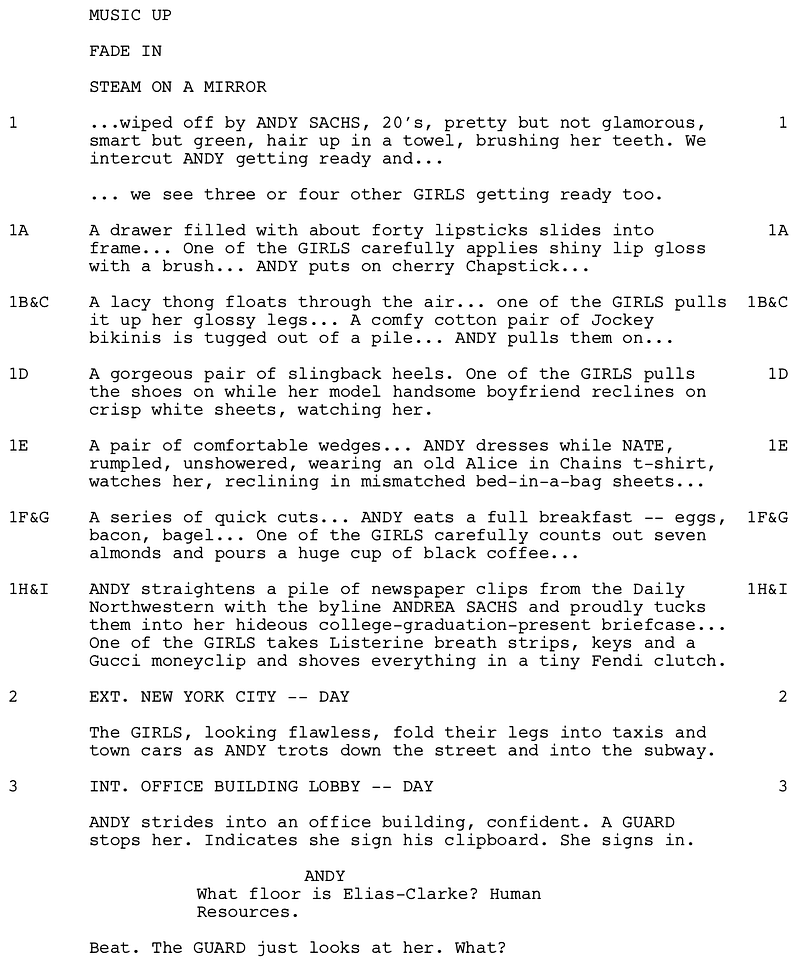
One suggestion: The filmmakers wanted to begin with a music video credit sequence, hence, the Andy’s day-in-the-life series of images. It not only reveals aspects of Andy’s girl-making-do-in-the-Big-City life — and in a visual way — it also sets a peppy tone which will help carry the viewer through some of the edgier interactions early on between Andy and Miranda. In other words, send the message that things lighten up for our Cinderella Protagonist.
But that’s probably the big reason: Andy is the story’s Protagonist. As such, it is Goal Number One for a story: Make us care about this central figure. The movie introduction of Andy — before any dialogue, mind you — creates a series of images which uses the contrast between Andy diligently and earnestly going about prepping for her big meeting and the busy crowded atmosphere of Manhattan to give us an immediate sense of this: She is an underdog. And almost nothing makes us care about a character more than feeling like they are a Little Person with Big Dreams going up against Enormous Odds. Hence, the shooting script version of the opening:
Page One is a daily Go Into The Story series featuring the first page of notable movie scripts from the classic era to contemporary times. Comparing them is an excellent way to study a variety of writing styles and see how professional writers start a story.
For more Page One posts, go here.
You may follow the daily conversation on Twitter as I cross-post there: @GoIntoTheStory.